Top Event Photographers in Wisconsin
Find top event photographers in Wisconsin for festivals, conventions, and weddings. Hiring guidance plus photography jobs across WI.
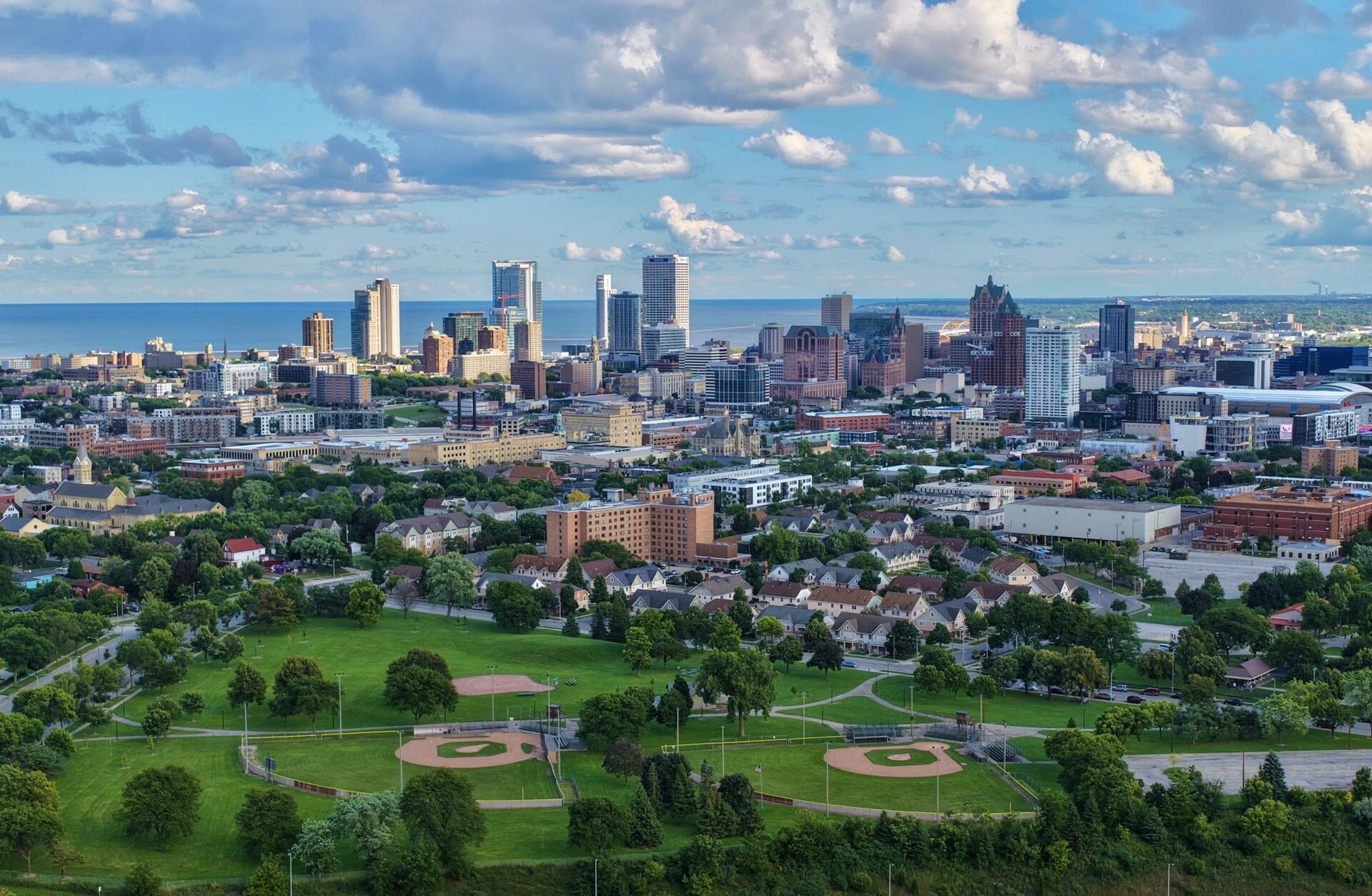
Hero photo: Milwaukee skyline looking southeast toward Lake Michigan, by Isaac Rowlett. License CC BY-SA 4.0, via Wikimedia Commons. Shown uncropped.

For a Wisconsin event photography hire, I would begin with a simple exercise: describe the event without using the venue's name. What happens, who takes part, and what should someone understand from the finished pictures? Then put the venue back into the plan. That order helps keep an impressive building from distracting from the people and program the client needs documented.
I have photographed events for more than 20 years. The advice I bring to a new assignment is to make the visual purpose specific and the production plan workable. Wisconsin's Baird Center and Monona Terrace provide two useful examples of how to do that. Their published details establish settings and history, not a statewide promise of bookings, a photographer's access, or a ranking of professionals.
Baird Center: Design the Coverage After the Expansion, Not From Memory
Wisconsin Center District celebrated the expanded Baird Center's opening in May 2024. Its announcement describes a 1.3-million-square-foot convention center, an exhibition hall with 300,000 contiguous square feet, and the addition of the Baird Ballroom and Baird Sky View Terrace. I would retain the difference between total building size and exhibition space rather than use the figures interchangeably.
Ask what the current booking includes
A photographer who recognizes the venue name still needs the organizer's current room list and floor plan. An old gallery or remembered route does not establish the layout for a new program. Ask which spaces are booked, where the photography crew enters, and which movements are permitted during the event.
For a conference with an exhibition and a reception, I would create separate coverage notes for each. The exhibition may need demonstrations and participant interactions. The reception may need introductions and small groups. A ballroom presentation may require careful stage coverage. Those tasks should be connected by a realistic schedule rather than bundled into an undefined promise to photograph the entire building.
The terrace is another example of why the booking matters. Its appearance in an operator's announcement does not mean it is available to your event. If a client wants photographs there, ask whether access has been arranged and where the same required image would happen if the plan changes. The desired background should not become an unsupported commitment.
Treat the new setting as a question, not a sales claim
I would not claim that an expansion guarantees more work for photographers or makes a particular event successful. The source establishes what was added. The hiring decision should focus on whether a candidate can explain the coverage your program requires in those spaces.
Ask the photographer how they would establish the event, cover its participants, and move between required moments. If the program has an overlap, ask them to identify it. A useful proposal connects the facility to the assignment. It does not simply repeat the venue's size as evidence that the photographer is the right choice.
Monona Terrace: Use the Architecture Without Making It the Subject of Every Frame
Monona Terrace's history describes a design first proposed by Frank Lloyd Wright in 1938 and the community and convention center opening in 1997. That distinction matters: a historical proposal and a later completed building should not be collapsed into a misleading statement about when the venue was built.
For an event there, I would ask how the client wants the setting to appear in the gallery. An establishing photograph may help identify the place. Other images may need to concentrate on a speaker, a conversation, or a group rather than repeat architecture in the background. The building should support the story when it helps explain the gathering.
Make a visual intention for each part of the program
Imagine a meeting followed by a private reception. For the meeting, the client may need attentive participants and clear photographs of presenters. For the reception, the purpose may be connection between guests. I would write those intentions beside the schedule before making a shot list. That gives the photographer guidance when several possible images compete for attention.
If an image of the setting is important, decide when it can be made without taking the photographer away from another essential activity. A room may look different before guests arrive and during the program. Ask which version the client needs and who can tell the photographer when the space is ready.
Do not assume an attractive architectural image proves the photographer can cover an event. Look for complete galleries that include people, ordinary transitions, and challenging moments. A portfolio of buildings and a portfolio of gatherings answer different questions even when they feature the same property.
Build a Wisconsin Shot List That Helps Instead of Distracts
I would organize the requested images by purpose rather than produce a long catalogue of objects. A short, reasoned list can guide attention. A list that asks for everything can become a distraction, especially when the photographer is trying to notice interactions that could not have been scheduled.
Establish the gathering
The first category is identification. What tells a viewer where they are and what is happening? That could include a room, event signage, or participants arriving. Choose the elements that explain this event rather than every detail the property offers. Ask whether a particular partner mark or program title needs to be readable.
Identification also requires accuracy. If signage changes, the photographer should know which version is approved. If a presentation screen contains restricted material, make that clear before coverage. A photograph can be visually tidy and still be unsuitable for release because nobody checked the information inside the frame.
Show participation
The second category is activity. What do guests do, learn, try, or discuss? An image of a seated room may establish attendance but reveal little about participation. Ask the client which activities communicate the event's purpose, then give the photographer enough context to recognize them.
This is where an event contact can be especially helpful. They may know when a demonstration is about to begin or which small group includes the people central to the story. The photographer should not be expected to identify that significance from appearance alone. A brief introduction or a reliable reference can prevent a missed opportunity.
Record the people who need recognition
The third category concerns named people and groups. Identify presenters, award recipients, leadership changes, and any formal portraits required. Give the names and roles in advance, and appoint someone who can gather groups. The photographer can direct the frame without becoming responsible for discovering who belongs in it.
Keep group arrangements realistic. If everyone needs to be present, choose a moment when that can happen and allow the event lead to organize it. Do not add an essential group photograph as an afterthought while guests are leaving. A small amount of planning can preserve the image without turning the whole event into a portrait session.
Leave room for observation
Not every useful photograph belongs on a list. A reaction, a greeting, or a small detail may connect the planned moments into a story. Tell the photographer what matters to the client, then leave room for their judgment. The brief should clarify the assignment without prescribing every gesture.
I would distinguish essential requirements from examples of the desired feeling. If an example cannot happen naturally, the photographer needs to know whether to arrange an alternative or keep observing. That distinction prevents a casual suggestion from becoming an assumed promise that later disappoints the client.
Choose a Portfolio That Shows Attention Across a Whole Program
Ask for a complete comparable gallery that the photographer may share. Read through it with your intended use in mind. Does the sequence explain the program? Are the people visible as individuals rather than anonymous decoration? Can you find the quieter interactions as well as the headline moment?
Check the edit for repetition and gaps
A gallery can contain many images without offering useful variety. Look for repeated angles that do not add information, then ask whether essential activities are represented. At the same time, do not judge by quantity alone. The original brief may have called for a focused selection. Ask what the photographer was commissioned to deliver.
The explanation should be specific. If movement was restricted or a session could not be photographed, the candidate should describe the effect on coverage. That helps you assess how similar conditions might be handled at your event. A clear account of a limitation is more credible than an assurance that experience makes every condition easy.
Watch how people are photographed
Look at expressions, spacing, and the moment chosen. Are conversations interrupted by awkward direction? Do posed groups look comfortable? Does the photographer leave enough visual context to understand the interaction? Those choices influence whether clients and guests will want to use the images afterward.
Discuss your own preference for direction. A formal presentation, a family celebration, and a networking reception may call for different levels of intervention. Ask when the photographer would arrange a picture and when they would work quietly. An answer about those decisions is more useful than a broad stylistic label.
Understand who made the work
If several photographers covered the sample event, clarify the candidate's contribution. Ask which part of the gallery reflects their role and how they would handle the position offered in your assignment. Participation in a large event does not automatically demonstrate responsibility for every room or every stage of the program.
For a proposal with additional photographers, ask how work is divided and how changes are communicated. More people can support coverage when the responsibilities are clear. They do not remove the need to identify priorities or coordinate the image handoff.
Make the Event's Operating Plan Part of the Hire
The visual brief needs practical support. I would ask for arrival instructions, the current schedule, the equipment route, and an on-site decision maker. These details do not need elaborate presentation. They need to be accurate and easy to find when the photographer arrives.
Confirm property requirements rather than assume them
Ask the venue about vendor documentation, insurance requirements, and equipment restrictions for the actual event. Then ask the photographer whether they can meet those conditions. I would not claim that every Wisconsin venue applies the same policy or that a photographer's previous visit settles the new assignment's rules.
If a permit or approval is needed for a requested location, identify who is arranging it. Keep the request unresolved until the responsible source confirms it. A photograph in another person's portfolio proves that an image was made there, not that your event has permission to reproduce the same setup.
Prepare for a changed program
Name one person who can approve changes to coverage priorities. If an award moves, a speaker arrives late, or an outdoor activity changes location, that contact should tell the photographer what takes precedence. Multiple people giving conflicting instructions can create a gap even when each request seems reasonable on its own.
For an outdoor component, identify the approved alternative and the person who makes the decision. Ask what happens to formal groups and any setting-specific image. The photographer can propose a method, but the event host must confirm where the program will take place. Do not substitute a hope about conditions for a usable plan.
Ask about continuity
Discuss backup equipment, file protection, and what happens if the named photographer becomes unavailable. Ask for a practical explanation and record any commitment that affects the hire. The goal is to understand how the assignment would continue through a problem, not to obtain a promise that no problem can occur.
Agree on Images, Rights, and Delivery Together
A gallery's usefulness depends on what the client receives and what they may do with it. Before booking, describe the finished files, selection process, delivery dates, and intended uses. If the client needs captions or specific formats, include them rather than assume they are standard.
Plan early selections as actual work
An event team may need photographs for a recap before the program finishes. Explain which images are needed and where they should go, then ask the photographer how that work fits around coverage. Editing and transferring files require attention. The plan should acknowledge any effect on the schedule instead of quietly promising both tasks at once.
Name the recipient and the reviewer if approval is required. A file sent for review should not be mistaken for a file ready for public release. Keep that distinction visible in the handoff so a communications team does not have to infer it from a folder name or a hurried message.
Explain outside uses before they arise
A sponsor, exhibitor, or other organization may ask for images after the event. Discuss whether those uses are covered by the agreement before distributing files. Receiving a gallery does not itself settle every future permission. Ask the photographer to explain the proposed terms in language the client can apply.
Privacy belongs here as well. Identify people or materials that should remain out of public images and how the crew will recognize them. An internal record can have a different audience from a public selection. The brief should tell the photographer which is which.
Review the First Use Before Filing the Gallery Away
After delivery, I would check one intended use with the event lead. If the gallery was commissioned for a member recap, choose the images that explain the program and verify their identifying information. If it was meant to acknowledge partners, check that the relevant details are visible and approved. This is a test of the agreed purpose, not a request to invent a different assignment after the event.
Keep corrections specific. A misspelled name or an incorrect role needs a factual update. A preference for another crop may be a separate production request under the agreement. Distinguishing those issues helps the client and photographer finish the handoff without confusing a correction with a change of scope.
Then preserve the files and their usage information together. An archive becomes harder to use if a later team can find the pictures but not the permissions or captions. The useful result is a gallery people can understand and handle responsibly after the original event team has moved on.
Use ProShoot to Connect the Brief With Relevant Work
Post the Wisconsin event with its actual date, venue, hours, visual purpose, and conditions that affect coverage. Available photographers can evaluate the assignment and offer portfolios and bids. Compare each response with that brief, then clarify any difference in staffing, locations, deliverables, or open questions.
For photographers seeking event photography jobs in Wisconsin, show the part of your work that answers the client's problem. Explain your role in a relevant gallery and how the proposed plan handles the program. Avoid relying on festival names, sports associations, or regional tourism claims as proof that work is waiting. The assignment in front of you is the evidence to assess.
I would end the hiring process with one shared understanding: which photographs matter, who arranges the conditions for them, what the photographer delivers, and how the client can use the result. Baird Center's expansion and Monona Terrace's history help describe the setting. A clear brief turns that setting into a defined photography assignment.
Ready to hire a professional photographer?
Post your job free and get bids from photographers near you.
Post a Job Free →