Top Event Photographers in St. Louis
Hire St. Louis event photographers with a clear plan for America's Center programs, concurrent duties, required people, and the images the client will use.
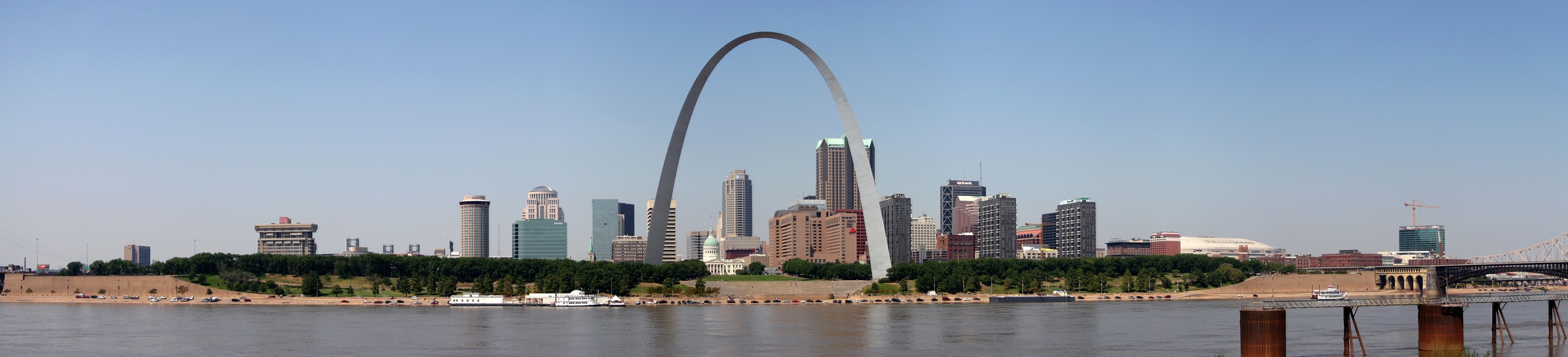
Photo: Buphoff / CillanXC at English Wikipedia, via Wikimedia Commons. CC BY-SA 3.0. Archival 2007 panorama. Resized; no additional crop.

I like a photography proposal that tells me what could get in the way. Not because the event needs more anxiety, but because a visible conflict can still be fixed. An invisible one tends to become a missing photograph that nobody can make after the guests leave.
For a St. Louis organizer, I would test the brief against several plausible failures before selecting a photographer. Is the crew going to the correct part of the complex? Does a required person know when to appear? Is the client buying a selected story or an uninterrupted record? Those questions make a proposal easier to trust.
America's Center provides the local facility context here. Its operator's current page identifies several distinct facilities and event-space types. The situations below are hypothetical, not reports of my personal shoots or claims of open jobs. This is a practical guide for hirers and applicants, not a ranked roster of named photographers.
Failure to prevent: everybody says America's Center and means something different
The official page identifies Cervantes Convention Center, The Dome at America's Center, St. Louis Executive Conference Center, and Ferrara Theatre as components of the complex. A brief naming only the complex can leave an important detail unresolved.
Ask for the actual facility, booked rooms, program, and event contact. The operator also describes exhibit halls, a ballroom, and meeting rooms. Those categories point to different work: exhibit interactions, a main presentation, or concurrent discussion. They should not be treated as interchangeable because they share an umbrella name.
I would put the exact assignment on the working plan before comparing staffing. A proposal can sound complete while assuming one room, when the organizer expects several separate records. That is a scope disagreement worth finding early.
Resolve the place at the level where work happens
A building address identifies a destination without establishing a crew check-in route or approved camera position. Get current event instructions for the equipment and people actually attending. Public visitor information cannot supply every operational answer.
Prior work can help a photographer know which questions to ask, but earlier access is not permission for this booking. A different configuration, organizer, or restricted area can change the job. Current preparation matters alongside familiarity.
If another property is added, treat it as another obligation. Use actual addresses and the complete schedule to assess feasibility. Do not invent a transfer allowance or guarantee from a general sense of downtown geography.
Failure to prevent: a connection becomes a coverage promise
The official America's Center page describes The Dome as directly connected to the rest of the complex. That physical relationship is useful context. It does not prove that one photographer can cover simultaneous essential activity in both places without missing anything.
For a hypothetical program using the Dome and a separate presentation area, mark the events that cannot be repeated. Decide whether each needs continuous attention or selected visits. A camera moving between locations cannot observe what happens behind it.
If both records are essential at once, discuss another photographer or change the scope. Do not let the word connected substitute for a time-and-attention plan. A client needs to know what a single-person proposal actually includes.
Distinguish selected coverage from an incomplete promise
Selected coverage can be exactly right when the client wants a concise recap. It can represent several activities without recording every participant or speaker. Its value comes from being intentional and understood.
It becomes a problem when the organizer expects completeness and the proposal never states the selection. Compare offers by their assigned duties, not just the claim that the photographer will be present for the program.
If the program changes, revisit the allocation. An added simultaneous activity is not automatically included merely because the end time stays the same. Attention is a real part of the service even when the clock does not move.
Failure to prevent: the theater record loses the moment that matters
Ferrara Theatre is identified by the operator as part of America's Center. For a hypothetical lecture or recognition program there, request the current production diagram and camera instructions. The public facility description does not establish a permitted position, stage movement, or the actual lighting arrangement.
Ask the organizer to identify the essential moment in ordinary words. A speaker's short exchange with a participant may matter more than a long introduction. The photographer should not infer importance from duration or rely on visual drama as the only guide.
A useful record can include expression, context, and response. Close pictures and wider pictures serve different editorial purposes. The client should explain the likely uses so the photographer can build a varied selection without simply repeating the same view.
A required recognition portrait needs cooperation
If recipients should pause with the presenter, tell the host and participants beforehand. The photographer can prepare for a consistent frame when the program makes room for it. A natural handoff moving without pause produces a different kind of record.
If the client does not want any interruption, agree on that observational treatment. Do not expect the crew to provide a matched portrait series while the event explicitly prevents the pause it needs. The decision is a program choice, not a test of determination.
Provide verified names and an update route for substitutions. If someone accepts on another person's behalf, the organizing team must explain it. A caption should not turn a visual guess into a factual assertion.
Performance and presentation material can have separate restrictions
A client may commission a record without controlling every performance, artwork, or displayed item. Identify who handles relevant permission and what the crew may make and release. Do not assume attendance settles every use question.
If one segment is restricted, make the start and end recognizable. Tell the photographer who can confirm a change. A vague instruction to be discreet is not an answer about whether an image may be photographed or shared.
The photographer's own promotion is a separate use to agree on. An internal record should not become a public portfolio selection simply because the event ended and a gallery exists. Preserve the restriction through delivery.
Failure to prevent: exhibit coverage documents only signs
The operator describes exhibit halls within America's Center. For a hypothetical exhibition component, ask whether the required image is evidence of presence, a demonstration, a relationship, or a product detail. Those goals can need different photographs.
A readable sign may prove an organization participated without showing what its people did. An engaging conversation may show participation without identifying the required organization. The client should say why the coverage is needed so the photographer can solve the real problem.
If every required exhibitor must appear, provide the actual list and a contact who can identify representatives. A logo file is not an introduction to an unfamiliar face. The organizer needs to report absences or substitutions.
Do not let one unavailable subject consume the rest of the program
Agree on what happens when a display is not ready or a representative is absent. The photographer can report it and propose a return, but the client should choose whether waiting displaces another obligation. Silent persistence can create another omission elsewhere.
If a demonstration can be repeated, confirm when and under whose direction. The photographer should not interrupt operators or improvise activity just because another angle would help. A planned repeat is different from pretending a spontaneous moment occurred.
For controlled product photography, write a separate result into the scope. A useful event image of an object does not automatically satisfy a campaign's styling, detail, or approval requirements. The new task needs an actual definition.
Failure to prevent: meeting photography interrupts the meeting
The official page identifies the St. Louis Executive Conference Center and meeting facilities in the complex. The actual client must define what happens in the assigned room and whether observation, an arranged group, or both are expected.
For a hypothetical discussion, ask what the record should show: facilitation, participant exchange, or required people. If the client wants the session uninterrupted, explain that before the crew arrives. A photographer should not need to stop every table to make the requirements legible.
If formal portraits are required, create a defined moment and gathering responsibility. An observational meeting brief with a hidden expectation for every person to face the camera is not clear enough to compare proposals.
Privacy instructions should be usable and limited
Tell the crew which screens, documents, people, or segments should not be photographed. Share only the practical boundary and information needed to follow it. Private explanations unrelated to the task need not travel with the instruction.
If review is required before release, define the reviewer and pending status. A delivered record can remain restricted. The existence of an image is not a declaration that anyone who receives it can publish it.
Use actual agreement terms for access and storage. Do not rely on an assumed platform behavior to settle the client's privacy expectations. The people responsible for the record should understand where approval still matters.
Failure to prevent: a simple group request becomes an unstaffed service
A leadership group and a series of teams are different workloads. List essential combinations before people disperse and appoint someone who knows the roster. The photographer can arrange the people while the organizer identifies who is absent.
If individual portraits are added, define the intended use and consistency. A casual event portrait is not automatically the same service as a controlled profile series. The setup and attention should be included honestly in the proposal.
If the photographer is stationed for portraits, decide who records activity elsewhere. A fixed setup cannot also be continuously roaming in another room. An organizer may choose one, sequence both, or commission more coverage.
Give the change decision to an actual person
Guests and departments can make worthwhile requests without authority to redirect the service. Identify who can approve a change during the event. The photographer should explain what would be displaced and ask that contact while the client still has a choice.
Keep meaningful changes with the final scope record. An authorized substitution is not an unexplained missed photograph. At delivery, the client should be able to understand why the result differs from the original plan without reconstructing every conversation.
A capable crew can be flexible while preserving that boundary. Flexibility does not mean silently accepting more duties than can be performed or leaving the organizer unaware of the consequence.
Evidence to request before selecting the photographer
I would ask for an authorized complete example resembling the hardest part of this program. A theater assignment needs usable continuity beyond one dramatic speaker frame. Exhibit work needs more than empty installations if interaction is the actual goal.
If the photographer worked in a team, ask what they personally handled and who will attend the new event. Excellent stage pictures do not prove that the same person managed a portrait station, roaming coverage, and delivery. Accurate attribution makes collaboration useful evidence.
If confidentiality limits a gallery, request a permitted alternative. Another client's private event should not become public evidence merely because a new prospect asks. Respecting that restriction is relevant to how your own work may be handled.
Ask a reference about one conflict, not a general rating
A specific example of a shortened program, moved room, or added group can reveal useful behavior. Did the photographer identify the tradeoff and communicate while something could still change? You do not need confidential participant details to learn that.
For credentials or insurance, obtain the actual current requirement and confirm it with the proposed crew. A gallery does not establish compliance. This guide does not invent a venue-wide or citywide requirement from one possible event's needs.
The operator's page describes recent exhibit and loading-dock changes. Do not turn that into an assumed route or equipment privilege. Current organizer instructions are what matter for the attending team, even if they have worked there before.
ProShoot applicants can answer the failure points directly
ProShoot's published client workflow includes posting work, comparing bids and portfolios, and choosing a photographer. Photographers apply and present relevant work. Use the exchange to define a service, not to add unsupported claims about local demand, earnings, or job frequency.
An application can explain the actual facility, the essential moments, the concurrent conflict, and the facts still needed. Check availability across arrival, setup, assigned duties, and any agreed editing. Identify the attending crew honestly.
There is no need to invent personal St. Louis history or imply restricted access. Relevant work and a credible plan for current verification are useful on their own. A platform listing cannot confer permission from the event or venue.
Put the unresolved items beside the proposal
A useful comparison can include a short open-items list. Which room assignment remains tentative? Who provides the verified recognition order? Has the client decided between a continuous record and selected visits? These questions should stay visible until the responsible person answers them.
The list should not become an excuse to defer ordinary preparation. A photographer can investigate the facility categories and review the supplied program while waiting for one unresolved permission. A client can identify essential people while deciding whether to add another crew member. Keep independent work moving without pretending the missing answer has already arrived.
Before confirming the plan, distinguish a settled fact from an assumption and a conditional option. That small discipline prevents a possible portrait location from becoming a guaranteed deliverable or a tentative room from becoming the crew's final destination. It also gives both parties a fair basis for recognizing a later change.
Close the gaps before calling the record complete
Agree on selection, editing, delivery, organization, and uses before the event. Ask how the client will retrieve required people or program segments. An unexplained mass of repeated frames can leave the recipient doing the editing and factual reconstruction they expected the service to handle.
If captions are included, use a factual reviewer. If an earlier selection is requested, define who makes it and who photographs while editing happens. Delivery, storage, and access should follow the actual agreement rather than an unexamined promise about speed.
At closeout, report required items affected by a cancellation, absent subject, or authorized change. Make remaining uncertainty visible. A client should not need an image-by-image investigation to discover a missing obligation that the crew already knows about.
That is the kind of St. Louis photography commission I would trust: grounded in the correct facility, honest about attention, and clear about what useful completion means. A useful proposal for this client is the one that can show the relevant evidence and make the real choices visible before they become irreversible.
Make one unresolved item someone else's clear decision
A list of open questions is useful only when each important question has an owner. If a required presentation overlaps an added group, the event lead should choose the priority. If a proposed working position is uncertain, the relevant event or facility contact should confirm it. The photographer should not be left to convert an unanswered question into assumed permission.
Give the decision a practical checkpoint in the planning conversation. If the answer does not arrive, explain which result remains conditional and continue independent preparation. This keeps the commission moving without presenting uncertainty as completion. It also makes the later review fairer: the client can distinguish an option that never became confirmed from a duty the crew accepted and failed to perform. Those are different outcomes and should not be hidden under the same broad coverage label.
Sources checked November 6, 2026
Ready to hire a professional photographer?
Post your job free and get bids from photographers near you.
Post a Job Free →