Top Event Photographers in San Francisco
Build a San Francisco event photography plan around Moscone's actual buildings and program. Practical guidance for organizers and photographers applying to assignments.
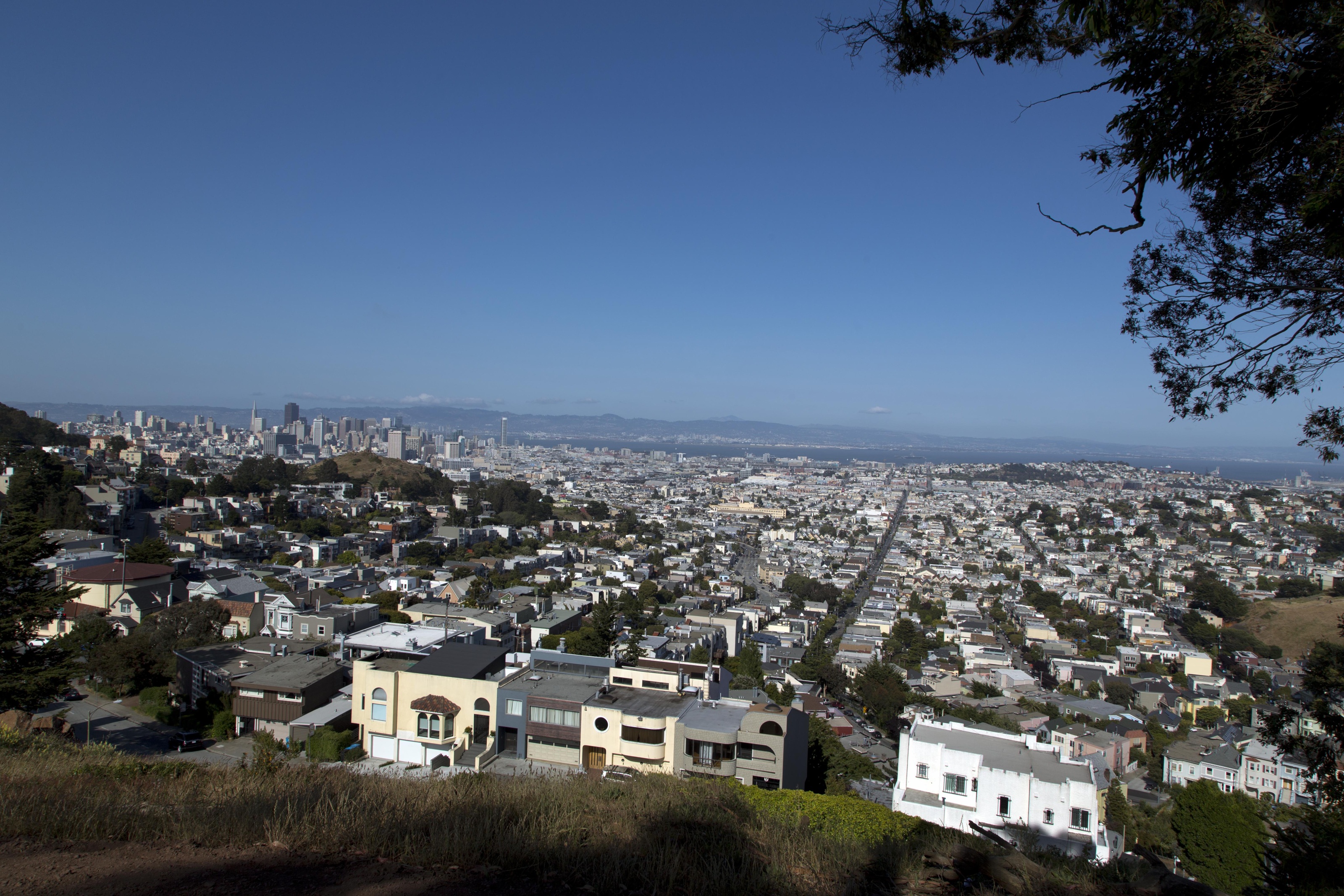
Photo: Carol M. Highsmith / Library of Congress. No known restrictions on publication. Resized.
A map becomes a photography plan only when someone adds the people and the clock. A large event can place important activities close on paper while scheduling them in a way one photographer cannot fully cover. I would make that conflict visible before agreeing to a San Francisco commission.
The useful question is not whether a photographer can move around a convention. It is whether the proposed service can preserve the things this client needs. Presentation continuity, exhibit interaction, and individual portraits can belong to one occasion without fitting one person's uninterrupted attention.
I use Moscone's current operator pages below to explain a map-led approach. The programs are hypothetical, not open jobs or accounts of my own shoots. This is not a ranked list of individual photographers. It is a practical way to compare relevant work and turn an inquiry into an assignment both sides understand.
Start with building, level, activity, and time
Moscone's official Exhibit Halls page distinguishes North, South, and West. It describes North and South exhibit halls below their main lobby spaces, while West has an exhibit hall on Level 1 and flexible space on Levels 2 and 3. Its floor-plans page provides separate sets for those buildings and levels.
A brief saying Moscone leaves those distinctions unresolved. Ask the organizer to identify the actual booked building and level for every required activity. Then use the event's approved current diagram, not merely a public overview, to discuss positions and transitions.
I would make four columns in a working note: location, activity, required photograph, and time. The note does not need elaborate design. It needs to expose the places where a camera cannot be where two essential requests expect it to be simultaneously.
A room number does not explain the activity
The same space may support a presentation, conversation, display, or formal group at different moments. Tell the photographer what participants will be doing. That changes the evidence to request from a portfolio and the kind of position the crew may propose.
If the image needs to show a specific relationship, name it. A wide view can establish setting without identifying the person or exchange the client values. A close portrait can identify someone without explaining the program around them.
Do not fill the working note with every conceivable picture. Separate the required result from optional visual ideas. A meaningful hierarchy helps the photographer observe, while an undifferentiated list can turn the commission into a search for isolated objects and faces.
North and South: plan below the lobby without assuming a route
The operator describes North and South exhibit halls below the main lobby level and identifies flexible meeting or exhibit use in Halls D and E. Those facts support a specific question: what is actually happening in the client's assigned hall and where does the program continue afterward?
For a hypothetical exhibition, I would ask whether the photographer needs to remain with a demonstration or move between selected displays. The client should distinguish complete activity coverage from a representative visual story. Both can be useful services when accurately described.
A public floor plan is not a current crew route. The event's organizer should provide the authorized reporting point, working position, and instructions for movement between assigned spaces. Do not turn a visible line on a map into permission to enter restricted production areas.
Flexible space needs an actual setup
Halls D and E can support meetings, exhibits, or both according to the operator. That flexibility does not tell the photographer how the booked event uses them. Request the approved arrangement with staging, displays, seating, and circulation.
If an organizer wants a portrait station, have the photographer explain its footprint and how participants will reach it. A light or backdrop occupies space even when portable. A general room category cannot prove that the setup fits the installed event layout.
If discussion and displays operate together, decide which activity matters at a given time. The photographer may need a position suitable for one without interfering with the other. That is an event-specific production question, not something to solve by quoting a maximum room capacity.
Demonstrations deserve an essential-action description
A demonstration brief should identify the important step, person, location, and time. The photographer should not learn afterward that the result depended on an action that happened during a visit to another display. The organizer knows the program's meaning and should share it.
If the demonstration moves, identify the update contact. A change can create a new conflict with a presentation or group. The client needs a choice while the photographer can still act, rather than an explanation after both moments have passed.
If the content is restricted, define what may be photographed and used. Public attendance does not automatically clear every displayed work, screen, or process for every publication. Give the crew a practical decision route for uncertain material.
West: do not treat three levels as one continuous camera position
Moscone's operator describes West's Level 1 exhibit hall separately from the flexible carpeted space on Levels 2 and 3. Its floor-plan page supplies level-specific resources. That distinction helps an organizer make a clearer brief than a single location label.
Imagine a company program with an exhibit interaction on one level and a presentation on another. Put both on the timeline and identify what must be complete. A short visit to the exhibit may be compatible with uninterrupted presentation coverage at another time, but not automatically at the same time.
The photographer should explain how the proposed coverage works. Sampling, priorities, or an additional photographer can each be legitimate answers. An unqualified promise to capture everything hides the actual decision instead of solving it.
A level change can be a change of photographic task
Moving from an exhibit to a meeting is more than a transfer. It can require another approach to light, position, participants, and restrictions. The proposal should allow preparation for the next task rather than assume a photographer simply arrives and continues identically.
If a formal group happens between sessions, assign someone who gathers participants and knows the roster. The photographer can arrange the group but cannot reliably identify every missing executive at a first encounter. That organizing knowledge is part of the production.
Choose the group moment before people disperse. A final call after the program may miss someone essential. If availability is limited, protect it in the schedule and explain what coverage would be displaced if the group moves.
The map does not tell you what may be published
A room's location and access are separate from the rights associated with its content. Ask whether the photographer is documenting an internal meeting, public program, or selected material for an approved announcement. Those audiences may need different handling.
If a session has restricted slides or documents, make the instruction recognizable. The crew needs to know when it applies and who settles a change. A general warning about privacy is not enough to determine which photographs may be made or released.
Name the reviewer for images that should wait. Names verification and confidential-content approval are different tasks. Keep their responsibilities clear so the final set does not sit in an undefined state because everyone assumes someone else owns the decision.
Loading information is not a camera crew's invitation
Moscone's exhibit page provides loading references for North, South, and West, including differing arrangements by hall. This guide does not repeat freight dimensions, structural loads, or technical instructions. They are not needed to decide where a photographer should report.
Ask the actual organizer for the approved arrival and equipment route. A public description of a dock or freight elevator does not authorize an outside crew to use it. Do not infer access merely because a route appears physically possible.
Tell the organizer what equipment is proposed. A person carrying cameras and a crew with a portrait station can need different arrangements. The confirmed plan should reflect the actual service rather than a generic vendor instruction copied from another event.
Public plans should remain orientation until confirmed
The floor-plans page helps locate categories and levels. It does not establish the event's final arrangement or give a photography crew authority to alter it. Use it to ask better questions, then follow the organizer's approved setup and working instructions.
If an older plan appears in the inquiry, label it as background until checked. A polished diagram can be stale even when the property name remains correct. One current working version is safer than several plausible copies with different routes or room assignments.
If the final plan changes, the photographer should acknowledge any effect on coverage, staffing, or equipment. Sending a revised attachment does not automatically mean the operational consequence is understood. Make the change usable before the crew arrives.
Portraits need a roster and a reason
A convention client may add staff portraits. Ask whether they need casual introductions or a consistent series matching existing profiles. Those results can require different setup and scheduling. Provide an authorized reference before the shoot if consistency is a requirement.
Identify an approved location, participant availability, and a contact who gathers people. The photographer should not spend the portrait window repeatedly leaving the setup to find unfamiliar subjects. Someone on the client's team needs to connect the names to people.
A fixed portrait station and uninterrupted roaming coverage in another location cannot both be continuously performed by the same person. Put the tasks together on the timeline. The proposal should describe a realistic division of time or crew.
Keep the purpose when the preferred background changes
If the client mainly needs consistent portraits, an approved alternative can preserve that result when a preferred location is unavailable. If the location itself is essential, state the condition clearly before accepting. The point is to make success depend on the agreed purpose, not a background idea that nobody verified.
Choose formal group combinations proportionate to the program. One leadership portrait and a long departmental sequence are different commitments. Extra requests may sound small individually while collectively removing the photographer from the event story.
Use the authorized change contact when a new combination competes with a required moment. A guest can make a reasonable request without authority to redirect the commission. The photographer should explain the tradeoff instead of quietly accepting incompatible instructions.
Compare photographers through evidence of similar decisions
For the hypothetical multi-level program, I would review a permitted complete gallery that connects activities across the event. Look for more than attractive excerpts. Does the record show essential people and meaningful interaction? Can the viewer follow why participants gathered?
Ask how the photographer handled a conflicting priority. The answer should describe communication and choices, not an effortless claim to have been everywhere. Judgment about what to cover is part of the service, alongside technical ability.
Exact Moscone experience can help without replacing preparation. A new photographer can work from current plans and instructions. A familiar photographer can carry a stale assumption. Relevant complete work and a thoughtful verification plan are stronger than broad familiarity alone.
Clarify responsibility before accepting the portfolio as proof
An additional photographer may have covered networking while another managed stage continuity and delivery. Credit that work accurately and ask what the applicant personally did. A collaborative example should not silently become evidence of sole responsibility for the full project.
If a different photographer would attend the new commission, review relevant work and the responsibility split. A client should know whose evidence supports the proposal. Team language should clarify accountability rather than hide who performs the service.
References can help test the process. Ask about one changed session, absent participant, or added group and how the effect was communicated. Keep private guest information and confidential materials out of the request. You need observable behavior, not another client's event records.
State the service in terms both sides can follow
Compare buildings, rooms, coverage, crew, portraits, selection, editing, delivery, and uses. Two offers can use similar descriptions while including different tasks. A selected recap is not equivalent to complete simultaneous-session coverage and a separate portrait station.
Ask candidates to name assumptions and exclusions. If a credential, approved position, subject availability, or gathering contact is essential, make that dependency visible. It should be settled before acceptance instead of discovered while participants wait.
If insurance or credentials are required, get current specifications and confirm that the proposed crew meets them. A portfolio or marketplace profile does not prove compliance. One property's paperwork should not become a universal San Francisco rule.
For a second property or function, create its own scope and location note. Use actual addresses, arrival needs, and the complete program to judge feasibility. This guide does not supply transfer estimates from a general impression of the city.
Photographers: use the application to expose a useful choice
A Moscone inquiry should prompt questions about the actual building, levels, and activities. An exhibition request needs an activity brief. A portrait request needs participant flow. A presentation request needs a coverage level and content boundary. Those answers are more useful than a generic claim to work every San Francisco event.
ProShoot's published client process describes posting jobs, comparing bids and portfolios, and choosing a photographer. Its photographer process includes applying and presenting work. Use the exchange to define a real commission. A profile does not establish venue access or personal local history.
Check availability against setup, the full program, and added functions. State unresolved permissions honestly. This guide does not infer jobs from company names, market prestige, annual calendars, or supposed client demands. An opportunity needs a current commissioning contact and scope.
Deliver a record with an understandable structure
Ask how the recipient will use the files. Presentations, exhibit activity, groups, portraits, and approved public selections may be easier to navigate separately. The client should not have to reconstruct a multi-level program from an unexplained collection of repeated frames.
If names or captions are included, appoint a factual source and reviewer. Do not guess titles, affiliations, or outcomes from visual context. Agree on delivery and any earlier selection separately, including the effect of editing while coverage continues.
Clarify intended uses and discuss the photographer's promotional use separately from private delivery. Use actual file-access and storage terms. Identify images awaiting approval and preserve restrictions on other people's material beyond the event.
Before closing, reconcile essentials with authorized changes. Explain material gaps caused by canceled activities or absent subjects. A clean handoff should leave the recipient using the record rather than auditing every frame to discover what remains unresolved.
Choose the photographer who can read the program, not only the map
Moscone's building and level distinctions begin the planning conversation without completing it. The real assignment comes from the people, activity, schedule, and intended audiences. I would choose a photographer through relevant complete work and questions that make those connections clear.
Whether hiring through ProShoot or applying there, use the map and clock to protect the photographs that matter. A plan grounded in the actual event is stronger than a promise of every image across San Francisco.
Sources checked November 6, 2026
- https://moscone.com/exhibit-halls
- https://moscone.com/guidelines/floor-plans
- https://proshoot.io/how-it-works/
Ready to hire a professional photographer?
Post your job free and get bids from photographers near you.
Post a Job Free →