Top Event Photographers in Rhode Island
Plan Rhode Island event photography for a Providence convention or Newport celebration. Practical hiring and application advice grounded in actual venue questions.
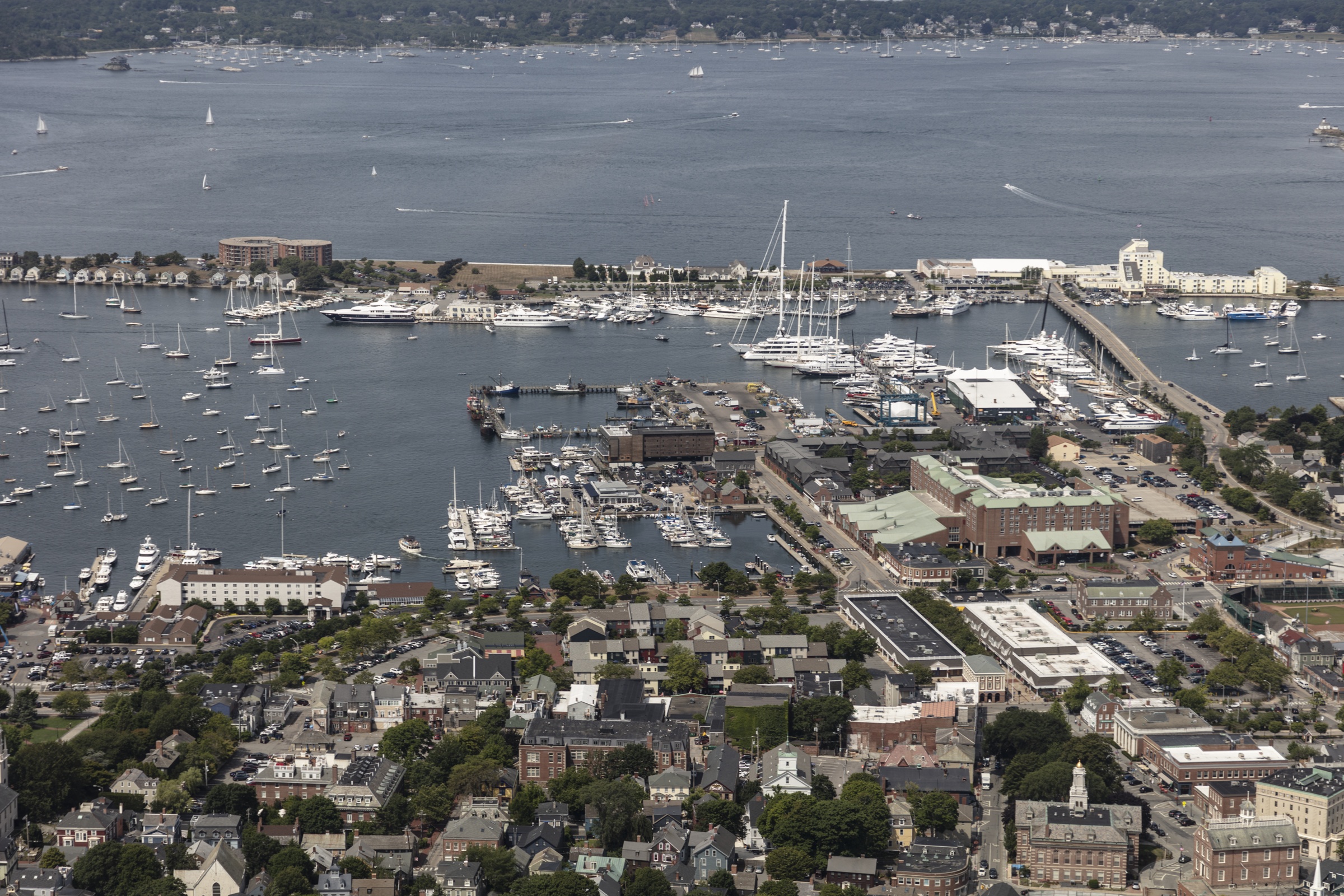
Photo: Photographs in Carol M. Highsmith's America Project in the Carol M. Highsmith Archive / Library of Congress, Prints and Photographs Division, LC-DIG-highsm-52484, July 29, 2018. Public domain. Resized; no crop.
A convention client and a celebration host may both ask for candid photographs, but they may mean different things. One wants to show professional relationships and participation. The other wants to preserve how a gathering felt to people who know one another. I would ask what those pictures need to do before deciding whom to hire.
Rhode Island event photography becomes easier to compare when the brief explains that purpose. A Providence program and a Newport celebration should not receive the same generic plan with a different address. The portfolio evidence, permission questions, and decisions about time should reflect the actual occasion.
This guide uses current operator descriptions of the Rhode Island Convention Center and Rosecliff as hypothetical planning examples. It does not name a ranked roster, advertise jobs, or claim personal shooting history at either property. A real commission needs confirmed booking details and a proposal responsive to them.
Providence: show the program and the people who make it work
The Rhode Island Convention Center's official facility page describes exhibition, ballroom, meeting-room, and pre-function space. It also identifies a connection with the Omni Providence Hotel. Those facts are a starting point for questions, not a complete event map or a crew's access instructions.
Imagine a convention needing presentation coverage, participant interaction, and selected partner photographs. I would ask which story has priority at each point in the schedule. The client's communications team may want something different from the partner-relations contact, and those needs should be reconciled before they reach the photographer.
Use the booked room names and actual diagram. Saying convention center does not explain where the stage faces, which sessions overlap, or how people move between activities. A photographer should review the current program rather than rely on a previous event's arrangement.
A required relationship needs identification
If the client needs certain people together, name them and provide a contact who recognizes them. An unfamiliar photographer cannot infer an organization's leadership from seating or badges. Introductions can make candid coverage more useful without turning the whole event into a posed sequence.
Explain whether the required image is a conversation, presentation, or arranged group. A clear logo photograph may not show the participation a partner expects. A busy crowd may establish atmosphere without identifying anyone. The desired result should guide the photographer's attention.
If a subject is absent, name the person who can decide whether to return or change priorities. Do not leave a crew searching while the main program continues. A missing participant is a planning fact to manage, not a failure the photographer can solve by taking more unrelated frames.
Keep complete coverage distinct from selected visits
A keynote can require an uninterrupted record while breakout sessions need only representative images. State that distinction. If every simultaneous session needs complete coverage, ask what staffing is necessary rather than assume one person can satisfy the requirement through movement alone.
A proposal should identify what is included, what is sampled, and what remains conditional. The organizer can then compare realistic services. Two bids should not be treated as equivalent when one assumes occasional room visits and another includes dedicated coverage.
For restricted content, identify the practical boundary. The photographer should know whether images may be made, privately delivered, or publicly released. Those are different decisions, and a convention ticket does not settle them all.
The hotel connection does not expand the commission automatically
RICC's page describes its connection with the Omni. That does not mean a crew commissioned in the convention center may use hotel rooms, corridors, or meeting areas without confirmation. If the event includes hotel functions, identify them in the scope and obtain the relevant instructions.
A planned portrait there needs an approved location and a schedule. The photographer should explain equipment and how much roaming coverage one person can provide while the setup is active. A fixed portrait station cannot be treated as an invisible addition to continuous event coverage.
Confirm the reporting point and authorized movement route. An appealing connection on a public page is not an equipment instruction. Mark an unresolved route honestly instead of inventing one that looks convenient and ready to follow.
Newport: preserve the relationships within the celebration
The Newport Mansions' official events page describes Rosecliff's Ballroom, adjacent Salon, and Dining Room uses, along with its oceanfront setting and architectural features. This guide does not reproduce capacities, rankings, or rental conditions. The host still needs to confirm the spaces and instructions for the actual booking.
For a hypothetical celebration, I would ask who the event brings together and what the host wants remembered. A room can be visually striking without explaining those relationships. The photographer should understand the essential people before treating the architecture as the main story.
A celebration may include candid gathering, formal groups, and a scheduled presentation or toast. Put those on a timeline and name what cannot be missed. Otherwise the photographer can be called away for an optional portrait during the moment that mattered most.
Give formal groups a finite plan
Choose the required combinations and a person who can gather participants. A photographer can arrange the group and watch expressions, but may not know which family member or colleague has not arrived. The host's recognition is part of the production.
Discuss how much time the requested combinations take from observation. A long portrait sequence and continuous candid coverage may need different staffing or scheduling. Calling each additional group a quick picture does not remove that tradeoff.
If someone does not want public photographs, provide the instruction respectfully without circulating unnecessary personal reasons. A practical signal or contact can help the crew follow the boundary. The client should distinguish a private participant record from a public promotional selection.
Architecture should support the people, not replace them
Rosecliff's operator page can prompt ideas about setting and backgrounds. Those ideas still require approval. A staircase or room mentioned publicly is not a guarantee that it is available for a portrait at the desired moment or suitable for a proposed equipment setup.
Ask for the booked spaces and the current working rules through the host. Historic surroundings deserve a plan that respects the operator's instructions. Do not invent a blanket rule for all Newport properties or assume a previous event's permission transfers to a new booking.
For an essential group, agree on an alternative approved position. If the purpose is preserving the people together, a background change should not erase that goal. A clear hierarchy makes adaptation easier than a promise tied entirely to a specific location.
A room transition can become a missed moment
The operator distinguishes the Ballroom, Salon, and Dining Room. The host should explain how the actual program uses them. A photographer needs to know where guests go, what happens during the move, and whether any required activity begins before everyone arrives.
If a toast starts while a group is still being arranged elsewhere, identify who can decide the priority. The photographer should not have to choose between conflicting directions from different guests without an authorized contact. A simple decision route protects the celebration without making the crew inflexible.
For a surprise or confidential portion, share only the information needed to plan discreetly. The crew may need the timing and participants without every private reason. Keep the instruction tied to the commissioned work rather than distribute sensitive context unnecessarily.
Review two different kinds of complete story
For Providence, I would look for a permitted convention set that connects presentation, audience, interaction, and setting. For Newport, I would examine a celebration sequence including important relationships and groups. A portfolio of striking room photographs alone does not demonstrate either full service.
Consistency matters across the gallery. Can you follow the occasion? Are required subjects present? Do less dramatic moments remain technically usable and meaningful? A highlight reel shows selected ability; a complete authorized example helps test sustained coverage.
Exact property history is not the only evidence of fit. A photographer new to the room can prepare carefully using current material and organizer instructions. A familiar photographer can still rely on a stale assumption. Ask how the applicant will verify the arrangement for this event.
Clarify who did what
If an example was made by a crew, understand the applicant's contribution. An additional photographer may have handled excellent guest coverage while someone else managed the program and final selection. Labeling the role accurately makes the evidence easier to use.
Ask which photographer and crew will attend the proposed assignment. If that differs from the portfolio's primary author, review relevant work and responsibilities. The client should not find out on arrival that the evidence used to choose the service belongs to someone who is not participating.
Respect confidential galleries during review. An authorized alternative can help demonstrate fit without exposing a previous client's private participants or internal presentation. The way someone handles that boundary is relevant to how your own images may be treated.
Compare the decisions inside each proposal
Read coverage, spaces, crew, formal groups, editing, delivery, and image uses. Similar headline language can conceal different services. A reception-only proposal is not equivalent to one that includes portraits, a presentation, and simultaneous-room coverage.
Ask for assumptions and exclusions in ordinary language. If the plan depends on a portrait area, subject availability, credential, or gathering contact, the organizer should see that condition. It can be resolved before booking rather than become an argument during the event.
If new requests arise, name the person authorized to decide. A guest or another department may request something reasonable while lacking authority to redirect commissioned coverage. The photographer should explain what changes and seek a decision through the agreed contact.
Requirements come from the actual property and program
Obtain current access instructions and permitted positions. A public address, attendee invitation, or familiar building connection does not necessarily grant working access. Do not infer backstage, service, or equipment permissions from a rental description.
If insurance or credentials are required, get the specifications and confirm that the proposed crew meets them. Portfolio quality or a marketplace listing cannot prove compliance. One property's requirements should not become a statewide Rhode Island rule.
For another venue or additional function, create its own location and scope note. Do not assume an event in the same region needs no further planning. Actual addresses, arrival needs, and the confirmed schedule should guide the proposal.
Agree on who can use the photographs
An organizer may want internal records, public announcements, participant sharing, partner distribution, or advertising. State those intended uses. Receiving files alone does not define every right or audience. The agreement should explain what the client is actually commissioning.
If review is needed, identify the reviewer and the question being decided. Names verification, confidential-content review, and public selection are different tasks. The photographer needs a practical route for images that should wait rather than guess at organizational policy.
Discuss the photographer's promotional use separately. A private delivery does not necessarily authorize a portfolio post. Obtain whatever approval the agreement requires, and preserve restrictions on other people's material even after the event has ended.
Photographers: respond to the occasion, not the state label
For the Providence example, I would show relevant convention work and identify any overlap among required moments. For the Newport celebration, I would show relationships, groups, and observation, then ask how the host wants those balanced. Those are different proposals even when one photographer can handle both.
ProShoot's published process describes clients posting jobs, reviewing bids and portfolios, and choosing a photographer. Its photographer process includes applying and presenting work. Use that exchange to make the actual assignment clear. A profile does not establish local history, credentials, or permission at every property.
State availability after reviewing arrival, setup, coverage, and any added function. If a location or right remains unresolved, identify the dependency. An honest condition is better than an unconditional promise built on someone else's unconfirmed decision.
This guide does not infer photography work from tourism, corporate activity, annual festivals, or a supposed seasonal peak. A real job needs a commissioning contact and current scope. The operator sources support facility questions, not guaranteed opportunities.
Recheck the final plan after changes
The last planning conversation can change the photograph more than the first brief. A group may move, a speaker may arrive later, or a room may be assigned to another function. Compare the current program with the working instructions before the event, and update the version the crew will actually use.
For the Providence example, check whether the required partner is still attending and whether session overlaps have changed. For the Newport example, check whether the group contact and participants know the portrait moment. Those are concrete confirmations, not a request to reopen every creative decision.
I would also ask the photographer to acknowledge a change that affects staffing, equipment, or coverage. The organizer should know its consequence while there is time to decide. A revised plan sitting in an unread attachment should not be treated as a settled operational agreement. Keeping one current version helps prevent a carefully prepared crew from following instructions that are no longer true.
Delivery should fit the recipient's next task
A convention team may need presentations and partner interactions easy to find. A celebration host may need formal groups separated from the candid story. Ask what the recipient will do next and agree on an organization that supports it rather than send an unexplained collection.
If captions or identities are included, designate a source and reviewer. The photographer should not guess names, titles, or relationships from memory. A reliable organizing contact should verify those facts and settle corrections.
Agree on delivery and any earlier selection separately. Images requested during the program may affect coverage and review. Describe the work explicitly instead of letting a casual request for quick pictures become an unlimited parallel service.
Use actual storage and file-access terms. Identify files awaiting approval and explain material gaps caused by absent subjects or canceled segments. Before closing, reconcile the delivery with the agreed essentials so the client does not have to audit every image to discover what remains unresolved.
Choose a clear fit for the gathering
Providence's convention example needs program priorities and relationships understood. Newport's celebration example needs people protected within a distinctive setting. The photographer's relevant complete work and practical questions should make those differences visible.
Whether you are hiring through ProShoot or applying there, begin with the actual program, audiences, and permissions. I would choose the person whose plan serves that occasion rather than someone offering the same unlimited promise for every event in Rhode Island.
Distinguish a relationship picture from a guest record
For the hypothetical Newport celebration, ask why two people need to appear together. Is the client documenting a specific relationship, making a required announcement image, or simply including guests in the record? The answer can change whether an introduction, arranged pause, or candid observation is appropriate.
A photographer unfamiliar with the group needs someone who can identify the people and explain the practical requirement. They do not need private background unrelated to making the picture. Keep the instruction limited to the actual task and any publication boundary.
Apply the same test to the Providence program: a participant image should have a reason beyond proving that a room was occupied. The client may need facilitation, response, or a required person. Naming that purpose helps the crew make useful pictures without manufacturing interactions. It also prevents a final review from treating an attractive candid image as a substitute for an agreed identifying portrait, or an identifying portrait as proof that the broader program story was covered.
Sources checked November 6, 2026
- https://www.riconvention.com/about
- https://www.newportmansions.org/museum-rentals-weddings/
- https://proshoot.io/how-it-works/
Ready to hire a professional photographer?
Post your job free and get bids from photographers near you.
Post a Job Free →