Top Event Photographers in Oregon
Find an Oregon event photographer with a brief tailored to Portland conventions, Eugene meetings, or a Bend retreat. Practical guidance for hiring and applying.
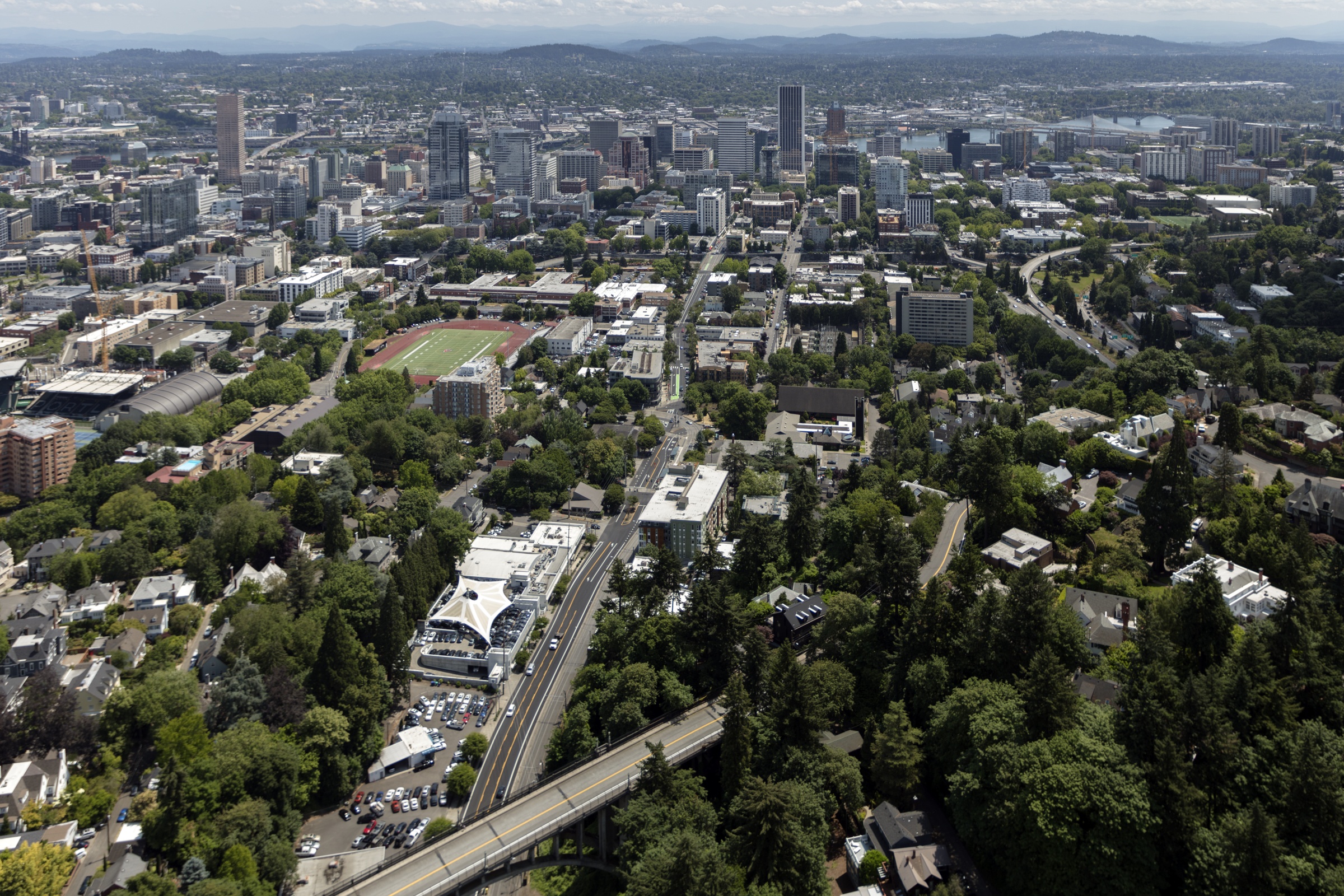
Photo: Carol M. Highsmith / Library of Congress, Prints and Photographs Division, LC-DIG-highsm-51165, June 5, 2018. Public domain. Resized; no crop.
When an Oregon organizer asks for event photography, I want to know whether the pictures need to document a program, identify people, or explain a gathering's setting. Most assignments need a combination. The useful hiring conversation decides how those purposes fit the actual schedule instead of treating them as an unlimited list.
Portland convention coverage, a Eugene meeting with portraits, and a Bend retreat give three different examples. I use them as hypothetical planning exercises, not personal shooting stories or claims that an event is hiring. The venue descriptions come from current operator pages checked for this guide.
I would not choose a named photographer from a title alone. I would compare relevant complete work and a proposal that responds to the actual brief. The questions below help an organizer make that comparison and help a photographer explain a response that does not sound interchangeable with every other application.
Portland: keep the convention story from becoming a room tour
The Oregon Convention Center's official Explore OCC page identifies Oregon Ballroom and Portland Ballroom with their lobby areas, exhibit halls, meeting rooms, suites, and outdoor plazas. It distinguishes North meeting rooms associated with ABC from South rooms associated with DEF. Those names help make a brief precise.
They are not, by themselves, a photography assignment. An organizer should name the booked spaces and explain what happens in each. A photographer who visits every room without understanding the program can still return a gallery that misses the relationships and moments the client needed.
For a sample association conference, I would identify an opening presentation, selected exhibit interaction, a required leadership group, and networking priorities. Each should have a purpose and an owner on the organizing team. This is a planning example, not a claim that every Portland conference needs the same set.
Follow the people whose presence matters
If leadership needs to appear together, give that group a moment when the people are available and assign someone to gather them. A photographer can direct a group without knowing the organization's full roster. The client should provide that recognition rather than expect the crew to identify everyone from a list.
For networking, tell the photographer which introductions or relationships matter. A general instruction to show atmosphere can lead to useful candid images while still missing a particular sponsor or guest. If that person is essential, name the request and provide a contact who can help.
I would avoid treating every attendee as a mandatory individual subject unless that is truly the commissioned work. A manageable priority list gives the photographer room to observe. An exhaustive list with no hierarchy can turn a conference story into a search exercise that competes with the program.
Work from the event layout, not the public gallery
The operator's page identifies spaces and features, but the current stage, seating, displays, and routes need the organizer's approved plan. A photograph of an open ballroom does not establish the arrangement after partitions and production are installed. Ask about the actual setup before promising a view.
The same applies to suites and plazas. Their presence on a public page does not mean they are included in the booking. If a client wants a portrait elsewhere on campus, confirm permission and location. A venue description is a source of questions, not an access credential.
If required sessions overlap, discuss priorities or staffing. A person cannot provide complete simultaneous coverage in separate rooms simply because they share a convention building. A proposal should expose that choice while the organizer can still make it.
Eugene: portraits change the meeting assignment
Hilton's official Graduate by Hilton Eugene events page describes ballrooms, boardrooms, and breakout spaces. Its room table identifies Vistas Ballroom and Rooftop Deck among the named options. A brief should specify the actually booked rooms rather than assume the hotel name tells the photographer everything needed.
Imagine a company meeting where several participants also need portraits. I would begin with the portrait roster, the intended look, and when each person can leave the meeting. A portrait request is not a small detail if it requires the same photographer to stop documenting the program elsewhere.
Ask whether the meeting needs a complete sequence or only a few contextual frames. If the client wants both uninterrupted coverage and an individual portrait session, the proposal needs a schedule or staffing decision. Calling the job event photography does not remove the difference between those tasks.
A roster is a production tool
I would ask the company to assign someone who gathers participants and verifies names. The photographer should not repeatedly leave a prepared setup to search for people they have never met. Clear participant flow can make the portraits more consistent and leave more time for the meeting record.
The intended use should guide the portrait brief. Are these internal profiles, public staff introductions, partner materials, or something else? If the company needs consistency with existing images, provide authorized examples before the event. A requirement introduced after the shoot cannot guide the work already made.
I would ask the photographer to explain the space needed for the proposed setup. A backdrop or light still occupies a working position even when it is easy to carry. The organizer must confirm a location compatible with circulation and the meeting's production plan.
A rooftop reference needs confirmation
Vistas Ballroom and Rooftop Deck appearing in Hilton's room table does not establish that the client has booked both or that an outdoor portrait is permitted. Confirm the assigned space and an alternative before writing a specific background into the plan.
Keep the deliverable's purpose clear. If the essential result is a consistent portrait of each participant, a location change should not automatically become a failed assignment. The photographer and organizer can choose another suitable position when they agree on the goal rather than only the scenery.
For private meeting content, ask how restricted screens or discussions will be identified. A hotel setting does not establish publication permission. The commissioning organization needs to explain the intended uses and the review route for anything that should wait.
Bend: distinguish the retreat record from the setting photographs
Riverhouse Lodge's official conference-center page describes flexible indoor and outdoor event space along the Deschutes River in Bend. It also provides a separate address for conference and event deliveries. Those facts help frame questions about the actual booking without establishing a crew's access or the room configuration.
For a hypothetical retreat, I would ask which parts are work sessions, which are social, and which photographs the organizer needs afterward. The setting may matter, but it should not swallow the purpose of the gathering. A scenic view is not a substitute for the people and decisions the client wants documented.
Ask whether the photographer is expected to observe discussions, arrange groups, or make portraits. Participants need to understand any planned interruption. A photographer should not have to negotiate a formal group in the middle of a discussion because the request never reached the people involved.
Plan the informal portion deliberately
A retreat reception can be informal for guests while still needing an organized photography brief. Identify the required people, explain whether posed groups are welcome, and name the contact who can make introductions. The photographer can then observe without guessing which relationships are important.
If outdoor coverage is planned, confirm the actual area and permission. A venue description of riverside space does not give an outside crew unrestricted use of adjacent property. Identify an indoor alternative for required images and the person who can change the plan.
I would also ask how private conversations are treated. A retreat may include moments the client does not want documented or published. Describe those boundaries practically and provide a contact for uncertainty instead of assuming the photographer can read the organization's expectations from the room.
A delivery address is not a personal access authorization
The operator publishes conference and event delivery information. A photography crew should still obtain assigned arrival instructions from the organizer. Equipment access, reporting points, and working windows need confirmation for the actual event.
Tell the organizer what is coming. One person carrying cameras and a crew with additional lighting or a portrait setup can have different needs. Do not direct the crew into a service area simply because an address appears on a public page. Use the venue information to ask the right question, then follow the confirmed arrangement.
For an additional property or another town, create separate instructions. Portland's convention page cannot establish Bend access, and a Bend delivery note cannot settle a Eugene meeting. Work from actual locations and timing rather than a generic statewide travel estimate.
Match the portfolio evidence to the three assignments
For Portland, I would review a complete sequence containing presentations, exhibit interaction, networking, and required groups. Look for a gallery that explains the program rather than repeats one attractive stage angle. Consistent coverage matters more than the number of variations in a delivered set.
For Eugene, I would examine portrait consistency and the meeting record together. Can the photographer show both kinds of work and explain how the schedule was managed? A strong portrait alone does not demonstrate that important meeting moments will remain covered.
For Bend, I would look at people within a setting, comfortable group direction, and unobtrusive coverage of a gathering. Scenic images can support that evidence without replacing it. Ask how the photographer kept the program's purpose visible rather than turning the event into a landscape session.
Ask what role the photographer held
An additional photographer may have made excellent guest images while another person managed the presentation and delivery. That is valid experience when labeled accurately. It should not be presented as responsibility for an entire assignment if the person only handled one part.
I would not require exact venue history. Someone new to a room can prepare with current plans and instructions. Someone familiar with it can still rely on outdated assumptions. The quality of the proposal's preparation is stronger evidence than a broad claim to know every Oregon event venue.
Keep portfolio review authorized. If a project is private, ask for another permitted example or an agreed review arrangement. An earlier client's restricted event should not become public material merely because a new prospect wants evidence. That respect tells the next client something useful about trust.
Read the proposed scope as a set of choices
Check the program segments, rooms, staffing, equipment, editing, delivery, and image uses. Two proposals can sound similar while including different work. A headline total or image count does not reveal whether the portraits, leadership group, or reception are included.
I would ask the photographer to name assumptions and exclusions. If the plan depends on a room, credential, roster, or approved position, state that. The organizer can settle the condition before booking rather than discover a hidden dependency when the event starts.
Identify one person who may approve additions during the program. A guest requesting a portrait or another department requesting a meeting record does not necessarily have authority to redirect coverage. A clear decision-maker protects the commission without making the crew seem unhelpful.
Discuss how a new reception, another property, or a longer program changes the assignment. The point is a shared decision, not an automatic yes or no to every request. Put the change into the scope rather than let the two sides carry different assumptions.
Rights follow uses, not the event label
Say whether the photographs are for internal records, public communications, press, partner material, or advertising. Receiving files is not a complete description of permitted use. The agreement should identify the audience and rights the client actually needs.
If review is required, name the reviewer and the question they decide. Is it participant identification, confidential material, or another restriction? The photographer needs a clear route for uncertain images and an answer about what happens when the reviewer is not available.
The photographer's own promotional use should be discussed separately. A client accepting a private gallery has not necessarily approved a public portfolio post. Obtain the permission the agreement requires before sharing, not after someone notices their internal meeting online.
Prepare the administrative part without inventing universal rules
If the venue requires insurance documentation, obtain its current specifications and ask whether the proposed photographer and crew meet them. A good portfolio does not prove a policy, and a certificate used at one property may not satisfy another request. Keep the check tied to this actual booking.
Confirm the equipment position and arrival route. A light, stand, or backdrop still takes space and may affect circulation. Portable is not the same as unrestricted. The client should also understand that a fixed portrait station changes how much roaming coverage one photographer can provide.
A practical crew note should contain the confirmed reporting point, contact, arrival window, and equipment instructions. An attendee invitation may not include those. Mark unknown details honestly rather than invent a convenient entrance or transfer time that appears ready to follow.
References can help test whether the photographer handles such details well. Ask a former client about one schedule change or added request. Did the photographer communicate in time for the organizer to choose? You do not need private guest details to learn whether the working relationship was reliable.
Photographers: write to the actual Oregon inquiry
For Portland, I would lead with relevant conference work and identify any overlap in essential moments. For Eugene, I would address the portrait roster and its effect on meeting coverage. For Bend, I would ask how work sessions, social time, and setting images relate. Those are different applications even when the same person can do the work.
ProShoot's published client workflow describes posting jobs, comparing bids and portfolios, and choosing a photographer. Its photographer process includes applying and presenting work. Use those steps to make the specific commission understandable. A profile does not by itself establish credentials, insurance, access, or personal venue history.
Be precise about availability. Check the actual location, arrival needs, coverage window, and additional functions. A short program may still require preparation and setup. Another town or property cannot be added on the assumption that it is a minor extension without reviewing the schedule.
A clear question can be stronger than a generic promise. If a room or permission remains open, explain what depends on the answer. The organizer can then compare realistic proposals rather than choose between offers built on different hidden assumptions.
Make delivery useful to the person who receives it
The Portland organizer may need session and sponsor images easy to find. The Eugene company may need portraits identified separately from the meeting story. The Bend team may want a chronological record with approved public selections. Discuss the structure that supports the actual next task rather than assume one undivided gallery fits everyone.
If names and captions are included, identify who verifies spelling, titles, and affiliations. The photographer should not guess those facts from a partly visible badge or memory. The organizing team needs to provide a reliable source for the final record.
Agree on a delivery date and any earlier selection separately. If images are needed while the event continues, describe the review route and effect of editing on coverage. A casual request for quick pictures should not become an unlimited live-editing obligation hidden inside a photography job.
State file-access and storage terms actually offered. Do not promise permanent availability unless it is part of the service. Finishing cleanly means the client knows where the agreed files are, which await approval, and how to request a factual correction.
Choose a clear program over a statewide promise
The facility sources do not establish company spending, festival recurrence, seasonal demand, or a stream of open photography jobs. I would not use those claims to decide whom to hire. The useful evidence is relevant complete work and a plan grounded in the event being commissioned.
Portland, Eugene, and Bend illustrate why the questions should change. A convention story, a portrait-and-meeting assignment, and a retreat record have different failure points. Whether you are posting through ProShoot or applying there, make those differences visible. A precise agreement gives both sides a better starting point than a promise to capture everything across Oregon.
Sources checked November 6, 2026
- https://www.oregoncc.org/plan/explore-occ
- https://www.hilton.com/en/hotels/euggegu-graduate-eugene/events/
- https://www.riverhouse.com/meetings/convention-center/
- https://proshoot.io/how-it-works/
Ready to hire a professional photographer?
Post your job free and get bids from photographers near you.
Post a Job Free →