Top Event Photographers in North Carolina
Hiring guidance and photography job advice for North Carolina clients and photographers.
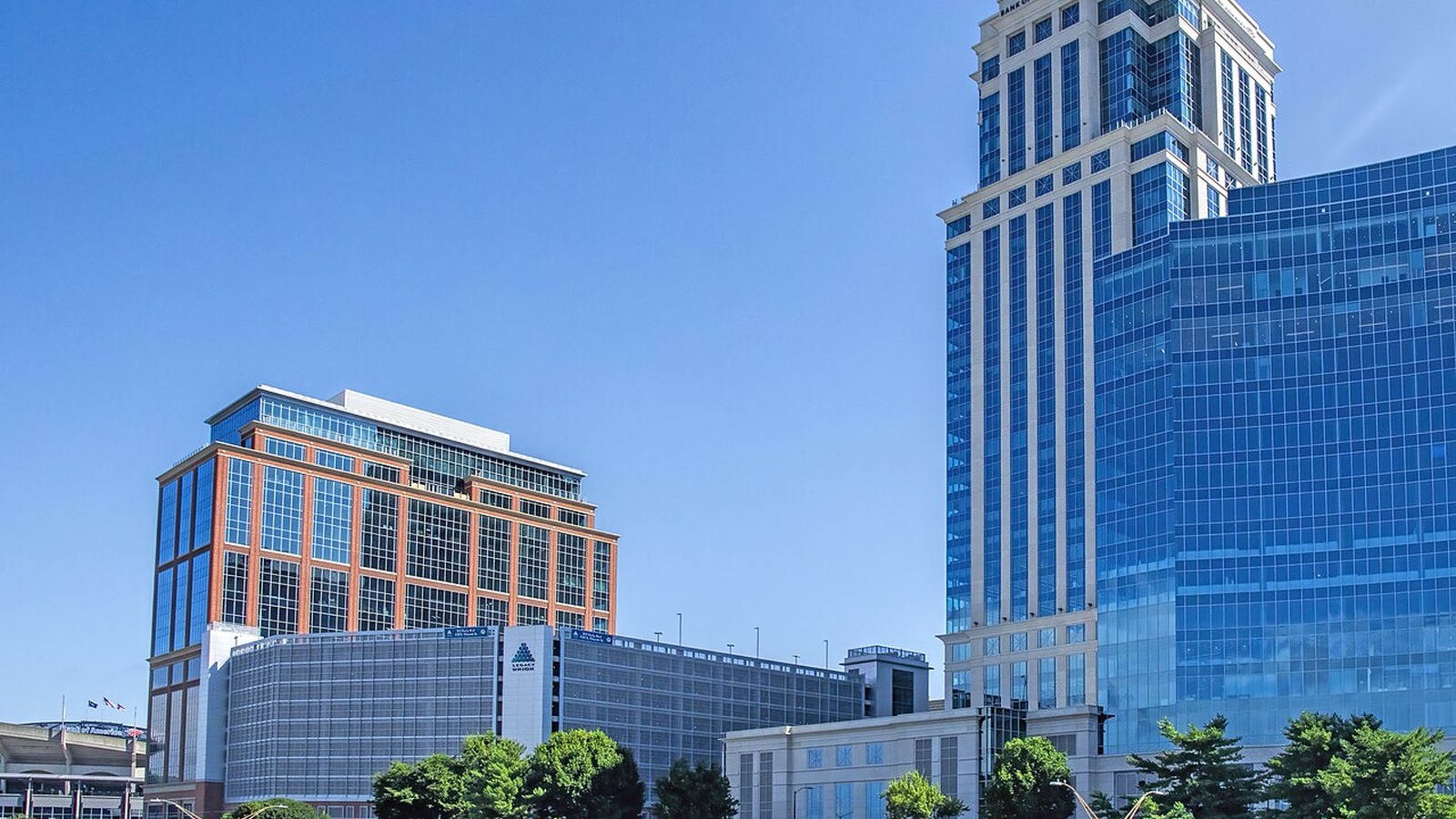
Photo: Bruce Emmerling / Wikimedia Commons. CC BY-SA 4.0. Cropped and resized.

The organizer and photographer need to be solving the same problem
An event brief can sound clear while leaving the client and photographer with two different pictures in their heads. The organizer imagines a complete record of a company gathering. The photographer imagines a roaming assignment in the main room. Nobody has discussed the portraits upstairs or the simultaneous workshop.
I would close that gap before hiring an event photographer in North Carolina. The way to do it is to work through the assignment from both sides. What does the organizer need to use afterward? What does the photographer need in order to make those photographs?
This guide follows several hypothetical North Carolina assignments. Charlotte, Raleigh, Durham, the Triad, Asheville and Wilmington are not interchangeable locations. The examples are planning exercises, not claims about jobs I have shot. They are a way to make a proposal concrete for clients and for photographers looking for work.
Charlotte: the sales meeting that becomes three assignments
Imagine a company bringing employees to Charlotte for a meeting. The original request is for meeting photographs. Later, somebody adds executive portraits and a customer reception. I would stop calling it one simple event and describe the three parts separately.
The meeting might need stage coverage, audience reactions and photographs of colleagues together. The portraits might need a consistent background and a selection process. The reception might need documentary coverage with a few arranged groups. The client should say which outputs matter and who will use each one.
From the photographer's side, those requests create scheduling questions. Can a portrait setup stay in place while meeting coverage continues? Will the same person photograph both? Is there a break long enough to move equipment? The answers affect the proposed plan, not merely the amount of energy the photographer brings.
A useful client response is to provide the actual program and identify flexible activities. Perhaps the portraits can happen before the meeting. Perhaps the reception begins while the main session is still running. Mark that overlap honestly and ask the photographer what coverage is possible under the proposed staffing.
If the Charlotte Convention Center is involved, consult the operator's current site for facility information and get assignment-specific access from the event team. A building description does not establish where this photographer can go or when they may enter. The event contact should confirm those details before arrival.
What the Charlotte buyer should ask to see
I would ask for a relevant delivered gallery, shared with permission, and a portrait set if portraits are part of the brief. A collection of attractive individual photographs does not answer whether the photographer can deliver a consistent company portrait series and a coherent meeting story.
Read the event sequence from beginning to end. Do the images show the people and activities the buyer is likely to need? Are there useful ordinary moments between stage highlights? Ask what the photographer was assigned on that earlier job so you do not judge them against a request that was never made.
For portraits, compare several people rather than one favorite frame. Look at framing, background and the edit across the set. Explain whether the company needs to match existing photographs or can adopt a new look. That decision belongs in the conversation before a setup is proposed.
Photographers can make this easier by presenting the examples separately and explaining why each is relevant. Do not bury the portrait evidence inside a conference gallery and expect the client to find it. A buyer should be able to connect each part of the proposed assignment with work they can actually assess.
Raleigh and Durham: a demonstration with a boundary
Consider a private professional event split between a Raleigh presentation and a Durham demonstration. The organizer may want a story about ideas becoming practical work. The photographer needs more than two addresses to understand that story.
Ask what the demonstration is meant to show and which moments are likely to explain it. Will someone introduce a tool, guide participants through a process or discuss a result? The organizer can identify the steps without staging a false version for the camera. The photographs should record the activity that actually takes place.
Then define what is outside the assignment. Screens, technical documents, personal records or unfinished material may not be appropriate for distribution. An invitation into a room does not give a photographer authority to publish everything visible there. Assign an authorized contact who can clarify the boundary.
From the photographer's side, ask about positions and movement. Where can they work without obstructing a demonstration? Are there safety or equipment restrictions? Get the current instructions from the relevant operator or organizer. Do not rely on a general rule about what similar venues allow.
If the two locations are on the same day, put the move in the program. Include the end of coverage at the first address, equipment packing and the start expected at the next. A travel estimate alone does not describe the complete transition. The organizer and photographer should agree on where any gap occurs.
Give the communications team an actual role
For the Raleigh-Durham example, I would want the communications team to describe the intended audience. An internal explanation of a demonstration may need different photographs from a public announcement. The photographer should understand the distinction before deciding what to emphasize.
If captions need technical accuracy, choose someone qualified to check the wording. The photographer should not infer what a device does or invent a description from a brief conversation. Ask for approved terminology and a way to flag images that need additional review under the agreement.
A client can also identify a few photographs that would be useful in a future layout. Perhaps an image needs context around the activity rather than a very tight crop. Give the photographer the purpose, while leaving room for them to work within the actual space and conditions.
For photographers, show a portfolio sequence that explains a process. A detail picture becomes more useful when paired with the person doing the work and the environment around it. The buyer needs to see that you can help an unfamiliar viewer understand the activity, not only make an object look attractive.
Greensboro and Winston-Salem: the multi-room association day
Imagine an association program in the Triad with a main presentation, two workshops and an awards segment. The client asks for full coverage. I would ask them to define that phrase before choosing a crew.
Does each workshop need a complete visual account? Is a short visit sufficient? Are the rooms active at the same time? A schedule with room names will answer more than the event's attendance number. The photographer needs to know where essential moments overlap.
The organizer can rank priorities. The awards segment might be fixed, while room details can happen earlier. A planned group photograph may be movable. If equal coverage of simultaneous sessions is necessary, ask for a staffing proposal that explains how the work is divided.
From the photographer's side, be clear about the role of each proposed person. A team should have assignments and a coordinated delivery plan. The client should not assume that adding another camera creates equal coverage of every room without any discussion of responsibilities.
For an awards segment, coordinate the photograph itself. Where do recipients pause? Who gathers them? Who checks names? A brief rehearsal or instruction from the stage contact can help when appropriate. The photographer should not be expected to interrupt the program to arrange each handshake after it has already happened.
A useful limit is better than an impossible promise
If I were the client, I would ask the photographer to identify the weakest part of the proposed coverage plan. That is a practical question, not a trap. It gives the organizer a chance to change something while there is still time.
If I were the photographer, I would name the limit plainly. One person covering the stage cannot promise to be in a distant workshop at the same instant. A portrait station cannot remain staffed while its only photographer works elsewhere. Explain the consequence and offer a workable alternative when one exists.
A client can compare proposals fairly only when those assumptions are visible. A single-photographer proposal and a team proposal may cover different assignments. Send the same program to each candidate and ask what is included, excluded or dependent on unresolved information.
Do not confuse a more detailed proposal with a guarantee that nothing changes. Events change. The point is to understand how the plan responds, who can approve revisions and how the crew receives them. That is more useful than pretending the original schedule will remain untouched.
Asheville: an outdoor idea needs a second location
For a hypothetical Asheville retreat, the organizer might want an outdoor team photograph followed by indoor meeting coverage. I would ask where the portrait will happen, who controls the space and what the alternative is if conditions make it unsuitable.
Check the current forecast and operator instructions near the date. A general description of mountain weather is not enough to decide what will happen at a particular event. Name the person authorized to move the activity and a way to reach the photographer with the decision.
The alternative room needs to be usable for the intended group. If the indoor space is smaller or has a different background, the photograph may need a different arrangement. Give the photographer enough notice to evaluate it rather than bringing everybody into the room and asking for the original plan unchanged.
Access questions apply outdoors too. Confirm any current permission requirements for the chosen place, equipment and group activity. A location being attractive or publicly visible does not settle those questions. Get the answer from the party controlling the site.
For photographers seeking retreat work, show how you cover a group and its activities across a sequence. An outdoor landscape is not evidence that you can organize a team portrait. A useful portfolio connects people, setting and the actual purpose of the gathering.
Wilmington: a reception is not an attendance record
For a hypothetical Wilmington reception, the organizer may want natural photographs of people talking. That is a reasonable brief, but it is different from a requirement to photograph every attendee. Decide which result is needed before judging a portfolio or accepting a proposal.
If certain groups must appear, plan them. Give a coordinator the names and a time to gather people. The photographer can arrange the frame, but should not have to infer relationships or search the entire event for a person they cannot identify.
If the event has a short program, let the photographer know when it starts and who controls changes. A speech can begin while the crew is photographing a requested group elsewhere. One contact with the current timeline helps prevent competing instructions.
The client should explain any restrictions on who may be photographed or where images may go. Keep private reasons private when they are not needed to carry out the instruction. The photographer needs a workable boundary, not unnecessary personal information about guests.
For portfolio review, look at whether a reception gallery feels coherent and useful. Are there conversations, context and expressions? If the desired result includes posed groups, ask to see that work too. The right balance depends on the commission, not an absolute rule about how all receptions should be photographed.
The proposal should finish the conversation, not restart it
Before accepting a photographer, put the settled details together. The document should name the date, addresses, coverage window, staffing, responsible contact and agreed outputs. If a detail remains uncertain, mark it rather than hiding it in broad wording.
Delivery needs a clear recipient, method, file format and deadline. A separate early edit, if requested and agreed, should be distinguished from the complete gallery. Do not assume event-time editing is included merely because someone would find it useful during the program.
Image use should describe the actual plan. Internal communication, public promotion, advertising and distribution to partners are not automatically the same request. Discuss the intended uses and seek qualified advice for important rights or contract questions under the applicable jurisdiction and facts.
Decide how changes are approved. Who can extend coverage, request a new location or authorize an additional deliverable? Record material revisions so the organizer and photographer are working from the same scope. A guest's request should not silently become a binding instruction from the client.
After delivery, route feedback through one person. Specify an incorrect name, a missing agreed item or a requested adjustment separately. That gives the photographer a clear response to make and gives the client a way to know when the work is complete.
For North Carolina photographers: sell a method the buyer can see
When responding to an event lead, I would choose the relevant evidence before writing the introduction. Show a workshop sequence for a workshop, a conference story for a conference and a consistent portrait set for portraits. A buyer should not have to imagine how unrelated work might translate.
Address the location honestly. State where you are based and ask about travel when needed. North Carolina contains distinct assignments, not one continuous local service area. A willingness to travel is useful; an unsupported implication that every city is next door is not.
Ask questions tied to the brief. If the program has simultaneous sessions, discuss priorities. If there is a demonstration, ask about approved access and content. If portraits are added, ask about numbers and scheduling. Specific preparation is a stronger pitch than a long list of adjectives.
Use ProShoot's current how-it-works page to understand the platform process if that is your starting route. This guide does not promise a particular account feature, available photographer or outcome. The introduction still needs to become a clear assignment agreed by the actual parties.
What I would want at the end
The client should know what the photographer will cover and receive. The photographer should know what the client considers essential and who can make decisions. Neither should have to reconstruct the assignment from a memory of several casual conversations.
Keep one current brief and make material updates visible. Then allow the photographer to observe and work within those priorities. The goal is a useful North Carolina event gallery, made under a plan both sides could explain before the first guest arrived.
Before the final yes, test one difficult moment
Ask the candidate to walk through the most constrained part of your day. It might be the transition between the Raleigh presentation and Durham demonstration, the overlapping Triad workshops or the Asheville portrait moving indoors. Listen for the information they need and the choices they would ask you to make.
A useful answer does not have to sound impressive. It should make the dependencies visible. If a group photograph needs participants gathered on time, say who gathers them. If access to a demonstration is pending, identify who confirms it. If a room is unavailable until later, do not pretend it is part of the original setup window.
Photographers can ask a corresponding question: which missing image would cause the organizer the most trouble afterward? The answer may reveal a priority the shot list did not express. Put that priority in the brief and consider whether the proposed plan actually protects it.
Then compare the evidence with the promise. Does the relevant gallery show the kind of work being proposed? Does the schedule support the coverage? Are the delivery terms clear? Those checks turn a general impression into a decision about this assignment.
If something remains unresolved, name it. A pending answer is better than a confident assumption that the client will have to notice and correct later.
Sources checked November 6, 2026
Ready to hire a professional photographer?
Post your job free and get bids from photographers near you.
Post a Job Free →