Top Event Photographers in New Orleans
Plan New Orleans event photography for a program with several kinds of gathering. Great Hall, theater, and ballroom examples for hiring and applications.
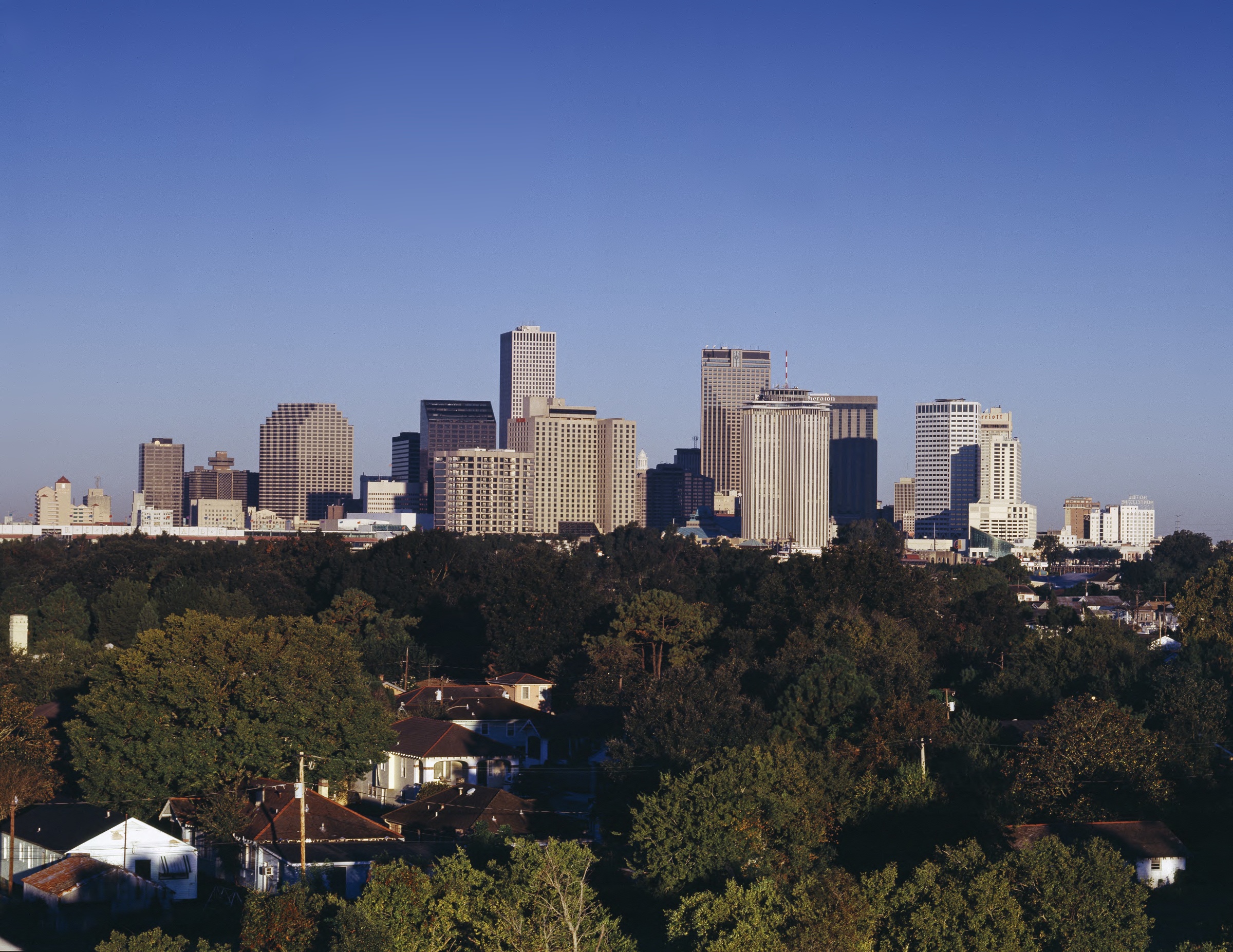
Photo: Carol M. Highsmith / Library of Congress. No known restrictions on publication. Photographs in the Carol M. Highsmith Archive, Library of Congress, Prints and Photographs Division. Resized; no crop.
An event can have several centers of attention. The audience watches a speaker, guests gather around a host, and another group starts preparing for a portrait. I would ask a New Orleans organizer where the photographic attention should stay when those centers compete.
That question does not reduce the event to a rigid list. It gives the photographer enough direction to observe intelligently and gives the client a realistic way to compare proposals. A promise to photograph everything can hide the very choices that determine whether the important record exists.
The convention center's official Special Spaces page provides the facility context below. The programs are hypothetical, not job advertisements or accounts of my own shoots. This guide helps clients hire and photographers respond to the actual gathering without presenting a ranked roster or leaning on broad claims about the city's culture and demand.
Imagine an event with three centers of attention
Suppose an organization commissions a presentation, recognition dinner, and participant gathering. Its public recap needs a coherent story, while an internal team wants required people easy to find. The organizer initially describes it as a single evening of event photography.
I would ask which moments cannot be repeated, which people have limited availability, and what the pictures need to explain. Then I would put those requirements beside the program. The useful plan is not simply more detailed; it makes conflicts visible before they become missed photographs.
A single photographer may be appropriate when the tasks are sequenced. Another person may be needed when complete records overlap. Selected coverage can also be useful if that is what the client agrees to buy. The proposal should state the service honestly rather than leave the definition of complete unresolved.
Center one: the theater program
The New Orleans Ernest N. Morial Convention Center's official page describes the New Orleans Theater as configurable and capable of division into acoustically separate sections. This guide does not reproduce capacities or turn those capabilities into a claim about the client's actual setup.
For the hypothetical presentation, obtain the booked configuration and current production diagram. A theater name alone does not identify the stage direction, permitted camera positions, or movement. The photographer needs the actual program instructions rather than an assumption carried from another event.
Ask what the client wants the presentation record to say. A close speaker image preserves expression. A wider view establishes context. Audience response shows participation. The final set may need all of them without expecting one photograph to do every editorial job.
Protect the part the organizer knows is important
A brief exchange or recognition may matter more than a longer routine segment. Tell the photographer what cannot be missed. The timetable's duration cannot supply that hierarchy on the client's behalf.
If another group requests a portrait during that moment, use the authorized event contact. The photographer should explain what would be displaced and obtain a choice. A confident guest request does not automatically outrank the original commission.
If both requirements are essential at once, change the sequence or discuss another photographer. Fast movement cannot create uninterrupted attention in separate places. A practical limitation stated before booking is more useful than a missing moment explained only at delivery.
A performance or presentation can contain rights held by someone else
The client may commission a record without controlling every use of a performance, film, artwork, or slide. Ask who handles the relevant permission and what the photographer may make or release. Attendance is not a complete answer to every publication question.
If segments are restricted, make the boundary recognizable. Identify when it applies, who signals a change, and who can settle uncertainty. A general request to be discreet is not a working instruction about whether an image may be made or distributed.
The photographer's public promotion is a separate audience from the client's internal record. Discuss that use explicitly and obtain the approval required by the agreement. Restrictions should remain attached to the relevant material after the event ends.
Center two: the recognition gathering
The operator identifies the Great Hall as a ground-floor divisible ballroom near the Julia Street entrance, with pre-function space, Rivergate Room, rooftop terrace, and an indoor balcony among its features. Those distinctions help identify the program's actual locations. They do not authorize a crew to use every feature.
For a hypothetical recognition gathering there, ask which configuration is booked and how the host will run the sequence. If recipients should pause with the presenter, communicate the convention before the first person arrives. A natural handoff and a held presentation portrait require different cooperation.
If the client prefers uninterrupted observation, say that instead. The photographer can follow the exchange and reactions. Neither approach is automatically right for every gathering; the important point is that the host and crew share the intended result.
Make names a verified part of the record
Provide the final recognition order and a factual source for names. If a substitute appears, identify who informs the photographer. An outdated program or partially visible badge should not become the basis for guessing identities.
If captions are included, have the organizing team verify roles and context. A person receiving an object does not establish the reason or title without a reliable source. The words attached to photographs deserve the same accuracy as the visual record.
If some recipients should not appear publicly, share the practical instruction without unnecessary private reasons. The crew may need a clear boundary without learning sensitive personal background. Keep the information proportionate to following the request.
A balcony or terrace is an idea to confirm
The official Great Hall description includes an indoor balcony and rooftop terrace. A client might propose them for setting images or groups. Public availability as a facility feature is not a personal authorization to occupy them during this event.
Confirm the actual booking, position, timing, and permission. If a photograph is essential, agree on an alternative when its purpose can be preserved elsewhere. The people together may matter more than a particular background that nobody has yet approved.
Do not promise the view or working conditions from a room photograph alone. The installed event arrangement and current instructions govern the task. A photographer should describe what their proposed setup needs and what remains conditional.
Center three: the meal and participant conversation
La Nouvelle Orleans Ballroom is described by the operator as a second-level space above Halls E and F, with flexible subdivisions. This guide uses that location and flexibility without copying the page's numerical capacities or differing rounded area totals elsewhere.
For a hypothetical meal function, I would ask whether the client needs candid conversation, selected partner interaction, formal tables, or a mix. A table of guests facing a camera is a different service from observing the relationships around the meal.
The room's use should be described for this booking. A divisible ballroom may host different arrangements, and an empty-room image does not establish where production, service, or photography can occur. Obtain the approved current diagram.
Know which relationship a photograph should preserve
If selected partners or supporters must appear, assign someone who recognizes them and can introduce them. A list of organizations cannot identify unfamiliar faces. The photographer should not infer importance from seating or the size of a sign.
Explain whether the desired result is an actual exchange, an arranged group, or an identifying portrait. A crowd can establish atmosphere while failing to show a required relationship. A clear logo image may document presence without showing participation.
If the subject is absent, name who decides whether to return, use an approved alternative, or move on. An indefinite search should not silently consume the rest of the commission. Honest status lets the organizer choose while options remain.
Formal requests need a finite place in the gathering
Choose essential group combinations and a moment before participants disperse. Assign a gathering contact who knows the roster. The photographer can arrange the group without recognizing everyone, but the organizer needs to identify who is missing.
A single leadership portrait and a sequence of departments create different workloads. Each new combination may sound brief while collectively replacing candid coverage. The proposal should reflect the actual group service instead of treating it as an incidental favor.
If individual portraits are added, define the intended result and any consistency required. Provide authorized references early. A casual introduction image and a matched profile series may need different setups, and a new look introduced after the shoot cannot guide images already made.
Connect the three centers with one working timeline
The theater, recognition, and meal functions may feel like one occasion to guests while creating distinct tasks for a camera team. Put the actual places and essential moments together. Do not assume a transition is free coverage time for a portrait somewhere else.
A fixed portrait station and uninterrupted roaming in another location cannot both be continuously performed by the same person. If the client needs both, the offer should explain sequencing or staffing. Hidden overlap is not solved by a broad label such as full event coverage.
If a location, time, or subject changes, update the version the crew follows. The photographer should acknowledge an effect on coverage, equipment, or staffing. An attachment sent without a shared understanding of its consequence is not a settled operational plan.
Physical access needs the actual event contact
The Great Hall's location near an entrance helps identify it. It does not tell a crew where to report or which route to use with equipment. Get current instructions separately from public visitor information.
Tell the organizer what the proposed crew brings. Cameras carried by one person and a lighting setup with a backdrop can have different practical needs. Portable equipment still occupies working space and needs an approved position.
If insurance or credentials are required, obtain the current specification and confirm the attending crew can satisfy it. A portfolio or marketplace profile cannot prove compliance. One property's request should not become a universal rule for New Orleans venues.
Judge the photographer by the way they connect the story
I would review a permitted complete gallery that moves among comparable program types. Can you follow the occasion beyond its most dramatic images? Are essential subjects present, and do ordinary moments remain usable? The evidence should support the actual balance being commissioned.
Ask which decisions the applicant personally made. A collaborator may have photographed reception guests while another person managed stage continuity and delivery. Accurate attribution makes that experience useful. For the new event, identify the attending crew and the responsibility each owns.
A reference can describe one changed program or added request. Ask whether the photographer raised the consequence while there was time to choose. You do not need private guest details or confidential material to understand that behavior.
Exact venue familiarity is helpful, not final proof
Someone who has worked in a room can still rely on an earlier setup. Someone new to it can prepare carefully with approved plans and instructions. I would assess current verification alongside the portfolio rather than treat past access as permanent permission.
If a full example cannot be shared, use an authorized alternative. A prospective client does not gain a right to see another organization's private program merely by asking. Respect for that boundary may matter to the new client's trust later.
The gallery's volume is not a substitute for its purpose. A larger selection can offer choices, but repeated frames do not repair a missing essential person. Ask how the photographer selects and organizes work so the client can use it rather than inherit the editing problem.
Read the scope for the choices already made
Compare the actual locations, attention levels, crew, groups, portraits, selection, editing, delivery, and uses. A selected recap is different from complete concurrent-session records with a controlled portrait service. Similar descriptions should not conceal different work.
Ask for assumptions and exclusions in ordinary language. If the result depends on a position, credential, participant availability, or gathering contact, make that condition visible. An unresolved fact should not disappear beneath a confident promise because it is inconvenient to settle.
Name the organizer who may approve changes during the program. A guest, speaker, or another department can have a worthwhile idea without authority to redirect commissioned attention. The photographer should explain what would be displaced and ask through the agreed route.
Another property or added function needs its own scope and location note. Use real addresses and the full schedule to assess feasibility. This guide does not provide transfer estimates or regional travel assumptions from a general impression of the city.
Photographers: answer the center of attention that matters now
For the theater portion, address the unrepeatable activity and permitted positions. For recognition, address the presentation convention and names source. For the meal, address relationships and group timing. Those are different responses, even when the same photographer can provide all three services.
ProShoot's published client workflow includes posting work, reviewing bids and portfolios, and selecting a photographer. Its photographer process includes applying and presenting work. Use the exchange to define a real commission. A listing does not establish venue access or personal local shooting history.
Check availability from arrival and setup through the final assigned function. State unresolved conditions honestly. This guide does not infer jobs from festivals, championship comparisons, cultural absolutes, or promises of work every month. An opportunity needs a current commissioning organization and scope.
Put the final record in the shape its users need
The client may search by program segment, recipient, group, or approved public selection. Ask about that next task and agree on useful organization. An unexplained collection of repeated frames can leave the recipient reconstructing the event instead of using the work.
If captions are included, the factual reviewer should verify names and context. Agree on delivery and any earlier selection separately, including how editing during the program affects photographing. Identify who reviews restricted material and make pending status visible.
Clarify intended audiences and the photographer's promotional use separately. Use the actual storage and access terms offered. Preserve restrictions on private material after the event rather than let a finished gallery imply unrestricted publication.
Before closing, reconcile essentials with authorized changes. Explain a canceled activity or absent subject if it affected a required picture. The client should not need an image-by-image audit to discover what remains unanswered or could not happen.
Hire for the occasion's real centers of attention
The facility descriptions begin the inquiry, but the people and program give the commission its meaning. A useful photographer can show relevant complete evidence and explain how attention will move without hiding conflicts.
Whether hiring through ProShoot or applying there, define the actual New Orleans gathering. A clear plan for the essential stories is stronger than an unlimited promise attached to a famous destination.
Give the three program leads the same priority note
Before the hypothetical evening, I would ask the theater lead, recognition host, and meal coordinator to read one short photography note. It should say which moment comes first if two requests collide and who settles the choice. Their programs may each look manageable in isolation while placing incompatible expectations on the same photographer.
Ask each lead for one likely change: a shortened introduction, substitute recipient, or late table gathering. Then check whether the note still gives the camera team a clear answer. The exercise is useful precisely because it happens before the event, while a small sequence adjustment can preserve both requirements. Keep the result concise. The crew needs a shared priority, not three separate promises that each department assumes outranks the others.
Sources checked November 6, 2026
Ready to hire a professional photographer?
Post your job free and get bids from photographers near you.
Post a Job Free →