Top Event Photographers in New Mexico
Compare New Mexico event photographers with a practical plan for Albuquerque presentations and Santa Fe meetings, groups, and receptions.
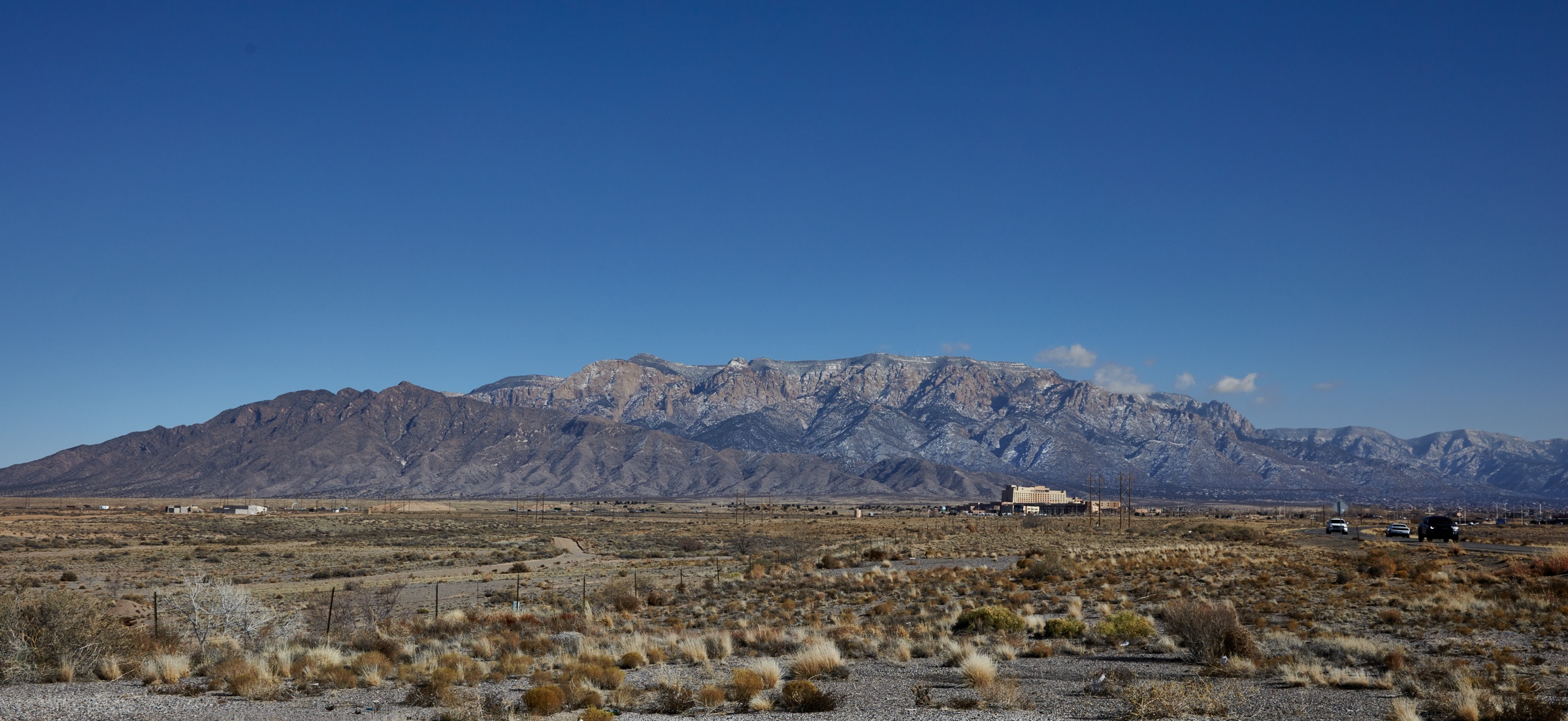
Photo: Carol M. Highsmith / Library of Congress, Prints and Photographs Division, LC-DIG-highsm-66237, January 11, 2021. Public domain. Resized; no crop.
The first New Mexico event photography question I would ask is what happens if the program changes rooms. Not because every event will, but because the answer shows whether the client and photographer have agreed on the actual work. A vague request for conference photographs can hide several very different expectations.
An Albuquerque organization may want a keynote record and an exhibit demonstration. A Santa Fe group may want a meeting, formal portraits, and a courtyard reception. I use those as hypothetical examples below, not as accounts of personal assignments or claims that jobs are currently open.
The local descriptions come from the Albuquerque Convention Center's planning page and Tourism Santa Fe's convention-center information. Those sources establish facility features. They do not establish a photographer's permission to work, a venue booking, or who is available to hire. I would make a shortlist only after comparing real work with a real program.
Decide what the gallery needs to explain
Before asking for proposals, imagine the person who receives the final gallery but did not attend the event. What do they need to understand? Who spoke, what was demonstrated, who participated, which relationships mattered, or what the organization accomplished? The answer should guide the coverage priorities.
I would not give every possible photograph the same importance. A required leadership group may deserve a scheduled moment. A broad room view may be useful context but not worth missing an essential presentation. A photographer needs that distinction before being asked to make choices during the program.
This is where a brief becomes more than a location and date. Describe the purpose of the images, not only the number of people attending. An internal record and a public campaign may draw from the same event, but they can require different subjects, review, and permissions.
An image request should have an owner
For each indispensable photograph, identify someone on the organizing team who can help it happen. That person may know the required guests, gather the group, or clarify the release restriction. A photographer can bring visual judgment without knowing every relationship in the room.
If no one can explain why an image is needed or who can arrange it, mark the request for discussion. It may still be useful, but it should not silently compete with photographs that have a clear purpose. I would rather settle a short list of important images than accept an unlimited instruction to capture everything.
Albuquerque: distinguish the keynote from the exhibit assignment
The Albuquerque Convention Center's official facilities page identifies Northeast and Southeast exhibit halls, flexible meeting rooms, a ballroom, and Kiva Auditorium. Those are distinct references for a brief. Saying convention center does not tell the photographer which room contains the required moment.
For a hypothetical keynote-and-demonstration program, I would ask which part happens in Kiva Auditorium and which part happens in an exhibit area or meeting room. The public facility description cannot supply the event's stage, screens, displays, or circulation plan. Obtain the current approved layout from the organizer.
An auditorium image may need to connect the speaker with the audience or show a particular exchange. An exhibit image may need a product detail, a demonstrator, or guests participating. These requests should be written separately. A photograph of an empty display does not prove participation, and an audience view does not replace a required speaker image.
The schedule has to support both stories
Place the essential keynote moments and demonstration windows on the same page. If they overlap, decide whether one receives priority, the demonstration can be arranged again, or another photographer is needed. There is no useful promise that makes one person fully present in different rooms simultaneously.
Ask the organizer who can alert the photographer if a presentation starts early or a demonstration moves. A schedule is only helpful if changes reach the person working from it. I would name the contact and communication route rather than assume the crew will overhear every announcement.
For the auditorium, confirm permitted camera positions, movement, and restrictions on additional light. For the exhibit space, ask about screens or material that should not be released. A public venue listing is not a credential or a publication policy. Those answers belong to the actual commissioning organization and program team.
Do not use facility scale as evidence of open jobs
The operator's page contains dimensions and promotional descriptions. I would not turn them into a claim about how many photography assignments exist or how busy an independent photographer will be. A large facility can host an event without offering an open job to someone reading the calendar.
For a photographer, the useful step is to respond to an authorized brief and show relevant evidence. For the client, it is to explain the work actually being commissioned. Neither side needs an unsupported statement about the city's market to decide whether the proposal fits.
Santa Fe: a courtyard is a location, not an unconditional deliverable
Tourism Santa Fe's official convention-center page describes flexible meeting space, a column-free ballroom, a landscaped courtyard, and a terrace. It also identifies meeting rooms and gallery space and notes fireplaces in some rooms. Those features give an organizer several settings to discuss without establishing that all are included in one booking.
For a hypothetical meeting followed by groups and a reception, I would ask which rooms are assigned and whether courtyard access is confirmed. The essential deliverable may be a clear group photograph of the participants, not a promise of one exact outdoor background. Keep that purpose visible when choosing an alternative.
If the client wants the setting to be recognizable, say so. A photographer can plan a contextual view without making every image about architecture. If guest interaction matters more, identify the people and relationships that need attention. The client should not expect the photographer to infer those priorities from the beauty of a location.
Put the group into the program
A formal group requires people to be present and willing to stop. I would give it a place in the schedule and assign someone to gather participants. Leaving it until the end can fail if the required people have already left or moved into another function.
Ask who checks the group list. A photographer may create an effective arrangement without knowing whether a particular board member is missing. The organizer supplies the roster and recognition; the photographer directs the image. Those responsibilities work better when neither side assumes the other holds all the information.
For a courtyard plan, identify who can change the location and where the group goes instead. That is not a weather prediction or a claim about a venue rule. It is a practical decision route for an outdoor segment whose access and conditions must be confirmed for the actual event.
Do not interrupt the meeting without agreeing to it
A client may want individual portraits as well as a meeting record. I would ask when each person can leave and how the photographer will know they are ready. A portrait station requires focused attention; it cannot run itself while the same person photographs a discussion elsewhere.
If the client only needs a few planned groups, say that instead of requesting unlimited portraits. Clear language helps photographers propose the right approach and helps the organizer understand what is included. It also prevents a brief from expanding through a series of informal requests from guests.
What I would look for in complete work
For the Albuquerque example, I would ask for a delivered sequence showing presentation timing, audience context, and active exhibit coverage. I want to understand the event without seeing only repeated variations of the same attractive frame. The gallery should show consistent attention across the parts the client commissioned.
For the Santa Fe example, I would look closely at groups, comfortable expressions, and transitions between meeting and reception. A scenic courtyard photograph alone does not demonstrate those skills. Ask how the photographer made the sequence work and what help the organizer provided.
Relevant experience does not have to mean the same room. A photographer new to a venue can prepare carefully from current plans and instructions. Someone who has worked there can still be wrong if they assume the next program repeats a previous layout. I would choose evidence of judgment over a casual claim to know the whole place.
Ask whose work you are reviewing. If a person photographed one portion as part of a team, they should describe that role. A supporting assignment can be good evidence for that portion without being presented as responsibility for everything from planning to final delivery.
Do not make a private gallery the price of consideration
A photographer may have restrictions on sharing a client's complete event. Ask for authorized examples or a permitted review arrangement. I would not reward someone for exposing confidential material to win a new job. Their treatment of the previous client's information is relevant to how they may treat yours.
References can help test the working relationship without revealing private details. Ask about a schedule change, a missing participant, or a request that needed clarification. Did the photographer communicate in time for the organizer to choose? Did the delivered set reflect the agreed purpose? Those answers are more useful than a string of compliments.
Make the commissioning instructions readable
For Albuquerque, I would attach the agreed auditorium and exhibit priorities to the current program. For Santa Fe, I would attach the group list and the plan for moving into the reception. Keep the photographer's work note concise enough to consult during the event rather than bury essential decisions in unrelated planning material.
Name the person who can approve additions or a change of location. A guest asking for another portrait does not necessarily have authority to redirect coverage from an essential moment. The photographer needs a courteous way to protect the organizer's priorities and a contact who can decide when those priorities change.
Explain intended uses directly. Internal communications, public distribution, partner reports, and advertising can be different requests. Delivery of files does not itself describe the rights provided. Put the actual intended audience and permitted use in the agreement rather than rely on a vague understanding that the pictures belong to everyone.
If a screen, display, or attendee has a publication restriction, describe how the photographer will recognize it. A requirement that exists only in the organizer's head is hard to follow. Identify a contact for uncertain cases and decide how images awaiting review should be separated from approved material.
Administrative checks should be specific too
If insurance documentation is required, obtain the current instructions and ask whether the proposed photographer and crew satisfy them. Do not infer coverage from a portfolio or assume that a certificate used elsewhere meets this venue's request. The check belongs to the actual booking.
Describe proposed equipment before arrival. A light, stand, or backdrop needs a position that works with the approved circulation and production plan. Portable does not mean unrestricted. Equally, a client should not add a fixed portrait station without acknowledging what it does to roaming coverage.
Give the crew a separate arrival note with the reporting point, contact, access window, and equipment route. If a detail is not yet confirmed, mark it as open. An honest unresolved question is easier to fix than an invented instruction that looks ready to follow.
Photographers: answer the event, not the state name
For an Albuquerque keynote-and-exhibit inquiry, I would show relevant stage and demonstration work and identify the schedule conflict if one exists. I would ask who confirms screen-content restrictions. That response gives the client evidence that the actual assignment has been read.
For the Santa Fe meeting-and-group inquiry, I would address participant gathering, courtyard permission, and an alternative location. I would explain the coverage window needed for the agreed groups instead of promising every portrait and candid moment without a plan.
ProShoot's published process describes posting a job, comparing bids and portfolios, and selecting a photographer. Its photographer workflow includes applying and submitting work. I would use those steps to communicate a specific scope. A profile is not proof of credentials, insurance, personal venue history, or unrestricted portfolio rights.
Keep availability tied to the actual locations. A program that adds another property or city needs a fresh look at the schedule, not a casual assumption that it is nearby enough. State which arrangements are confirmed and which remain conditional so the client can compare proposals honestly.
Deliver according to the next task the client will do
The Albuquerque organizer may need to locate the speaker, demonstration, and sponsor sets quickly. The Santa Fe organizer may need the required groups separated from the reception sequence. Discuss the structure that helps those uses rather than deliver a large collection with no explanation of what it contains.
If names and captions are included, identify the person who verifies them. The photographer should not guess a title or affiliation from memory or a partly visible badge. Accurate information needs a source just as the photograph needs a clear subject.
Set a delivery date and describe any earlier selection as its own requirement. Editing during the program can affect coverage. The proposal should explain that workflow and its conditions instead of allowing a casual request for quick photographs to become unlimited live editing.
I would also state the storage and access terms actually offered. Do not promise indefinite availability unless that service is genuinely included. The assignment closes more cleanly when the client knows where the agreed files are, which are approved for use, and who to contact about a correction.
Hire for a clear result, not a broad claim
There is no single named photographer I can responsibly call the right choice for every New Mexico event without reviewing the real brief and available work. I would compare complete relevant examples, a proposal that notices the program's difficult moments, and clear answers about responsibilities.
For Albuquerque, that may mean a plan that balances auditorium and demonstration coverage. For Santa Fe, it may mean a scheduled group and a realistic transition into a courtyard reception. The useful distinction is the work required, not a claim that the state's calendar guarantees jobs or that every event follows one pattern.
Whether you are posting an assignment on ProShoot or applying to photograph it, make that distinction visible. Agree on the images that matter, the people who help make them possible, and the boundaries of the job. That gives the event a better chance of producing photographs the client can actually use.
Make a courtyard preference answer to the gallery's purpose
For the hypothetical Santa Fe program, ask whether the courtyard is part of the story or simply a preferred background. If the required result is a group, the people and intended use may matter more than that one setting. If the place itself carries the purpose, its availability becomes a condition that must be confirmed rather than assumed.
The photographer should explain that dependency in the proposal and identify who can settle it. A conditional idea is useful as long as it stays visibly conditional. It becomes misleading when attractive wording turns it into a guaranteed deliverable without the actual event's permission.
Apply the same discipline to the Albuquerque example. A keynote record and an exhibit record may both be important, but their timing and expected completeness determine the service. The client should see the actual choice before accepting an offer. That gives the final gallery a clear purpose and prevents a useful alternative from being mistaken for an unexplained departure from a promise nobody could support.
Sources checked November 6, 2026
- https://albuquerquecc.com/planners/meeting-rooms-and-facilities/
- https://www.santafe.org/meetings/meet-different/the-convention-center/
- https://proshoot.io/how-it-works/
Ready to hire a professional photographer?
Post your job free and get bids from photographers near you.
Post a Job Free →