Top Event Photographers in New Hampshire
Plan New Hampshire event photographs for Manchester business programs and Durham meetings. Practical guidance for hiring photographers and preparing applications.
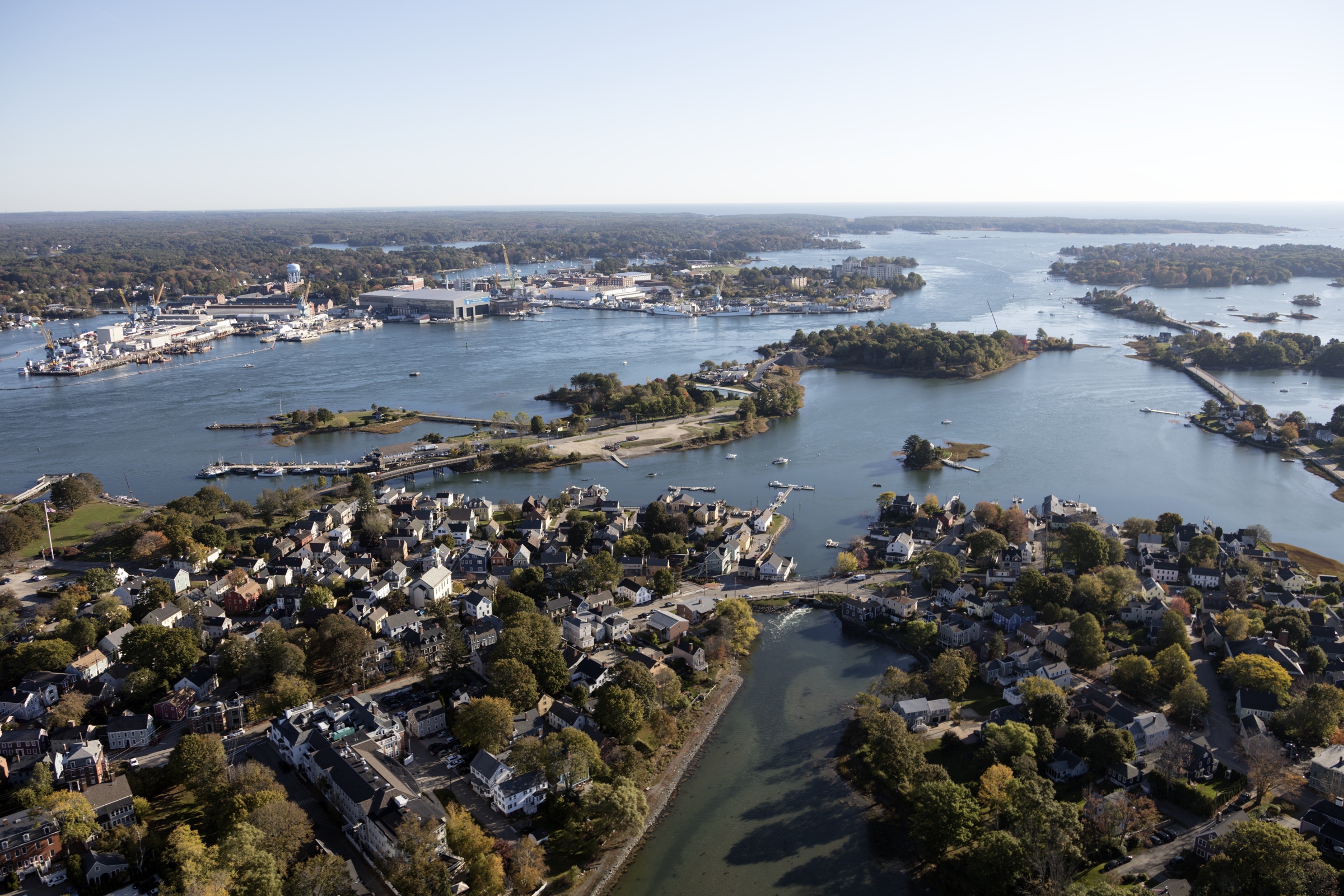
Photo: Photographs in Carol M. Highsmith's America Project in the Carol M. Highsmith Archive / Library of Congress, Prints and Photographs Division, LC-DIG-highsm-48366, October 18, 2017. Public domain. Resized; no crop.
A small meeting can contain a large photography decision. If the client wants people thinking and talking naturally, repeated posing may work against the purpose. If the client needs a formal group, observation alone may not deliver it. I would settle that difference before hiring a New Hampshire event photographer.
A Manchester business program and a Durham campus meeting can both need portraits, presentations, and participant interaction. They may still ask for different evidence and preparation. A proposal should show how the work fits the actual program rather than promise the same unlimited coverage in every room.
The examples below use current operator descriptions of DoubleTree by Hilton Manchester Downtown and UNH's MUB Conference Rooms. They are hypothetical, not job advertisements or accounts of my own local shoots. They offer a way for organizers and photographers to define a commission without inventing local history or market demand.
Manchester: separate the program record from individual portraits
Hilton's current Manchester Downtown events page identifies an expo center, pillar-free ballrooms, and boardrooms with built-in audiovisual technology. Its room table names Four Rivers Ballroom and Three Rivers Ballroom among the options. This guide uses those facility distinctions without repeating capacity or area totals.
Imagine a company program where the communications team needs presentations and several staff portraits. I would ask whether the portraits need consistency with existing work and when participants are available. The request is not simply a small addition if the same photographer must leave the meeting to make them.
The actual booked spaces and current arrangement matter. A hotel name does not establish where a portrait station can stand or how the main program is laid out. Ask for the organizer's approved diagram and instructions rather than treat an empty-room image as an event plan.
Define the portrait result before choosing a setup
A casual staff introduction and a consistent profile series may need different approaches. Tell the photographer the intended use and provide any authorized reference early. A look introduced as a requirement after the session cannot guide photographs already made.
Ask the photographer to explain the proposed location and equipment footprint. A backdrop, light, or waiting line occupies space even when portable. The organizer needs to confirm that the setup fits the booked room and circulation rather than assume the published room size proves it will work.
If a preferred setting is unavailable, agree on an approved alternative that preserves the purpose. A consistent portrait series may matter more than a particular background. A client should not lose the required result because an optional location idea was treated as indispensable.
A participant roster needs a person behind it
Assign someone who gathers subjects and verifies names. A photographer who has never met the team cannot reliably find each person from a list. The organizing contact's recognition keeps the session connected to the program while the photographer concentrates on directing subjects.
Agree on what happens if someone arrives late or a meeting runs long. Which portraits are essential, and who may change the sequence? Do not leave the photographer to choose between a waiting participant and the next required program moment without authority.
Participants should know whether a formal photograph is expected. A brief notice from the organizer can prevent surprise and help people arrive prepared. The photographer can then guide expression and position rather than negotiate the entire premise of the session on the spot.
The presentation still needs coverage while portraits happen
Put both tasks on the same timeline. If they overlap, decide whether to prioritize, sequence, or discuss another photographer. One person cannot remain at a portrait station and provide uninterrupted documentation in another room at the same time.
If another photographer is proposed, understand who handles each task and how the work will be selected consistently. More people can solve a coverage conflict when responsibilities are clear. An unspecified crew should not hide uncertainty about who makes the required pictures.
If the client needs only a few presentation images, say that. Selected coverage can be a valid commission. It should not later be judged against an expectation of a complete record that the proposal never included.
Manchester: an expo component asks a different question
Hilton identifies an expo center as another facility category. If a business program includes displays or demonstrations there, describe the commissioned activity separately. A meeting portrait proposal does not automatically include detailed exhibition coverage because the spaces share a hotel.
Ask whether the client needs empty displays, people participating, selected representative interactions, or a visual story combining them. An attractive room overview may show setting without explaining any particular activity. The intended use should guide where the photographer spends time.
Provide current locations and a contact for essential people. A list of organizations cannot tell an unfamiliar crew who represents them. If a subject is absent, the organizer should decide whether to return or redirect effort rather than let a search consume the remaining program.
Technical features are planning prompts, not permissions
Boardroom audiovisual technology on Hilton's page establishes a facility feature. It does not authorize an outside crew to change systems or establish that displayed content is public. Ask the actual production contact what is planned and how restricted material should be treated.
If additional lighting is proposed, confirm its placement and approval. The client should understand what the setup supports and what it changes. A public room description is not a blanket authorization for equipment throughout the property.
For images needed during the program, describe the editing and review workflow. That work may affect photographing or require another arrangement. A casual request for quick pictures should not become an undefined live-delivery obligation hidden inside the commission.
Durham: make the small meeting understandable
UNH's official MUB Conference Rooms page describes small and medium meeting rooms whose size can be configured by installing or removing a divider. It identifies a flat-panel screen among the features. This narrow description supports useful questions without establishing the client's actual arrangement or publication rights.
For a hypothetical campus workshop, I would ask what the photographs should explain: participation, discussion, instruction, recognition, or a result. A photograph of people around a table may document presence without making the purpose of the gathering clear.
The organizer should provide the booked configuration and current program. Do not assume a photographer may move a divider, furniture, or equipment. A configurable room is not an invitation for an outside crew to reconfigure it without approval.
Observation and arrangement are different services
If the goal is natural discussion, ask how much movement and interruption are acceptable. The photographer should understand the room's working rhythm. Repeatedly stopping participants can change the experience and the authenticity of the record.
If a posed group is essential, schedule it as a separate task. Give it a gathering contact and make sure the participants know the moment. Observation alone should not be expected to produce a formal group, and a formal setup should not silently replace all candid coverage.
I would review relevant work for readable relationships among people and activity. A strong portrait demonstrates one skill without proving the photographer can document a discussion unobtrusively. Ask for a permitted sequence from comparable work rather than only a few attractive excerpts.
Screen content needs an explicit boundary
The flat-panel screen is a room feature. What appears on it may belong to the organizer, a presenter, or another party. Confirm what may be photographed and how the images may be used instead of assuming the room booking clears every possible publication.
If some content should not appear, make that instruction recognizable during the program. Identify who signals a restricted segment and who can settle an unexpected change. The crew needs an actionable boundary, not only a general warning to be discreet.
A private record and public communications selection may have different permissions. Keep their status clear in delivery and review. A photograph may be useful to the client internally without being ready for a public post or partner distribution.
A required person needs identification
If selected participants must appear, provide a contact who knows them. A photographer should not infer leadership, affiliation, or importance from seating and name tags. Introductions can improve the coverage while keeping the meeting natural.
For names or captions, the organizer needs a reliable source and reviewer. The photographer should not guess a person's title or what a discussion achieved from visual context. Accurate facts are part of a useful record, not an optional correction left for someone to notice later.
Share practical restrictions without unnecessary private reasons. A crew may need to know someone should not appear publicly without knowing the personal background. Keep the information proportionate to the task and preserve that boundary in any final captions or notes.
Review the proposal through the actual risks
The Manchester example risks losing presentation coverage while portraits happen. The Durham example risks turning a natural meeting into an unwanted production or publishing restricted material. A useful candidate should ask questions that expose those risks and propose a clear way to handle them.
Exact facility history can help, but it is not required when comparable work and careful preparation establish fit. A photographer familiar with a property can still carry an outdated assumption. Ask how the applicant will check the actual program and working instructions this time.
Look at a complete authorized gallery for consistency. Can you follow the event? Are required subjects covered? Are ordinary moments still usable? A highlight reel shows selected ability without proving that the full commission was handled well.
Clarify responsibility and contribution
Ask which parts of example work the applicant personally made. Someone may have photographed portraits as part of a team while another person followed the program and managed delivery. That is valid experience when attributed accurately.
Find out who would attend the proposed assignment. If a different person performs it, review relevant work and the role split. The client should not discover only on arrival that the portfolio used to choose the service belongs to someone else.
References can test communication under change. Ask about one delayed session, absent participant, or added group and what happened next. You need observable behavior, not private guest information or confidential records from another client's event.
Compare scope before accepting
Read the coverage window, properties, rooms, staffing, portraits, editing, delivery, and image uses. Similar proposal language can conceal different services. A meeting record is not the same commission as a consistent portrait series plus complete simultaneous program coverage.
Ask candidates to state assumptions and exclusions. If a room, subject availability, credential, or gathering contact is essential, make the condition visible. The organizer can resolve it before booking rather than discover the dependency while participants wait.
Name the person authorized to approve changes during the event. A guest, presenter, or another department may have a reasonable request without authority to redirect the commissioned photographer. The crew should explain what will be displaced and seek a decision through the agreed contact.
Current requirements belong to this booking
Get the reporting point, permitted positions, and equipment instructions through the organizer. An attendee invitation or public building address does not necessarily grant working access. A familiar property name is not permission to use a service route or another booked space.
If insurance or credentials are required, obtain the current specifications and ask whether the proposed crew meets them. A portfolio or marketplace profile cannot prove compliance. One property's paperwork should not become a universal rule for New Hampshire venues.
For another function or property, create a separate scope and location note. Actual addresses, arrival needs, and the full program should guide whether an extension is feasible. Do not fill those facts from a general impression of the state.
Photographers: respond with evidence and a useful choice
A Manchester portrait-and-meeting inquiry should prompt questions about participant flow and coverage overlap. A Durham workshop inquiry should prompt questions about observation, required groups, and content restrictions. Those are different responses even when one photographer has the skills for both.
ProShoot's published client process describes posting jobs, comparing bids and portfolios, and choosing a photographer. Its photographer process includes applying and presenting work. Use that exchange to define the actual commission. Platform presence does not establish venue history, access, or insurance.
Check availability against setup, the full coverage window, and added functions. State unresolved conditions honestly. A realistic plan is more useful than an unconditional promise that depends on someone else's unconfirmed approval.
This guide does not infer jobs from company activity, tourism, annual calendars, or seasonal demand. An opportunity needs a current commissioning contact and scope. A clear application can be specific without unsupported New Hampshire market claims.
Make the delivery complete enough to use
Discuss how the recipient will find the work. Portraits, the program sequence, selected discussions, and groups may be easier to navigate separately. The client should not have to reconstruct the event from an unexplained folder of repeated frames.
Set delivery and any earlier selection separately. If review is needed, identify the reviewer and the decision. Names verification and confidential-content approval are different tasks. The photographer needs a visible route for files that should wait rather than a vague expectation that someone will check them.
Clarify intended uses and discuss the photographer's promotional use separately. Private delivery does not automatically approve public portfolio publication. Use actual storage and file-access terms, and preserve restrictions on other people's material.
Before closing, reconcile the delivered set with the agreed essentials and material program changes. If a subject was absent or a segment canceled, explain the gap. The recipient should not have to audit every file to discover what could not be photographed.
Before the event, compare the working note with the latest program. If a portrait moment moved or a room changed, update the instruction the crew will actually follow. Ask the photographer to acknowledge a change affecting staffing, equipment, or coverage. A single maintained version is more useful than several plausible but conflicting attachments, especially when different people supplied the meeting program and portrait requirements.
Keep those confirmed instructions available to the event contact too.
Hire for the gathering in front of you
The Manchester and Durham examples show why a photographer's plan should change with the actual task. Portrait production, program continuity, natural discussion, and content permissions have different failure points. Relevant complete work and a thoughtful response make those differences easier to judge.
Whether you are posting through ProShoot or applying there, describe the people, program, and uses clearly. I would choose the photographer whose questions protect that occasion rather than someone promising every picture across New Hampshire.
Use one participant's path to check the portrait promise
Imagine a meeting participant who attends the program, needs an individual portrait, and then leaves. Ask where that portrait fits without interrupting the essential record. The answer needs an actual opportunity and someone who communicates it, not simply a statement that the photographer will work it in.
If the service includes a controlled setup, identify its intended result and how the person reaches it. If it includes a casual event portrait instead, say that. Those services can both be useful, but they should not be exchanged silently because a schedule conflict becomes inconvenient.
For a program combining meeting and expo activity, repeat the test for the crew. Which duty receives their attention while the portrait happens? The organizer can choose sequencing, selected coverage, or another responsibility. A clear answer prevents the final record from being judged against a simultaneous service nobody planned. It also makes the application more specific: the photographer can explain the real offer rather than assure the client that every requested output is automatically compatible.
Sources checked November 6, 2026
- https://www.hilton.com/en/hotels/mhtmndt-doubletree-manchester-downtown/events/
- https://www.unh.edu/events-conferences/facility/mub-conference-rooms
- https://proshoot.io/how-it-works/
Ready to hire a professional photographer?
Post your job free and get bids from photographers near you.
Post a Job Free →