Top Event Photographers in Miami
Plan Miami event photography with precise locations, audiences, and permissions. Miami Beach convention and art-related examples for hiring and applications.
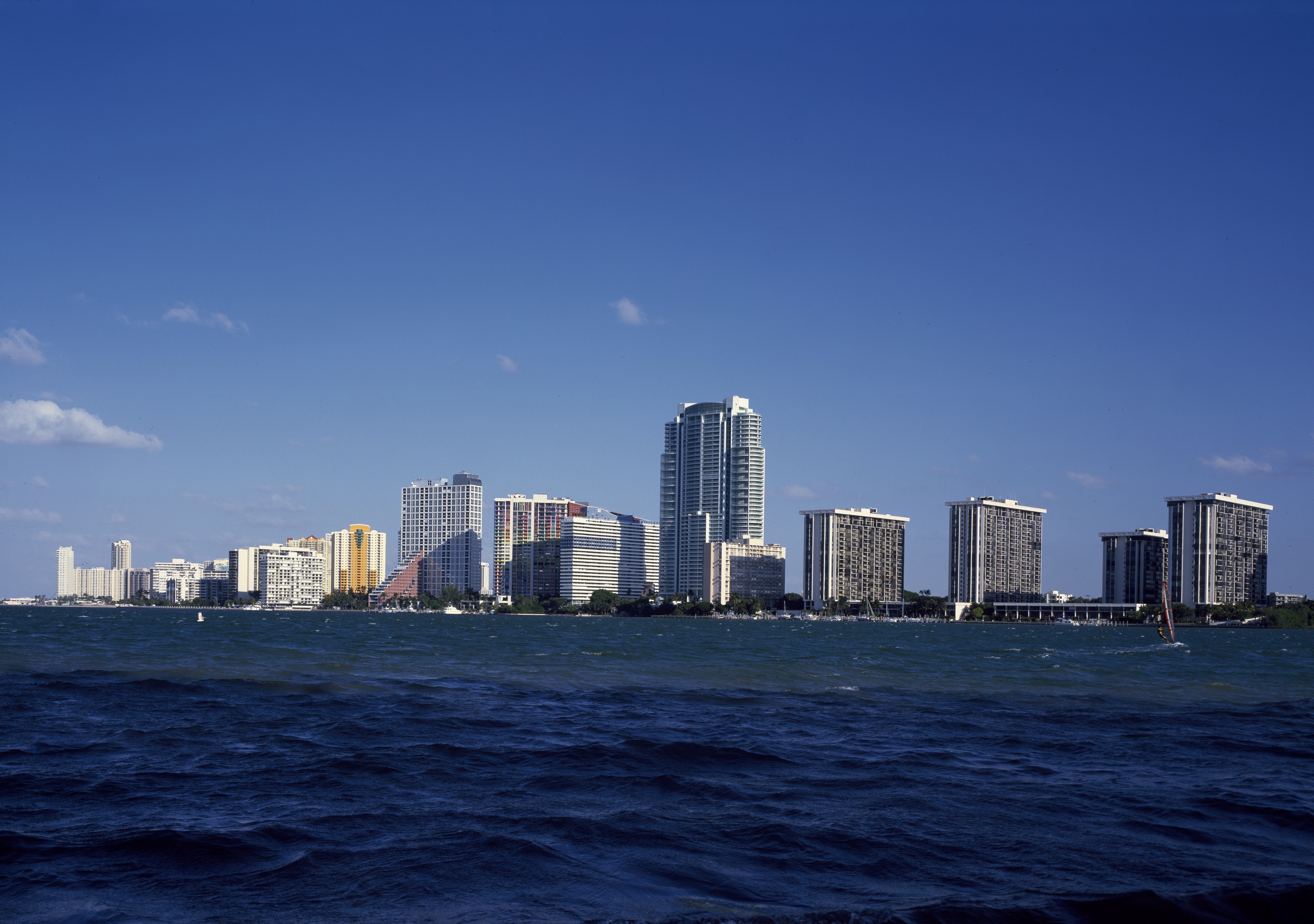
Photo: Carol M. Highsmith / Library of Congress. No known restrictions on publication. Resized.
An event photograph can show guests in a beautiful setting without explaining what they came to see. For a Miami commission, I would ask whether the client needs the gathering, the presentation, the displayed work, or the relationship among them. Those subjects can require different permissions and different priorities.
The city name alone does not settle the plan. A Miami Beach convention and a separate private gathering need their own locations and instructions. I would rather clarify that distinction at the inquiry stage than have a crew follow a confident but incomplete brief.
This guide uses current Miami Beach Convention Center information and the current Art Basel Miami Beach listing to frame hypothetical examples. It is not a directory of individual photographers, an open-job announcement, or an account of my own local shoots. The goal is a practical commission a client can compare and a photographer can answer honestly.
Start with the audience for the photographs
An organizer may want an internal recap, public communications, a partner report, or a private participant gallery. Describe the expected uses before choosing a photographer. Receiving files is not by itself a complete agreement about every audience or future publication.
If several departments need the work, reconcile their requests. Communications may want a concise approved selection while a program team needs a more complete record. A photographer should not receive several incompatible priority lists and be expected to determine the client's policy during the event.
Ask what each important photograph must explain. A room overview can establish setting. A close interaction can show participation. A formal group can identify people. None automatically substitutes for the others, and a larger gallery does not solve a missing purpose.
Miami Beach Convention Center: name the actual room
MBCC's official Quick Facts page identifies exhibition halls, a Grand Ballroom, pre-function space, meeting rooms, and named junior ballrooms. Those include Ocean Drive Room, Lincoln Road Room, Sunset Vista Room, and Art Deco Room. The names help make an inquiry precise without copying numerical capacities or area totals.
A brief should use the booked space and current approved diagram. Saying convention center does not establish the stage direction, furniture, participant route, or camera position. The photographer should check the event arrangement rather than rely on a previous program at the property.
For a hypothetical professional conference, I would identify the presentation that needs complete coverage, selected exhibit interaction, and any required groups. Put them on one timeline. The schedule reveals whether one person can realistically cover the requested work.
Give the presentation a coverage level
If the keynote needs an uninterrupted record, say so. If selected images are enough, say that instead. A photographer's occasional visits should not later be judged against an expectation of complete coverage that the proposal never included.
Ask for a permitted complete presentation sequence during review. Look for consistency across speakers and useful audience context, not only one dramatic stage photograph. The evidence should show how the photographer sustained the work through ordinary moments too.
Confirm positions, movement, and any proposed lighting with the event's production contact. A public room description does not authorize equipment in an aisle or changes to installed systems. The photographer can propose an approach and explain what still needs approval.
Make exhibits readable through activity
If the client needs selected organizations represented, provide current assignments and an identification contact. A list of brands is not a map or a way to recognize unfamiliar people. Introductions make coverage more purposeful without requiring every interaction to become a pose.
Describe whether the desired result is a clean display before opening or visitors participating later. Those are different tasks and can need separate opportunities. An attractive empty stand does not prove an interaction happened, while a busy crowd may obscure required detail.
For demonstrations, identify the key action and its time. If it overlaps the required presentation, the client needs a priority or staffing decision. One photographer cannot provide complete simultaneous records merely by moving quickly between locations.
A junior ballroom name is not a portrait reservation
The named rooms on MBCC's page support planning questions. They do not establish that an unbooked room is available for portraits or that an outside crew may occupy pre-function space. Ask the organizer for an approved location and actual setup.
If portraits must match existing images, provide an authorized reference before the event. The photographer should explain the proposed equipment and working footprint. A backdrop, light, and waiting group still occupy space even when the equipment is portable.
Assign someone who gathers subjects and verifies names. A photographer can direct a person without recognizing everyone in the organization. Searching for unfamiliar participants can otherwise consume the window intended for making the portraits.
The campus has named parks, not a blanket outdoor permission
MBCC's page identifies Collins Canal Park to the north and Pride Park to the west. Their presence can prompt an organizer to consider setting photographs or an outdoor group. It does not establish that a proposed crew setup or use is authorized.
Confirm the actual area, permission, timing, and an alternative for an essential photograph. A public green space is not automatically included in a private event booking. The photographer should not promise a required background before the relevant check is settled.
If the purpose is a leadership group, keep the people together as the priority when appropriate. An approved alternative may preserve the required result better than tying success entirely to one setting. Discuss that hierarchy rather than treat a location idea as the whole commission.
Arrival instructions should come from the actual event
The Quick Facts page distinguishes North and South loading facilities. Those features are not a crew's instruction to use either one. Obtain the reporting point, equipment route, and arrival window from the organizer responsible for this program.
Tell the organizer what the crew will bring. A person carrying cameras and a portrait station with lights can need different arrangements. Do not infer the permitted route from the size of a public loading area or from instructions used at another event.
If a final access detail is unknown, mark it for confirmation. A polished-looking guess can send a photographer to the wrong location. Honest uncertainty discovered before the event is easier to settle than a confident instruction someone follows on arrival.
Art-related work: distinguish the event record from the art itself
Art Basel's current Miami Beach page lists December 4-6, 2026. That establishes the published dates for that edition, not an opening for a photographer, an invitation, or blanket permission to document every work and participant. This guide does not infer future annual dates from it.
A hypothetical client may commission photographs of its own gathering around an art program. Ask who is commissioning the work, which location is involved, and what they may authorize. The private commission and the larger event are related context, not automatically the same access or rights.
If the desired photographs include displayed art, identify who handles the relevant permissions and uses. Do not make a broad legal claim based only on public attendance. The photographer needs an agreed instruction route rather than an assumption that everything visible can be used for every purpose.
Describe what the client needs to see
A gallery or host may want guests engaging with a display. Another client may want accurate documentation of the work. Those tasks have different photographic demands and may have different rights. Explain the purpose before asking candidates to show relevant examples.
A room overview can establish the gathering while reducing the displayed work to background. A close documentation image may say little about attendance or relationships. If both are needed, scope both instead of expecting a single kind of photograph to satisfy every use.
Ask how the photographer will avoid disrupting the experience. Movement, equipment, and direction should follow the actual host's instructions. A portfolio from another property does not grant permission here, even if the spaces appear similar.
Private guests and public selection can need different handling
Some photographs may be suitable for a private client record while others are approved for public distribution. Define the review route and mark status clearly. Do not rely on the photographer to guess the host's publication policy from the character of the gathering.
If selected people must appear, provide someone who recognizes them. If someone should not appear publicly, share the practical instruction without unnecessary personal background. The crew needs to follow the boundary, not circulate private reasons.
The photographer's promotional use should be discussed separately. A client accepting private files has not necessarily approved a portfolio post. Obtain the approval required by the agreement and preserve restrictions on other people's material after the event.
An added function needs its own scope
A conference reception, dinner, portrait session, or another property may be related to the main program without being included in the original commission. Identify the location, purpose, participants, and timing. Do not add it silently because it sounds like a small extension.
Use the actual addresses and full schedule when assessing feasibility. This guide does not supply transfer times from a general impression of Miami or South Florida. A photographer should check the real commitment before confirming availability.
If required moments overlap, make the tradeoff explicit. The client may choose sampling, different priorities, or an additional photographer. A realistic decision is more useful than an offer to do everything whose limits only emerge after the event.
Test two galleries with two different questions
For the convention example, I would open a permitted full sequence and follow the day. Can I understand the change from presentation to exhibit interaction? Does the set keep the people readable when the room is visually busy? Which part of that story did this photographer personally make?
For the art-related gathering, I would look at whether guests and displayed work coexist comfortably in the photographs. The client may need the event's character visible without turning every guest interaction into a documentation image of an artwork. A candidate should be able to explain that balance through their actual contribution.
Ask about one photograph they chose not to make. Perhaps access was limited, a guest preferred privacy, or an important program moment was happening elsewhere. A useful answer shows judgment rather than a promise that no choice ever had to be made. The point is not to reward missing pictures; it is to understand how the photographer protects the client's real priorities.
Review the person who will perform this work
A portfolio can contain a collaboration. That is perfectly valid when the contribution is clear. If the applicant covered reception guests while a colleague handled stage continuity, evaluate that experience for what it demonstrates. Do not let the team story imply that one person performed every task simultaneously.
For the proposed Miami assignment, identify who actually attends and which requirement each person owns. If a substitute or additional photographer is offered, review relevant evidence rather than assume the original portfolio represents everyone equally. The client needs to choose a service with visible responsibility.
A former client can help test the working relationship without sharing private materials. I would ask what happened when the event changed: did the photographer raise the consequence in time, and did the client understand the choice? Names of private guests, restricted slides, or internal disagreements are unnecessary to that answer.
Convert the remaining questions into a short decision list
One line could say that the presentation is fixed but the portrait area awaits venue approval. Another could say that art-related public use needs confirmation from the client's designated contact. Put an owner beside each question. The goal is to finish the decisions, not decorate an incomplete plan with confident wording.
This is where a client should compare proposals carefully. Does one include selected convention visits while another assumes continuous presentation coverage? Does one include individual portraits while another only includes groups? Read what will actually be delivered before treating the offers as equivalent.
If a credential or insurance document is required, obtain the current specification for the actual event and ask whether the proposed crew can satisfy it. A profile and portfolio cannot prove a policy. Nor does paperwork supplied for one Miami property establish what another property requires.
The equipment plan should be as specific as the commission. A photographer proposing a light or backdrop needs an approved place for it. The organizer should know who will confirm that position and what changes if it is unavailable. A portable station still affects space and the time one person has to observe elsewhere.
Choose a person who may change the assignment
Guests can have useful ideas. Another department can discover a photograph it wants. Those requests do not all arrive with authority to replace the client's original priorities. Name the organizer who may approve a change and ask the photographer to describe its consequence before proceeding.
For example, an extra group in an adjacent area could mean leaving the main session. If the group matters more, the authorized contact can choose it. If the session remains essential, the request can move. This is a better experience than an automatic yes that later becomes an unexplained hole in the program record.
When a room or access instruction changes, revise the version the crew uses and obtain acknowledgement of any material effect. The presence of a new attachment in a message does not establish that everyone has read or understood the operational change. Keep the final note small enough to consult during the event.
Photographers: use the application to settle one consequential gap
A conference client may need to choose between simultaneous session records. An art-related client may need to distinguish private event images from public reproduction of displayed work. Read the inquiry for that decision and explain what answer your proposed service needs.
ProShoot's published process gives clients a way to post work, examine bids and portfolios, and choose a photographer. Its photographer process includes applying and presenting work. That exchange is useful when it makes the commission clearer. It is not evidence that a profile has access to every property or personal history with every local program.
Before stating availability, account for preparation, equipment setup, the program, and any separately requested function. Do not infer a light commitment from a short public schedule. State a condition openly when another person's permission or a room assignment remains necessary.
This guide does not treat festival scale, seasonal peaks, company names, or demand claims as proof of an opening. A real assignment needs a commissioning contact and current scope. A photographer can demonstrate local preparation through the precise MBCC room and campus questions without inventing a stream of work.
Make the final handoff useful to the image users
Ask the recipient how they will search the work. A communications contact may begin with cleared public pictures; an internal team may need the complete program; a host may want required guests easy to identify. Organize the agreed service around those next actions instead of assuming a long chronological file list solves all of them.
If captions are included, the client's factual reviewer should supply verified names, roles, and context. A photograph of conversation is not evidence of what was decided. Set a date for the finished delivery and define any earlier selection as a separate workflow, especially if it must be edited while coverage continues.
Tell the client which files still need a decision and which are ready for their agreed use. Do not merge an internal selection and a cleared public set in a way that hides the distinction. The photographer's promotional use also needs its own agreement; accepting a private gallery is not automatically approval to display it publicly.
Use the actual storage and access terms offered. If a required guest was absent or a segment canceled, explain that fact succinctly. Reconcile material changes with the original essentials before closing. The result should leave the client using photographs, not conducting a file-by-file search for an image nobody could make.
Choose a plan grounded in the gathering
The Miami Beach examples need different decisions. Conference continuity, exhibition activity, portraits, and art-related permissions are connected but distinct tasks. I would choose the photographer whose relevant complete work and questions make those distinctions visible.
Whether hiring through ProShoot or applying there, start with the people, program, and image users. A clear commission for the actual occasion is more useful than a promise to capture everything across Miami.
Sources checked November 6, 2026
- https://www.miamibeachconvention.com/center-info/quick-facts
- https://www.artbasel.com/MIAMI-BEACH
- https://proshoot.io/how-it-works/
Ready to hire a professional photographer?
Post your job free and get bids from photographers near you.
Post a Job Free →