Top Event Photographers in Las Vegas
Plan Las Vegas event photography around demonstrations, announcements, and meetings. A trade-show story guide for hiring photographers and preparing applications.
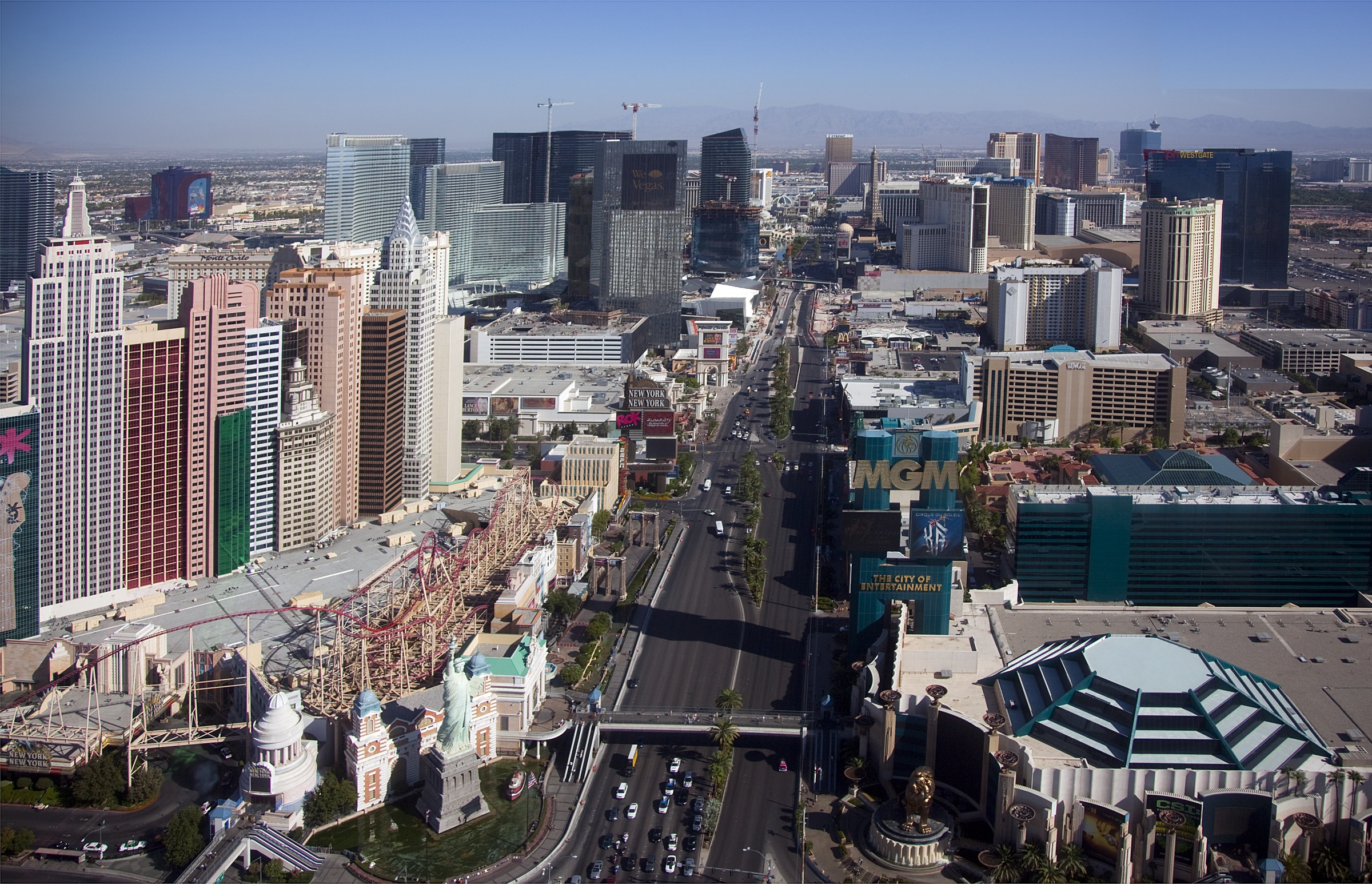
Photo: Carol M. Highsmith / Library of Congress. No known restrictions on publication. Resized.
At a trade show, the client may need a picture of the product, the demonstration, and the people responding. I would not treat those as one request. Each explains something different, and the useful photography plan decides how they fit together before the floor becomes busy.
For Las Vegas event photography, that is a stronger starting point than a claim about the city's scale or an unlimited promise of coverage. An actual commission comes from an organization with a program, people, permissions, and intended image users. The photographer should answer that commission, not a reputation attached to the destination.
This guide uses LVCVA's January 2026 announcement about the Las Vegas Convention Center's renovated legacy campus for context. The client and program below are hypothetical, not job listings or accounts of my personal shoots. The exercise helps organizers compare photographers and helps applicants show how their work would serve a specific assignment.
A hypothetical launch has four stories
Imagine a company planning an announcement, repeated demonstrations, meetings with selected guests, and an evening gathering. Communications wants an approved public selection; another team wants an internal record. The company initially asks for a photographer without explaining how those activities overlap.
I would separate the stories before requesting bids. The announcement explains what the company introduced. The demonstration explains how something works. The meetings show the people involved. The evening gathering records relationships in another setting. They can share a commission without being interchangeable photographs.
Put the activities and required people on one timeline. Mark which need uninterrupted coverage and which can be sampled. That note exposes whether the proposed service is realistic before anyone starts comparing image counts or general statements of enthusiasm.
Story one: the announcement has a short, unrepeatable center
Ask the organizer what cannot be repeated. It may be a reveal, a speaker exchange, or a formal recognition. A long presentation can have one brief essential moment, and a photographer needs to know where attention belongs.
The client should identify the actual booked space and approved current setup. A convention-center label does not establish the stage direction, permitted position, or lighting. The photographer should propose an approach based on this program rather than assume a previous show used the same arrangement.
If the announcement is the priority, protect its continuity. A request for an optional group should not send the same person away during the reveal. If both are essential simultaneously, discuss another photographer or a different moment instead of promising full coverage of incompatible tasks.
Ask to see the whole announcement sequence
A single dramatic launch frame demonstrates selected ability. A permitted complete set helps test how the photographer handled introductions, ordinary moments, speaker changes, and audience response. The record should remain useful beyond its most visually impressive image.
Ask what the photographer's role was. An additional photographer may have covered the audience while another person handled the reveal and final delivery. That is valuable evidence when credited accurately, not proof that one person controlled the whole project.
If another crew member will attend the new assignment, review their relevant work and responsibilities. The client should know whose evidence supports the proposal before accepting it. A team description should clarify who owns the required moments.
Do not confuse announcement timing with publication timing
A client may commission photographs before it is ready to distribute them. State any release boundary and the contact who approves it. The photographer should not infer that an image is public simply because it was made at a trade show.
If captions are included, appoint a factual reviewer. The words should not claim a result or partnership based only on people standing together. Names, roles, and announcement context need verified information from the organizing team.
The photographer's promotional use is another audience. A private client delivery does not automatically approve a portfolio post. Agree on that use separately and preserve restrictions after the event.
Story two: a demonstration needs more than a picture of equipment
Tell the photographer what action makes the demonstration understandable. Is it the operator's gesture, the response on a screen, the audience's participation, or a physical result? A wide view may include everything while making the important step unreadable.
If demonstrations repeat, identify the reliable opportunities rather than assume another will always occur. The client may need a particular presenter or guest. Confirm those people and their availability so the photographer can make the commissioned image instead of an accidental substitute.
If the activity happens only once, mark it as such. The proposal should show how it fits the announcement or meeting schedule. A photographer cannot maintain complete attention in two places at the same time simply because both tasks are part of the launch.
A clean object image is a separate task
The client may also want the display before visitors arrive. Arrange a permitted opportunity when it is ready. Photographing an empty exhibit can document design and detail without proving participation later. Both records are useful when the brief actually requires them.
If controlled product images are expected, define that result rather than call them incidental event photographs. A separate setup may need space, time, equipment, and a different part of the portfolio. An applicant should explain those needs before promising the service.
The organizer should identify what is private or unreleased. A visible screen, diagram, or prototype is not automatically cleared for every use. Give the crew a practical boundary and a contact for uncertain material during the program.
Make time changes visible to the camera team
A demonstration moving later can collide with an essential announcement or guest meeting. Name who informs the photographer and who chooses priorities. A changed time in another department's message should not silently override the working plan.
If a required presenter is absent, decide whether to return, make an approved alternative, or shift effort. An open-ended search can consume the rest of the assignment. The client needs honest status while there are still options.
The photographer's application should show relevant activity coverage, not only isolated products. Ask how an example sequence connects object, person, and response. The explanation can demonstrate observation without revealing a previous client's confidential material.
Story three: meetings are about people the photographer may not know
The company may need selected guests or partners shown. Provide names and a recognition contact who can make introductions. A list of organizations cannot tell a new crew who represents them or which relationship matters.
Describe whether the desired image is a genuine conversation, an arranged group, or an individual portrait. These are different results. A picture of a logo does not necessarily show participation, and a candid exchange may not present every face clearly.
If a meeting is private, explain its photography and publication boundaries. The client may want an internal record while restricting public distribution. The photographer should not have to infer those rules from where the conversation happens.
Keep the meeting honest in the final record
A photograph of people talking does not prove agreement, a transaction, or a project outcome. If captions or descriptions are commissioned, have the client verify the context. The record should reflect the actual event rather than attach a desired interpretation unsupported by the image.
Participants should understand any planned interruption. A formal group can be arranged separately without asking a private discussion to become a staged exchange. The photographer needs to know how much direction is welcome and what should remain observational.
If essential people have limited availability, protect it in the program. The organizer should settle their commitment rather than expect the photographer to negotiate a new appointment at the exit. A camera can arrange a group only when the people are actually there.
Story four: the evening gathering is not unlimited spillover coverage
A reception or dinner may extend the launch story without belonging to the original scope. Identify its actual property, purpose, participants, and timing. Do not assume it is included because it is related to the same company or described as informal.
Use actual addresses and the full schedule when assessing feasibility. This guide does not estimate city transfers from a general impression of Las Vegas. Arrival, setup, coverage, and any change of equipment all belong to the real commitment.
If the client wants formal groups and candid reception images, choose the essential combinations and a gathering contact. A long sequence of departments creates different work from one shared portrait. Each additional request may be brief while collectively replacing observation.
A new request needs an authorized choice
Name the person who may redirect the photographer. A guest, executive, or another department may have a reasonable idea without authority to displace the commission's priorities. The crew should explain what would be missed and obtain an informed decision.
If an important person arrives late, the organizing contact should settle whether to change the plan. The photographer should not be left choosing between that subject and another unrepeatable moment without the client's authority.
Document material changes briefly. The point is a shared account of the choice, not elaborate paperwork during a gathering. The final gallery should be judged against the work actually approved rather than several incompatible memories of the request.
Current LVCC context: use the renovated campus, not an outdated description
LVCVA's January 5, 2026 release announces completion of the Las Vegas Convention Center legacy-campus renovation. It describes the Central Hall Grand Lobby's glass curtain wall and natural light, an interior concourse between North and South halls, and a redesigned South Hall with a new east-side entrance.
Those are current facility facts to retain. They are not a personal arrival instruction or a guarantee of the configuration for this launch. The photographer still needs the organizer's booked location, approved setup, and assigned route.
The release contains event-specific references and projections. This guide does not treat the January CES program as a current job or infer future annual dates from it. It also does not repeat project spending, citywide attendance forecasts, economic impact, or market rankings as evidence of photography demand.
A new entrance is not automatically your entrance
A photographer might see the east-side South Hall entrance in the release and assume that is where to report. Ask the organizer. The actual program may assign a different arrival arrangement, credential point, or equipment route.
Likewise, an interior concourse is a facility connection, not a promise about transfer time or unrestricted crew movement. Use the actual program and instructions to judge the proposed coverage. A nearby activity can still create a different photographic task and permission check.
For an important portrait location in the Grand Lobby, confirm permission and the actual installed arrangement. Natural light is a described feature, not a guarantee of a particular look during the commissioned event. A preferred setting should remain conditional until checked.
Portraits need their own production decision
If the company adds staff profiles, define whether the result should be casual or a consistent series matching existing work. Provide authorized references early. A look introduced after the session cannot guide photographs already made.
Ask the photographer to describe the equipment footprint and participant flow. A light, backdrop, or waiting line occupies working space. The operator's facility description cannot prove that a portrait station fits the event's approved layout.
Assign a contact who gathers subjects and verifies names. An unfamiliar photographer should not repeatedly leave the setup to search for people. A fixed station and uninterrupted roaming elsewhere need a realistic division of time or crew.
Review the proposal as four stories, not one headline
I would ask candidates to identify which of the four stories their evidence supports. Relevant complete work should show more than selected highlights. Can the viewer follow the program and understand participation? Are essential subjects present? Are ordinary moments consistently usable?
A photographer does not need exact property history when comparable work and careful current preparation establish fit. Familiarity can help, but it can also carry stale assumptions. Ask what the applicant will verify before the assignment.
References can test practical communication. Ask a previous client about one changed demonstration, absent guest, or added group and how the consequence was explained. Keep private participants and confidential records out of the request. You need evidence of working judgment, not their internal event materials.
Compare the actual inclusions
Read locations, coverage levels, staffing, groups, portraits, selection, editing, delivery, and uses. Two proposals can sound alike while including different work. A selected recap is not equivalent to complete concurrent-session records plus a controlled portrait service.
Ask for assumptions and exclusions in plain words. If the result depends on a credential, approved position, subject availability, or gathering contact, make that condition visible. Resolve it before acceptance rather than discover it while people wait.
If insurance or credentials are required, obtain current specifications and confirm the proposed crew meets them. A portfolio or marketplace profile cannot prove compliance. One property's request is not a universal rule for Las Vegas venues.
Photographers: make the application explain a launch problem
A useful response might identify the reveal's overlap with a demonstration, the missing guest-recognition contact, or the portrait station's effect on roaming. Show relevant evidence and explain the decision needed. That is more helpful than a broad statement that every trade show will receive complete coverage.
ProShoot's published client process describes posting jobs, reviewing bids and portfolios, and choosing a photographer. Its photographer process includes applying and presenting work. Use the exchange to define a real commission. A listing does not establish venue permission or personal local shooting history.
Check availability across setup, the full program, and added functions. State unresolved conditions honestly. This guide does not infer openings from destination rankings, a fixed trade-show calendar, past sports events, or year-round demand. An actual opportunity needs a current commissioning contact and scope.
Deliver the four stories so people can use them
Agree on the structure the client needs. Announcements, demonstrations, meetings, portraits, and approved public selections may be easier to find separately. The recipient should not have to reconstruct the launch from an unexplained collection of repeated frames.
Set delivery and any earlier selection separately. Editing and review during the program can affect ongoing coverage and should be planned as work, not an undefined quick favor. Designate a factual source and reviewer if names or captions are included.
Clarify image uses, approval routes, and the photographer's promotional audience. Use actual storage and file-access terms. Identify files awaiting a decision and explain material gaps caused by absent people or canceled activities.
Before closing, compare essentials with authorized changes. The handoff should reflect the program that happened without requiring an image-by-image audit to find an unresolved issue. The client should be able to use the record with its material decisions visible.
Choose a photographer for this program, not the city's scale
The hypothetical launch contains connected but distinct stories. A useful plan preserves their purpose and exposes where attention, access, and timing need a choice. I would hire through relevant complete evidence and a response that makes those decisions realistic.
Whether hiring through ProShoot or applying there, start with the actual Las Vegas commission. A clear agreement for the people, program, and audiences is stronger than an unlimited promise built on the destination's reputation.
Sources checked November 6, 2026
- https://press.lvcva.com/news-releases/las-vegas-convention-center-completes--600-million-renovation--welcomes-ces-2026/s/347816b0-e3ad-4eea-911a-130df7d34c6a
- https://proshoot.io/how-it-works/
Ready to hire a professional photographer?
Post your job free and get bids from photographers near you.
Post a Job Free →