Top Event Photographers in Kansas City
Build a Kansas City event photography commission around a clear approval chain, ballroom program, participant record, and the final images' intended use.
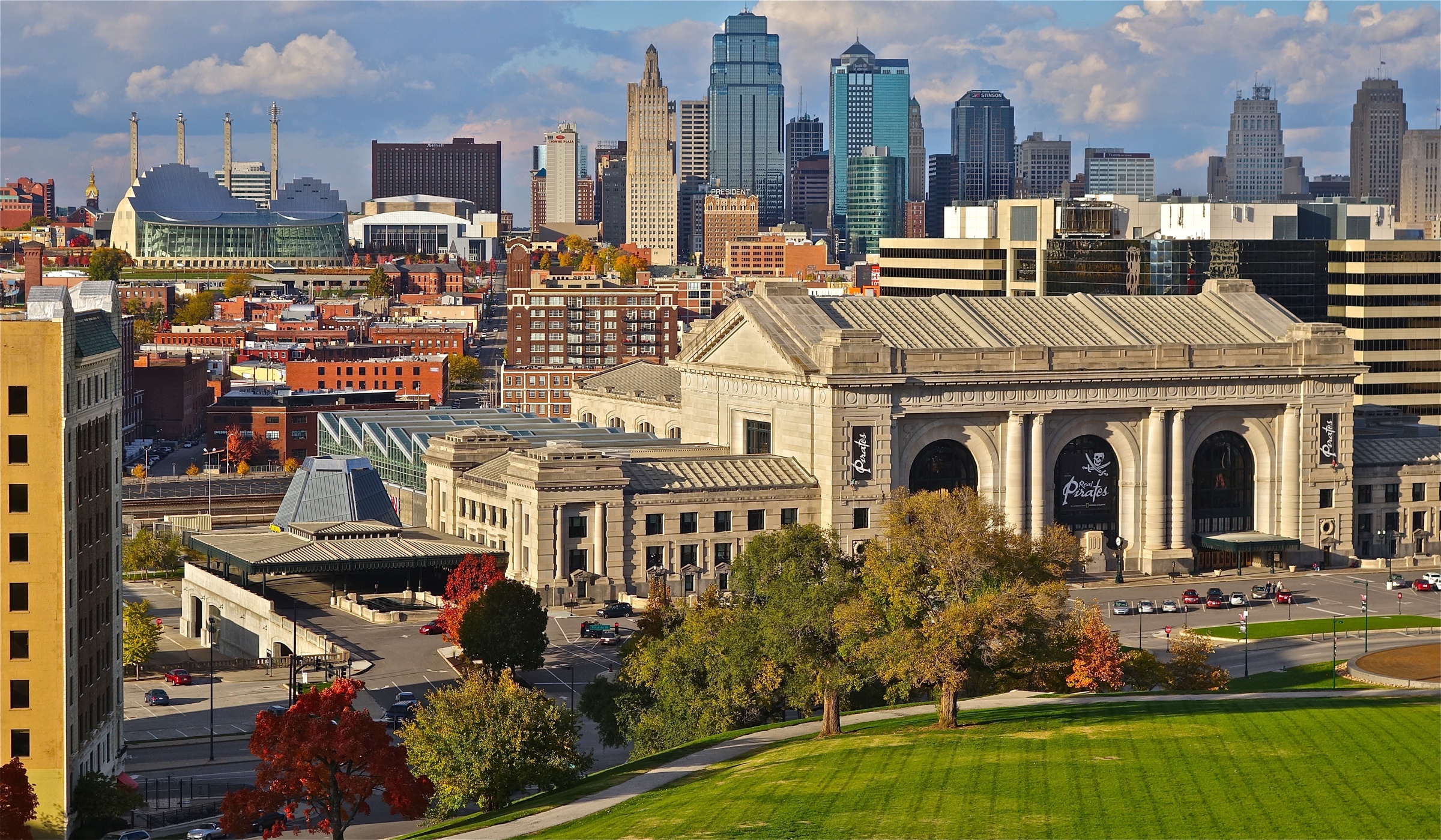
Photo: Dean Hochman / Wikimedia Commons, November 1, 2013. CC BY 2.0. Resized; no crop.

An event can have many people requesting photographs and only one person responsible for the commission. I would identify that person early in a Kansas City brief. The photographer needs to know whose decision settles a conflict, not simply whose request arrives most confidently.
That is especially useful when a program combines presentations, partner interaction, and required groups. Each request can be reasonable while their timing is incompatible. A clear approval chain protects the important pictures and lets the organizer make changes with an understanding of the consequence.
The Kansas City Convention Center's official Kay Barnes Grand Ballroom page supplies the local setting here. The program examples are hypothetical, not open jobs or accounts of my personal assignments. This guide helps clients commission and photographers apply for a real service; it is not a ranked list of named photographers or a prediction of local demand.
Start with authority over the photographic record
Ask who commissions the service, who may redirect it during the event, and who reviews the final result. Those roles may belong to different people, but the distinctions should be understood. Otherwise, a crew can receive conflicting instructions from departments that each assume they control the work.
The photographer should know the essential record and the route for changing it. A guest's request can be worthwhile without automatically outranking the main program. Another department's need can be legitimate without being included in the original scope.
I would make the process simple: explain the request, identify what it displaces, and ask the authorized contact. This keeps the choice with the client while avoiding an argument with the person who asked. It also gives flexibility a practical boundary.
A request to add a group is a choice about attention
Suppose leadership becomes available during an essential presentation. The photographer cannot provide uninterrupted stage attention and a controlled group elsewhere at the same time. The organizer needs to choose timing, staffing, or priority.
An added group may be the right choice. The problem is not the change itself, but making it silently and leaving someone else expecting the displaced record. A clear decision protects both the new requirement and an honest account of what can no longer happen.
Keep material changes with the scope record. An approved substitution is different from an unexplained omission. The final gallery should be assessed against the actual commission rather than whichever version someone remembers afterward.
Give approval a subject, not just a signature
Different questions need different owners. The event lead can decide program priority. A venue contact may need to approve a working position. A factual reviewer can verify names. The person handling public release may decide whether a particular selection can be shared.
Do not assume one approval settles every question. Permission to photograph an event is not automatically permission to publish a restricted discussion. Permission to use a room does not establish that the camera team may occupy any position in it.
The brief should identify the relevant person and unresolved question without adding unnecessary administrative layers. The aim is a reliable answer, not more paperwork. A compact plan can make the boundaries easier to follow during a busy program.
Keep pending status visible
A proposed portrait position may be attractive but unconfirmed. A draft recipient list may be nearly complete but not factual enough for captions. A public selection may be delivered while still awaiting review. Those states should not be flattened into a general claim that everything is ready.
A photographer can keep independent preparation moving while waiting for one answer. Reviewing the supplied program, identifying overlaps, and explaining equipment needs need not stop because one permission remains open. But the missing answer should not be silently assumed.
That distinction is useful for the client too. They can see what actually needs their decision instead of being asked to audit the whole plan for hidden gaps. The result is a commission with visible dependencies.
Use the current ballroom identity in the working plan
The operator identifies Kay Barnes Grand Ballroom as 2501. Its page describes a controllable natural-lighting system and a glass wall facing south toward the Kauffman Center for the Performing Arts. Those are specific facility facts to use carefully, not a guarantee about an event's installed appearance.
For a hypothetical main program there, obtain the actual configuration, production plan, and permitted camera positions. The source's daylight description does not establish show cues, clear sightlines, or the look a client can expect from every angle.
This guide does not reproduce area or capacity totals from the page. Numerical venue figures cannot substitute for the actual production layout, and different figures should not be turned into a false precision about where a portrait setup will fit.
Decide whether the glass wall belongs in the story
A client might want an establishing picture that includes the setting. Ask why it matters: to identify the occasion's place, support an announcement, or provide visual variety. The answer tells the photographer how essential that background is.
A context view may complement a clear required-person picture rather than replace it. A wide image can make the setting readable while leaving the participant too small for another use. The client should not expect one frame to perform every editorial job.
If a precise view is essential, confirm the actual working position and event arrangement. Do not promise it from the operator's public description alone. A specific result needs the conditions that make it possible.
Controllable daylight does not eliminate preparation
The official page's lighting feature can be useful context. It does not tell the photographer what will be controlled, by whom, or under which program instructions. Ask the current production contact rather than infer a lighting plan from a building feature.
An applicant should explain what needs confirmation and show relevant authorized work. Prior experience may improve the questions, but an earlier setup is not evidence that the new event will match. A responsible first visit can be prepared with current facts.
If the client expects controlled portraits or product images as well as event documentation, define those outcomes separately. An attractive ballroom does not automatically turn roaming coverage into a campaign production.
The outdoor plaza is another approval question
The operator says the ballroom opens to an outdoor plaza at the southeast corner of the complex. That supports asking whether the actual program includes an outdoor component. It does not establish access, weather, crowd conditions, or permission for a group on an unspecified date.
If a required picture depends on that area, identify the approving contact and a practical alternative where possible. Preserve the important people and use rather than make one unconfirmed background the condition for completing the commission.
Choose while participants are available. A preferred setting becoming usable after the group leaves is not a successful fallback plan. The organizer should know when their decision affects whether any version of the image can be made.
Separate a gathering from a portrait station
A client may picture informal guests outdoors while also asking for controlled groups. Those are different services. A roaming photographer can observe conversation; a station needs a defined setup, intended look, and gathering responsibility.
Portable equipment still occupies working space and needs agreement. The photographer should describe real needs rather than let a small-looking setup imply that it can be installed anywhere without coordination.
If the same person also covers the main program, define when they switch duties. A stationary service cannot continuously roam elsewhere. The organizer can choose a sequence or additional coverage after understanding the actual tradeoff.
A Conference Center connection does not solve concurrency
The official page describes the ballroom's connection to the Conference Center for additional breakout rooms. That relationship is useful facility context. It does not prove that a single photographer can cover simultaneous essential activity completely.
For a hypothetical program with breakouts, ask whether the client wants selected visits or an uninterrupted record of every assigned presenter. Selected coverage can be a valuable and sufficient choice. It becomes a problem only when completeness is assumed but not offered.
Use exact rooms and the current schedule to identify conflicts. Do not infer a travel time from the word connected. If essential moments overlap, address staffing, timing, or a narrower requirement before a proposal is accepted.
Workshops need a decision about photographic interruption
If the client wants a discussion observed naturally, tell the crew. The photographer can look for facilitation, participant exchange, and response without stopping every table. If formal groups matter, give them a finite place in the program.
A candid brief should not conceal an expectation that every participant faces the camera. The organizer needs to choose the desired treatment and provide the cooperation it requires. A photographer cannot make both promises universally without a workable schedule.
When a workshop changes rooms, update the operative plan. A corrected attachment helps only if the crew knows it supersedes the earlier one. Name the person responsible for communicating changes during the event.
Required people need identification from someone who knows them
Provide the actual names or organizations that matter and a contact who can introduce them. A photographer unfamiliar with the group cannot reliably recognize a partner representative from a logo list. Guessing at importance from seating is not an adequate method.
For recognition, use verified names and the current sequence. A substitute accepting for someone changes the factual record. If captions are included, the organizing team should verify roles and context rather than leave the crew to infer them visually.
For groups, list essential combinations and appoint a gathering contact. The photographer can arrange people while the organizer identifies who is missing. A single leadership image and a full set of departments create different workloads.
Do not wait indefinitely for a missing subject without telling the client
An absent representative or delayed demonstration can matter. The photographer should report it and ask whether to return, use an approved alternative, or protect another duty. Silent persistence can create another missing requirement elsewhere.
If a demonstration can be repeated, confirm when and under whose direction. Do not ask the photographer to invent a spontaneous exchange or direct an operator without permission. A readable record should remain honest about what happened.
The same principle applies to required detail images. If controlled product work is needed, define the intended result rather than assume any object at an event receives a separate advertising service.
Verify working access through the actual booking
A public venue page does not establish crew check-in, equipment routes, restricted entry, or permission for a setup. Obtain current instructions for the attending team. Past familiarity is useful context, not permanent authorization.
If credentials or insurance are required, get the actual specification and confirm the crew can satisfy it. A portfolio and platform profile cannot prove compliance. This guide does not create a universal Kansas City requirement from one possible event's terms.
If another property is added, use its actual address and timing to assess feasibility. Do not invent a regional transfer allowance or assume that another location is free coverage time. Identify which obligation has priority if schedules change.
Evaluate portfolios as evidence of the proposed responsibility
I would request a permitted complete example resembling the hardest duty. Recognition needs consistency through routine recipients, not only a dramatic frame. Participation needs interaction, not just occupied space. A public story needs context as well as close expressions.
Ask what the applicant personally handled and who will attend. A collaborative gallery can combine several roles. Accurate attribution lets the client compare the actual service rather than assume one person simultaneously managed stage, roaming, portraits, and delivery.
If privacy prevents sharing a full example, request an authorized alternative. A prospect's interest does not override another client's restrictions. Respect for that boundary matters when the new organizer is considering trust with private material.
Ask a reference how a decision reached the right person
A specific changed plan can reveal useful behavior. Did the photographer explain a conflict while the client could still act? Did an added group or moved program receive an authorized choice? The reference does not need to share private guest details to describe that.
I would favor clear conditions over an unlimited assurance. A named question can be answered. An invisible assumption may remain hidden until the essential moment is gone. The proposal should let the organizer assess sufficiency before booking.
Current preparation matters even when someone knows the building. The actual layout, program, people, and permissions belong to this event. The photographer should show how those will be confirmed rather than rely on a broad claim of local expertise.
ProShoot applicants can name what they will own
ProShoot's published workflow includes clients posting work, reviewing bids and portfolios, and choosing a photographer. Photographers apply and present relevant work. Use that exchange to define the commission without unsupported promises of demand, earnings, or guaranteed opportunities.
An application should identify the essential record, relevant evidence, concurrent conflicts, and open questions. Check availability across arrival, setup, assigned coverage, and any agreed editing. Name the actual crew and required client cooperation.
Do not invent personal Kansas City shooting history or imply plaza access from a public page. Relevant evidence and a credible plan for verification can stand on their own. A listing cannot grant venue permission.
Check the room label in the final call sheet
Use Kay Barnes Grand Ballroom and its 2501 identifier together when that is the actual assignment. An internal nickname can be convenient for a planning team while remaining unclear to the attending photographer. Confirm the same destination appears in the current program, working instructions, and crew communication before relying on it.
End with an approved, usable record
Agree on selection, editing, organization, intended uses, delivery, storage, and access. If captions are included, name a factual reviewer. If release needs approval, make pending status visible and settle the photographer's own promotion separately.
An earlier selection is a real duty. Define who produces it and who photographs while someone edits. The actual agreement should govern the allocation rather than an unexamined speed promise that silently adds another simultaneous task.
At closeout, reconcile essential requirements with the actual program and approved changes. Explain a canceled activity, absent subject, or unresolved permission before the client discovers a gap by searching. A known issue should not disappear inside a high-volume delivery.
The Kansas City photographer I would hire makes the approval chain and the promised result understandable. That leaves room for good observation and useful changes while keeping essential decisions with the person responsible for them. The finished record should be easier to use because the commission was clear, not because the client performed a second investigation afterward.
Close the approval loop after a decision changes
When an authorized contact redirects the photographer, the people affected need to hear the result. A gathering assistant may need a new location; a stage lead may need to know the crew is protecting the presentation instead; the final reviewer may need to understand an approved substitution. A decision that reaches only one person can leave the old expectation active elsewhere.
Keep the communication limited to the actual consequence. There is no need to circulate private reasons unrelated to the photographic task. The purpose is to ensure the new plan is executable and that the final record will be reviewed fairly. I would favor a short confirmed update over a chain of informal assumptions. It lets the crew remain flexible without making the organizer discover afterward that different teams were following different instructions.
Sources checked November 6, 2026
Ready to hire a professional photographer?
Post your job free and get bids from photographers near you.
Post a Job Free →