Top Event Photographers in Iowa
Plan Iowa event photography around Des Moines convention spaces or a Coralville conference and reception. Hiring questions and practical proposal advice.
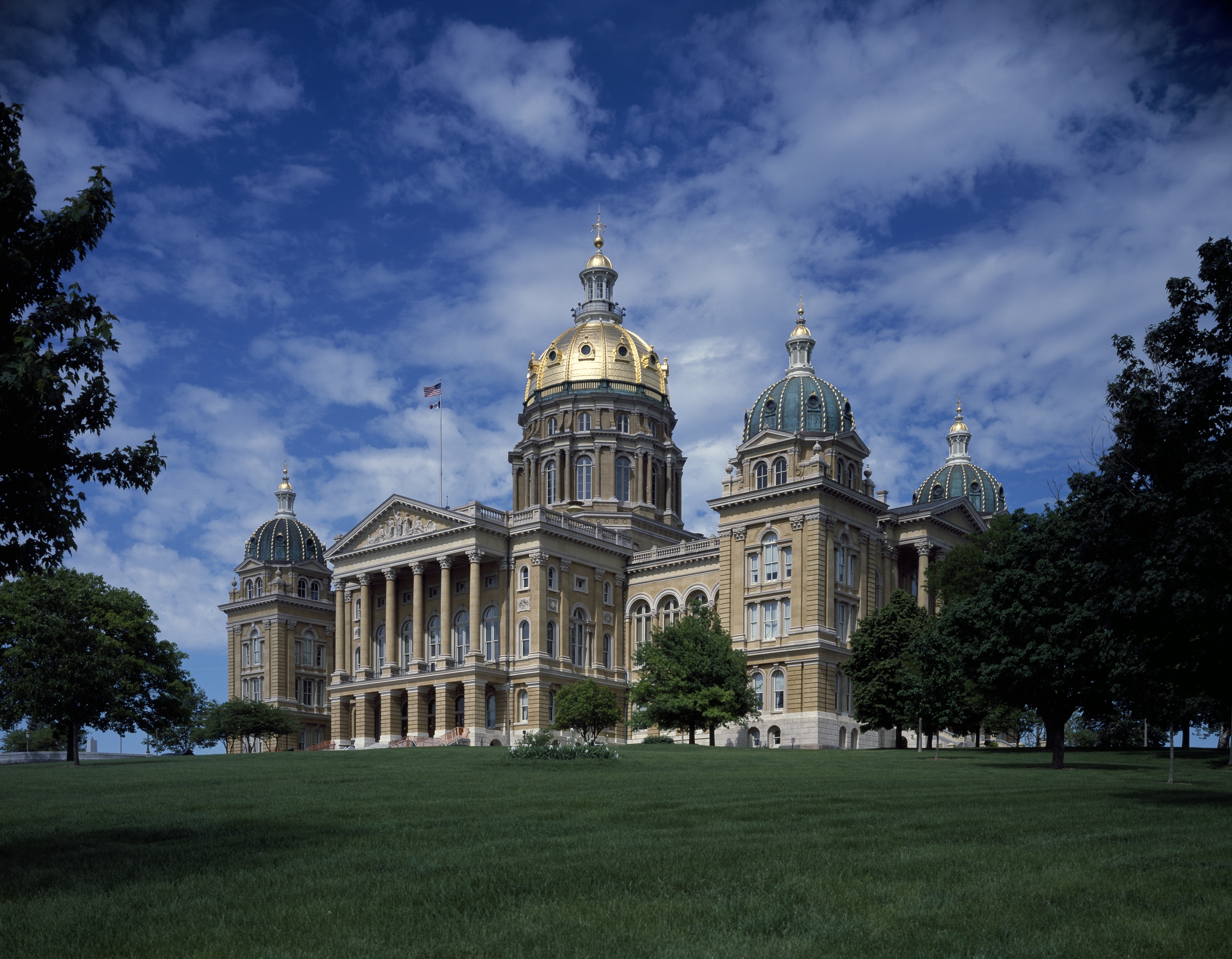
Photo: Carol M. Highsmith / Library of Congress, Prints and Photographs Division, LC-DIG-highsm-15231, between 1980 and 2006. Public domain. Resized; no crop. Source. Rights.
A useful Iowa event photography inquiry is not the one with the longest description. It is the one that makes the important decisions visible. I want to know what the images must explain, which moments will not happen twice, and who can help the photographer find the right people.
I checked the Iowa Events Center's current convention information and the hotel operator's description of Hyatt Regency Coralville Hotel and Conference Center for this guide. Those pages support the facility facts below. The imagined programs are examples for planning, not personal event history or evidence of an open job.
I would not rank named photographers without reviewing their available work against a real assignment. Instead, I would use a short decision record that follows the job from inquiry to delivery. That gives a client something clearer to compare and gives a photographer a better chance to explain their approach.
Decision one: which building does the inquiry actually mean?
In Des Moines, current names matter. The Iowa Events Center's official page says Hy-Vee Hall became EMC Expo Center on January 1, 2025, and Wells Fargo Arena became Casey's Center on July 1, 2025. A new brief should not leave an old venue name unexplained when it can supply the current one.
The same official page identifies the convention facilities, exhibit space, Grand Ballroom, Junior Ballroom, and meeting rooms. It describes the Junior Ballroom as divisible and identifies a connection to Hilton Des Moines Downtown. Those are useful references, not a complete event plan or a grant of access.
I would confirm the exact booked space with the organizer and put its name into the inquiry. An old attachment may refer to the same building under a former name, but the crew should not have to resolve that ambiguity on arrival. Add the actual entrance and reporting contact when they are confirmed.
An arena program and a convention program are different jobs
A client might refer generally to the Iowa Events Center while commissioning an awards luncheon, an exhibition, or an arena function. Ask which one. The room, program, and permissions can differ even when the locations belong to a related complex.
Do not infer credentials from a public calendar or an attendee ticket. The photographer needs the access arrangement for the commissioned work. If another program is taking place nearby, that does not automatically make it part of the coverage or allow the crew to enter it.
I would also check whether the client intends coverage at the connected hotel. A physical connection is not the same as an included assignment. Name the hotel function and its arrival instructions separately if it belongs in the job.
Decision two: what does the client need to prove?
For an imagined Des Moines association meeting, suppose the client asks for a keynote, members participating in an exhibition, and an award recipient group. I would write the reason for each beside the request. The keynote may support a public recap; participation may support a member report; the group may be an organizational record.
That exercise often exposes a vague request. Exhibition photographs can mean empty displays, active demonstrations, conversations, or an overall view. Those are different images with different timing. Ask which result the client expects instead of treating the category as self-explanatory.
The recipient group is another kind of task. It requires people gathered at an agreed moment and someone who knows who is missing. A photographer can arrange faces and composition without knowing the organization's membership. The client should assign the person who supplies that recognition.
Put the award group where it can actually happen
If the keynote and the group are both essential, avoid scheduling them in different rooms at the same time. Discuss whether the group can move, whether a priority changes, or whether another photographer is needed. No amount of enthusiasm makes one person fully present in two places.
I would ask who gathers the recipients and who releases them after the photograph. A planned group can become much harder when participants assume the formal program is finished and leave. The organizer controls that sequence; the photographer needs it communicated before the moment depends on it.
A useful brief does not have to dictate every frame. It should protect the essential opportunities and leave visual judgment to the photographer. That balance is more productive than an exhaustive list with no distinction between indispensable and optional images.
Decision three: what changes in Coralville?
The hotel operator's March 31, 2026 description of Hyatt Regency Coralville places it on the banks of the Iowa River and identifies two ballrooms, an exhibit hall, meeting rooms, and outdoor spaces. That is a separate facility reference, not an extension of the Des Moines brief.
For a sample company meeting followed by a reception, I would ask whether the images are intended for internal communications, partner material, a public announcement, or another purpose. A company name alone cannot establish which participants or screens may appear publicly.
Give each booked room its actual name and current configuration from the organizer. The operator's description does not establish the event's stage, seating, display, or circulation plan. A photograph from another reception may show relevant work without demonstrating the view available at this one.
A river setting can be secondary to a conversation
If the client wants the location recognizable, make that a stated image goal. If the reception is mainly about introductions among colleagues or partners, identify those people and interactions. A photographer should not assume the attractive setting deserves more attention than the relationships the client needs recorded.
If an outdoor image is proposed, confirm that the event has access to the intended position. A hotel description mentioning a river does not grant permission to use every adjacent area. Identify an alternative for any required group and the person who can make a location decision.
I would ask for a contact who knows the guests. A roster may help, but it does not always let a photographer recognize someone in a crowded reception. A quick introduction can protect a required image more effectively than expecting the crew to solve the client's relationship map from scratch.
Keep private meeting coverage private when required
A company meeting may include material not intended for public distribution. Ask how restricted slides, displays, or discussions will be identified. Do not assume that a person attending the event or a screen visible in the room is automatically cleared for every use.
If review is required, name the reviewer and describe the decision. Is the check about confidential content, participant identification, or brand use? The photographer should know which images wait and which may be delivered for the agreed purpose without an additional step.
The photographer's portfolio use should be discussed separately. Delivery of a private gallery does not necessarily authorize public promotion. An otherwise successful commission should not produce a later surprise when internal meeting images appear in a new job application.
Decision four: which complete work supports the proposal?
For the Des Moines sample, I would want a sequence connecting a presentation, exhibition activity, and groups. Check whether the gallery explains the event, not only whether one frame is striking. A strong keynote photograph does not demonstrate the whole assignment if the rest is missing or repetitive.
For Coralville, I would review indoor meeting coverage and reception interactions. Look for consistent expressions, clear faces, and a sense of who is talking to whom. A scenic hotel exterior is context, not evidence of how the photographer handles a program with important people and restricted material.
Ask who made the work and in what role. An additional photographer may have excellent examples from the reception while another person handled the meeting and delivery. That experience is useful when described accurately. It should not become a claim of responsibility for the entire event.
I would not require identical venue history. Someone new to a room can prepare from current plans and instructions. Someone who knows the building can still rely on old room names or assumptions. The quality of the preparation matters more than a casual claim to have photographed everywhere in Iowa.
Make the reference question observable
Ask a previous client how the photographer handled one late request or schedule change. Did they explain what the change would affect? Did they ask for help finding an important participant? Did the delivered set reflect the priorities that had been agreed?
There is no need to gather another organization's confidential program or guest details. You are checking how the working relationship functions. A specific example of communication gives more useful evidence than a collection of broad compliments.
Decision five: what does each side promise?
The organizer should provide the confirmed rooms, current program, required people, intended image uses, and restrictions. The photographer should describe the coverage, staffing, equipment, selection, editing, and delivery they propose. Put any remaining conditions beside the person who can settle them.
Name who may approve additions during the event. A guest asking for portraits does not necessarily have authority to move the crew away from the keynote. A sponsor request may deserve attention, but the commissioning contact needs to decide whether it changes priorities. Clear authority protects the event's purpose without making the photographer unhelpful.
Discuss how a new room, another reception, or an extended program affects the scope. The point is not to refuse changes in advance. It is to make them decisions rather than assumptions that each side understands differently.
Compare proposals on those terms before treating them as equivalent. A headline total or image count can conceal different coverage. More repeated images do not necessarily create a more useful record of the essential group, presentation, and interactions.
Rights should match the destinations chosen at the start
If the pictures are for internal records, public posts, press distribution, or partner campaigns, say so. Receiving a file is not a complete explanation of permitted use. The agreement should identify the audience and rights the commission actually needs.
For any images supplied to another organization, confirm that the intended use is included. A sponsor receiving a report and a sponsor using an image in its own advertising may be different requests. Settle the permission rather than assume every downstream use follows automatically from the original event.
If names or captions are part of the assignment, identify who verifies spelling, titles, and affiliations. The photographer should not reconstruct them from memory or a partly visible badge. Factual labels need a reliable source from the organizing team.
Decision six: can the crew arrive and work as planned?
Send a practical arrival note separate from the guest invitation. It should contain the confirmed reporting point, contact, permitted arrival window, and equipment route. If an entrance or access arrangement remains unknown, label it rather than guess.
Describe additional equipment early. A portrait backdrop or extra light takes space and must fit the approved circulation and production plan. Portable does not mean unrestricted. The client also needs to understand that a fixed station changes how much roaming coverage the same photographer can provide.
If insurance documentation is required, obtain the current specifications and check whether the proposed photographer and crew meet them. A portfolio does not establish policy details, and one certificate used elsewhere may not satisfy this booking. This is an event-specific check, not a statement about every Iowa venue.
For another town or property, prepare separate instructions. A Des Moines convention page cannot establish access in Coralville or at a private celebration elsewhere. Use the actual locations and schedule rather than an unsupported statewide travel estimate.
Photographers: turn the decision record into an application
For the Des Moines inquiry, I would show relevant presentation, exhibition, and group work. My response would mention the current facility names, identify any schedule conflict, and ask who gathers the recipients. That is more useful than a generic statement that I can photograph all corporate events.
For the Coralville inquiry, I would address private meeting material, guest recognition, and the reception's image purpose. If a river-setting photograph is important, I would ask about the actual position and permission. A specific answer helps the organizer compare the proposal with the job they are commissioning.
ProShoot's published process describes clients posting assignments and comparing bids and portfolios before selecting a photographer. Its photographer workflow includes applying and presenting work. Use that process to make the actual scope clear. A profile does not by itself prove credentials, insurance, venue access, or permission to publish previous clients' material.
Keep examples authorized and roles precise. If a project cannot be shown, choose another permitted example or obtain approval through the appropriate route. Winning a new commission should not depend on exposing a private event. A client who sees that care has better evidence of how their own information will be treated.
Availability includes the conditions of the job
Check the location, arrival needs, coverage period, and any additional function before promising availability. A short presentation may still require setup and preparation. A different property cannot be added on the assumption that it is close enough without examining the program.
State what remains conditional and why it matters. An unanswered room assignment or release rule is not a reason to invent certainty. It is an opportunity to give the client a clear question and settle the plan before the event relies on it.
Delivery is the final decision, not an afterthought
Ask how the organizing team will find the photographs it needs. The Des Moines group may want sessions, exhibition activity, and recipient groups easy to locate. The Coralville company may need approved public images separated from material awaiting review. Discuss an organization that supports those tasks.
Set the delivery date and any earlier selection separately. If images are needed during the event, describe the review route and how editing affects coverage. A casual request for quick photographs should not become an undefined obligation to edit throughout a live program.
Explain the storage and access terms genuinely offered. Do not promise permanent availability unless it is part of the service. The job closes more cleanly when the client knows where the agreed files are, which images require review, and how factual corrections will be handled.
A better Iowa shortlist is built from answered decisions
I would not rely on company lists, festival recurrence, sports history, seasonal peaks, or claims of constant statewide demand to choose a photographer. The cited facility pages do not establish an open job or a particular person's fit. The useful evidence is the work and plan connected to the actual commission.
For Des Moines, that means current venue references and an achievable presentation, exhibition, and group sequence. For Coralville, it means a clear meeting-and-reception purpose with appropriate permissions. Whether you are hiring through ProShoot or applying there, make those differences visible. A useful conversation is the one that leaves both sides understanding the photographs they have agreed to make.
Reopen the decision that changed, not every decision at once
When a client revises a room assignment or adds a required group, identify which earlier choice is affected. A changed location may require new access instructions without changing the intended image. An added portrait service may change staffing or attention while leaving the venue destination intact.
Ask the photographer to explain that consequence in ordinary language and name the person who can approve the revised plan. This keeps the decision record useful instead of turning it into an accumulation of drafts. The crew should know which version governs and which conditional idea never became part of the commission.
At delivery, the same record can explain why the result differs from the first inquiry. An approved change is not an unexplained omission. The client should be able to recognize the essential duties performed and the unresolved item still awaiting an answer. That is a practical completion test, whether the actual Iowa program is a selected recap, a required-person record, or several deliberately assigned photographic services.
Sources checked November 6, 2026
- https://www.iowaeventscenter.com/convention-center
- https://www.marcushotels.com/press/hyatt-regency-coralville-hotel-conference-center-ranked-1-for-guest-recommendation-alongside-other-top-honors/
- https://proshoot.io/how-it-works/
Ready to hire a professional photographer?
Post your job free and get bids from photographers near you.
Post a Job Free →