Top Event Photographers in Indiana
Find top event photographers in Indiana for conventions, sports events, and weddings. Hiring guidance plus photography jobs across IN.
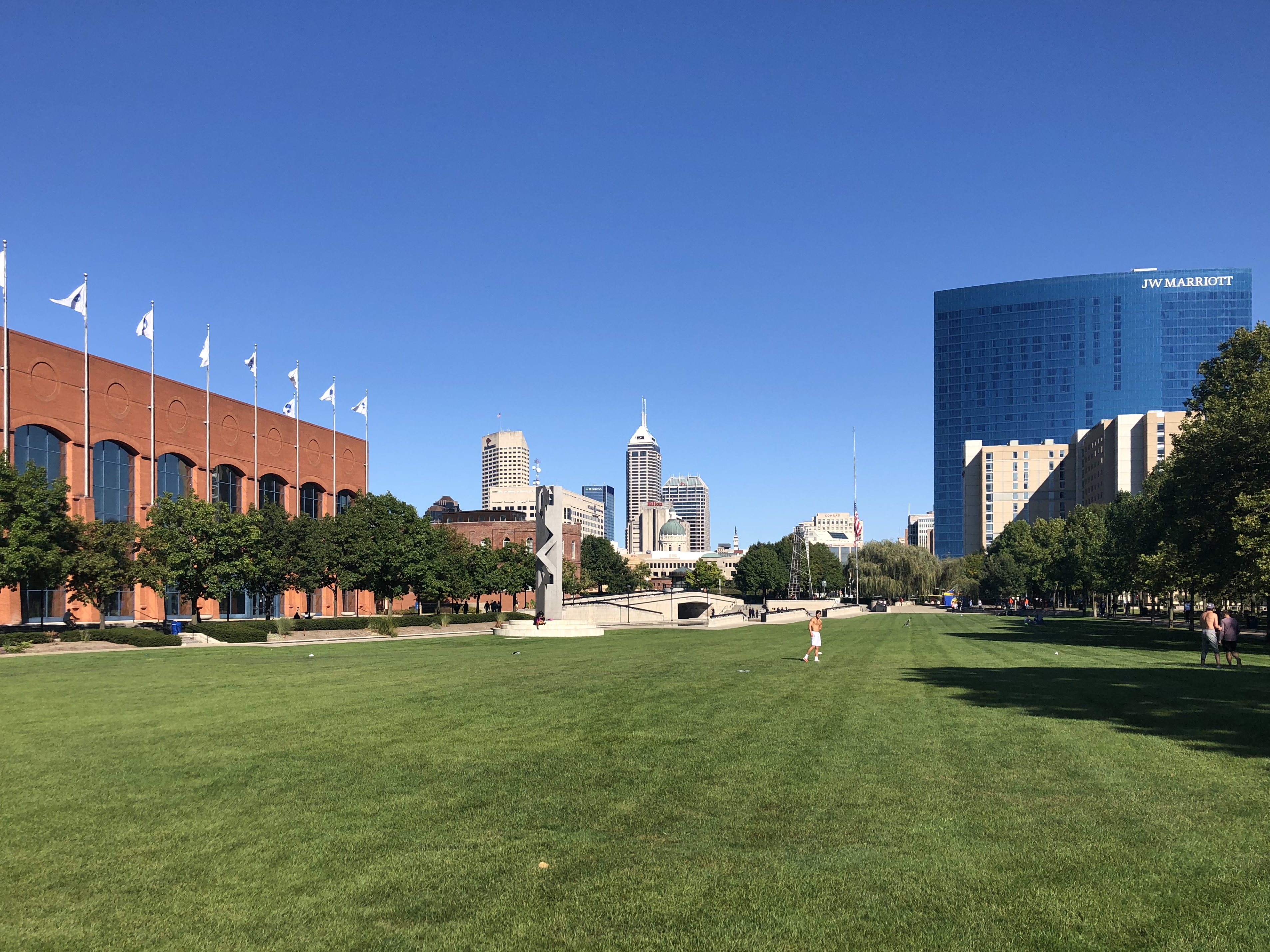
Hero photo: Indianapolis skyline from White River State Park, 2020, by Momoneymoproblemz. License CC BY-SA 4.0, via Wikimedia Commons. Shown uncropped.

In an Indiana event photography brief, I would pay attention to the word connected. A hotel, convention building, and stadium may be linked in a planner's description, but that does not tell a photographer which route is open, where equipment enters, or whether the schedule allows movement between rooms. The details that make a venue appealing are not automatically the details that make coverage workable.
I have photographed events for more than 20 years. My approach to hiring starts with the photographs the client needs and works backward to the people, places, and decisions required to make them. For Indiana, the examples below focus on an announced Indianapolis hotel opening, a convention's historical attendance figure, and the distinction between an organization's location and access to its events. This is a hiring guide, not a list of ranked photographers.
Indianapolis: Verify the Connection Before You Rely on It
A future opening belongs in the brief as a future opening
Hilton's October 6, 2026 announcement describes the 803-room Signia Hilton Indianapolis as opening in December 2026. It also describes a skywalk connection to the Indiana Convention Center and Lucas Oil Stadium. As of this review on November 6, I would not write a photography plan that treats that announced opening as an already operating route.
If your event involves the hotel, ask the organizer for the current booking confirmation and instructions for the date in question. A published opening target is useful context; it is not personal authorization to enter a building or proof that a particular space will be available. The photographer needs the actual room and the host's current instructions.
That distinction applies to older buildings too. A connected-property description can tell you how facilities relate to one another, but a photography assignment needs a practical route. Ask about vendor entry, elevators, equipment movement, and any time when the route changes. Keep those answers tied to the event rather than assuming a previous visit establishes the new arrangement.
Test the route against the photographs
Imagine a conference session followed by a reception in another building. I would ask where the photographer needs to be at the end of the session and what image must happen first at the reception. If the organizer expects the last question from the audience and the first greeting at the next venue, show the conflict plainly. A connection between properties does not let one person occupy both places.
The choice might be to change the priority, adjust the schedule, or add coverage. What matters is that the client makes an informed decision. A photographer should not have to quietly choose which promised moment will be missed. Put the agreed tradeoff into the coverage plan so the event lead and communications team understand it the same way.
I would also check who communicates route changes. If a door is unavailable or a room moves, the photographer needs a named contact who can provide the approved alternative. Give that person the coverage priorities, not merely a phone number on a general contact sheet. They should know which change could affect a required photograph.
A Gen Con Number Is Historical Context, Not a Staffing Formula
Gen Con reported more than 71,000 attendees for its 2024 event. That tells us something about that edition's scale. It does not establish the attendance of a later event, the size of a specific exhibitor's assignment, or how many photographers a new client needs. I would preserve the year beside the figure and avoid turning it into a prediction.
For a convention-related commission, first identify who is hiring. An organizer documenting the overall event, an exhibitor photographing a booth, and a publisher commissioning participant portraits need different proposals. A photographer might be able to perform all of those types of work, but not under one undefined request to cover the convention.
An exhibitor brief should explain the interaction
If the client is an exhibitor, ask what should be visible in the images. A demonstration, a conversation, a branded display, or a guest trying an activity each tells a different story. Identify the people and objects that make the image useful. A generic photograph of a crowded aisle may say little about what the client actually did.
Ask whether participants can be photographed for the intended purpose and how any permissions will be arranged. The photographer should know whether the images are for an internal record, a public recap, or promotion by the exhibitor. Do not assume that a badge, a public venue, or a busy booth settles every image-use question.
Build a short list of visual needs without scripting every gesture. The photographer needs room to respond to what happens, especially when a useful interaction cannot be repeated. I would distinguish an essential product detail from an example of the atmosphere the client hopes to show. That keeps the brief useful without turning it into an impossible checklist.
An organizer brief needs a coverage boundary
If the client wants the broader convention story, define the rooms, activities, and periods included. Which sessions require specific coverage? Are there quieter activities that matter as much as the headline program? Who can identify the people named in the communications plan? An organizer's access can help only when the photographer understands what that access covers.
I would ask for a priority map of the program. Assign one person to settle conflicts during coverage, and give them the authority to choose between competing requests. If several departments submit separate lists, combine them before the assignment begins. Calling every image essential does not make all of them possible.
The finished gallery should reflect the event's purpose rather than only its size. A large attendance figure can encourage an overemphasis on crowds. Ask for images that explain participation, learning, connection, and the activities the client wants remembered. The audience should be able to understand what happened without reading an explanation beside every frame.
Keep an Indianapolis Organization Separate From Its Event Permissions
The NCAA identifies Indianapolis as its headquarters location. That is a verified organizational fact, not evidence that a photographer can enter a championship, receive credentials, or work for a participant. I would remove any suggestion that an office location automatically creates assignments or access.
For sports-related hospitality, ask whether the commission is for a private gathering, a sponsor activity, a public program, or event action. Those distinctions affect both access and the photographs needed. A proposal should name the actual assignment rather than rely on the appeal of the sport or organization associated with it.
Hospitality and competition are different jobs
A client may want photographs of guests meeting, speaking, and celebrating without needing any coverage of competition. Ask that question directly. It can prevent a confusing proposal built around access the client has not arranged and images they do not need. The coverage should follow the commission, not an assumption about what a sports-related event must include.
If competition photography is part of the request, ask who is responsible for credentials and what restrictions apply. Confirm the relevant program and location with the organizer. A photographer's past access to another event does not transfer to this one. Keep permission questions visible until the responsible source answers them.
Compare Indiana Portfolios With the Brief Beside Them
I would review portfolios after defining the assignment, not before. It is easier to judge relevant work when you know the conditions the new photographer must handle. Ask for a complete gallery from comparable coverage that the photographer can share. A collection of favorite images can show taste without showing how a whole event was documented.
Read the quiet frames
The gallery's ordinary photographs are often useful evidence. Look at people listening, checking in, waiting for a presentation, or speaking in small groups. Are expressions natural? Is the context clear? Does the photographer avoid awkward interruptions? Those images show whether attention continues between the obvious highlights.
Then look for the moments the client had to organize: a leadership portrait, an award presentation, or a formal group. Can you see a consistent approach to spacing, faces, and backgrounds? Ask how the event team supported those photographs. A strong group image may depend on a host who gathered the right people at the right time.
Ask about the role behind the pictures
If a gallery came from a larger crew, ask which parts the photographer covered. That is a normal question, not a challenge to their credibility. The proposed lead photographer should explain the responsibilities they held and how those examples relate to your event. Do not infer sole coverage from an event name on a profile.
Discuss the kind of direction you want. Some moments need active organization; others work better when the photographer observes quietly. A useful answer describes when the photographer would intervene and when they would step back. Style is easier to understand through those decisions than through a single label.
Look for adaptable coverage, not an equipment recital
Equipment can matter, but a list of camera bodies does not explain how the gallery was made. Ask what the photographer would do if a room were darker than expected, a portrait location changed, or the schedule compressed. The answer should connect preparation to the photographs, while acknowledging anything the organizer must confirm.
Backup equipment and file protection belong in that conversation. Ask about the plan in practical terms and record any commitment that affects the assignment. You are not looking for a claim that nothing can fail. You are checking whether the photographer has thought about keeping coverage going when the original plan changes.
Give Each Indiana Location Its Own Instructions
A statewide event series should not be briefed as if every date were the same assignment. For a meeting in Indianapolis and another gathering elsewhere in Indiana, list each venue, address, schedule, contact, and intended use. Ask the photographer to confirm which dates and locations their proposal includes.
A campus program, a company reception, and a private celebration may share a host but still need different treatment. Identify privacy concerns, people who must be recognized, and group photographs that need arranging. Keep those details next to the relevant date so instructions do not drift from one event into another.
For an outdoor component, name the approved alternative and who will decide when to use it. Ask the photographer how that change affects portraits or movement between spaces. The alternative needs a real location and a communication plan. A sentence saying weather permitting does not explain what happens to the photographs if conditions change.
Define the Handoff Before Choosing the Photographer
I would ask the client to describe the first use of the images and the longer life of the archive. Are files going to a communications lead for a recap, to an internal team, or to a family gallery? That answer helps set the edit and delivery without assuming every event needs the same process.
Separate a rapid request from the main gallery
If the client needs a selection during the program, identify the photographs, the recipient, and the approval path. Ask whether the photographer's proposed schedule can support that work. Time spent selecting and editing files is time that must be accounted for, especially if coverage continues in another room.
For the main gallery, agree on file formats, delivery dates, and the selection process or expected quantity. Clarify whether captions, naming conventions, or different image sizes are included. These are ordinary production decisions, but they become frustrating when each side imagines a different final package.
Write down who may use the images
An internal presentation and an external campaign are different uses. Distribution to a sponsor or another organization should be discussed rather than assumed. Ask the photographer to explain the proposed permissions in language the client understands. The agreement should make clear what the client receives and what uses both sides have accepted.
Identify any people or materials that require restricted handling. Confidential slides, private documents, and guests who should not appear publicly need a workable instruction. Name the contact who can answer a question during coverage. Avoid telling the photographer to use judgment while withholding the information needed to make that judgment.
Use ProShoot to Make the Comparison Specific
The ProShoot post should give available photographers enough information to assess the job: the event date, exact location, hours, program, image purpose, and constraints that affect coverage. Compare proposals against that description. If one bid assumes a single room and another includes simultaneous activities, settle the difference before making a choice.
I would keep a short list of unanswered questions for each candidate. Relevant gallery, named photographer, coverage boundary, delivery plan, and permissions are useful comparison points. A polished introduction does not replace an answer about an essential session. Choose the proposal that makes the assignment understandable as well as visually promising.
For photographers seeking event photography jobs in Indiana, demonstrate fit with a precise example. Explain what the client commissioned, what you photographed, and how the gallery served its purpose. Respond to the new brief's conflicts and missing details. Do not turn a convention attendance number or a headquarters location into a claim that work will be plentiful.
A Two-Column Check for an Indianapolis Event Lead
Before accepting a proposal, I would put the event team's assumptions in one column and the photographer's commitments in another. The organizer may assume every speaker receives a portrait, while the proposal covers presentation photographs only. The team may expect files for an announcement that evening, while the photographer has proposed one later gallery. Those differences should be visible before the hire.
Work through the program in order. For each required image, identify the location, the person responsible for arranging it, and the proposed photographer. Then ask where the final file goes. A gap in any one of those details is worth resolving. The exercise is especially useful when a hotel session, convention activity, and private reception have been discussed as one continuous event.
Keep this comparison short enough to use. It is not a second contract or a way to add unapproved tasks. Its purpose is to show whether both sides understand the existing proposal. When an assumption becomes a new request, ask the photographer to explain its effect on coverage and update the agreement if both sides accept the change.
The Last Check Is a Shared Understanding
Before the event, the client and photographer should have the same version of the schedule and the same coverage priorities. Confirm access instructions, key names, group arrangements, and delivery contacts. Ask what changed since the proposal. An announced opening, a moved session, or a changed route should not remain hidden inside an outdated brief.
After delivery, verify that the files match the agreed package and that names are accurate before sharing them. Preserve the archive under the accepted terms and keep private material within its intended audience. That is the result I would want from an Indiana photography hire: useful photographs, clear responsibilities, and no uncertainty about the handoff.
Ready to hire a professional photographer?
Post your job free and get bids from photographers near you.
Post a Job Free →