Top Event Photographers in Illinois
Hiring guidance and photography job advice for Illinois clients and photographers.
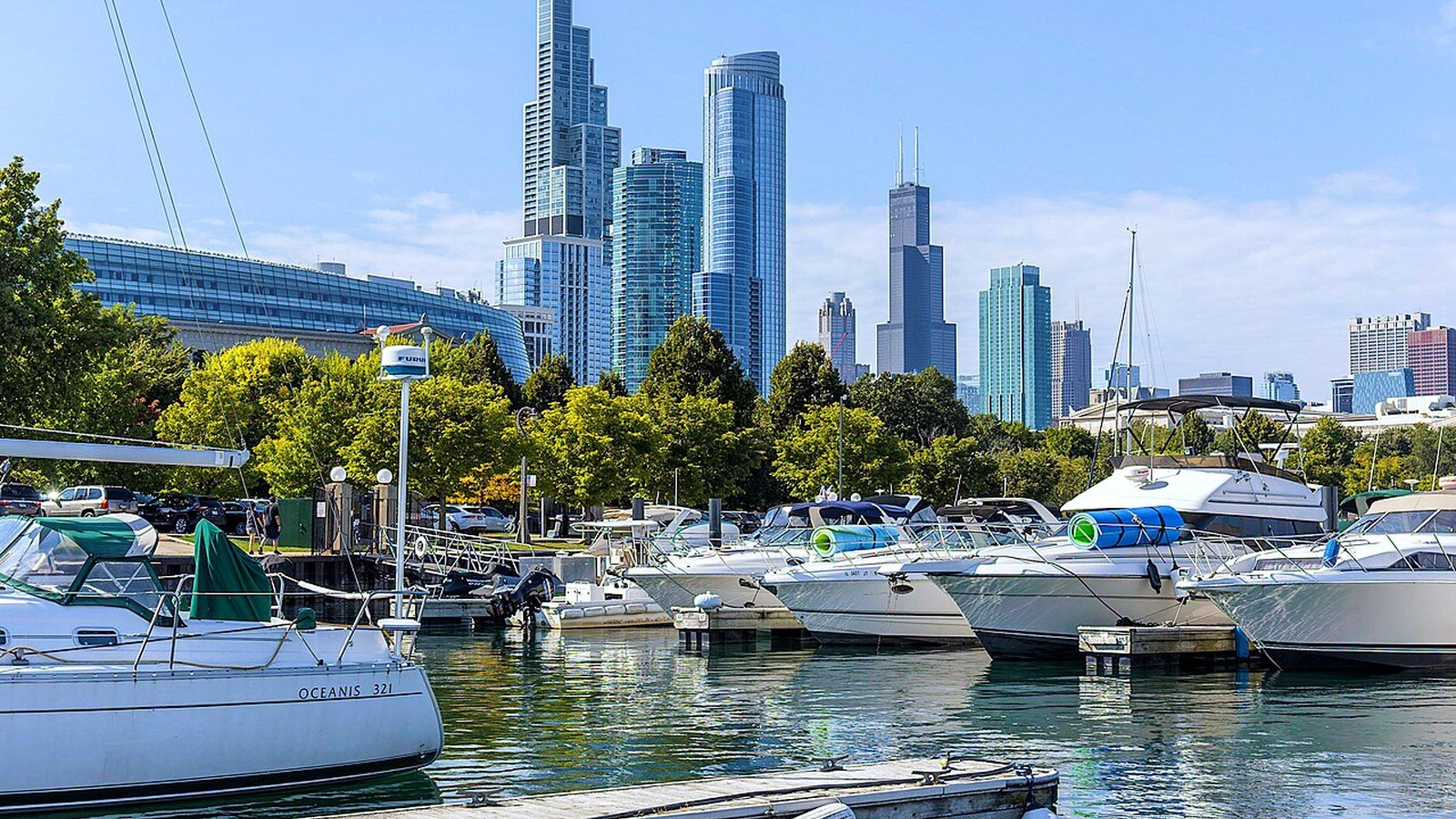
Photo: Marie Miller / Wikimedia Commons. CC BY-SA 4.0. Cropped and resized.

What I would put in an Illinois photography brief
The quickest way to make an event photography search confusing is to start by collecting names. I would do the brief first. A client who can explain the event can judge a photographer's answer. A photographer who understands the assignment can propose something useful instead of sending a generic introduction.
Illinois is too broad a service area to leave the address until later. Chicago is not a substitute for the whole state, and a photographer serving one part of Illinois is not automatically available for an assignment elsewhere. Say where the work happens, then ask who can do it.
Below is how I would assemble the brief, using hypothetical Illinois assignments to show why each part matters. These are planning examples, not accounts of jobs I have photographed. The point is to give clients and working photographers a common document they can actually use.
Page one: the purpose of the pictures
Imagine an organization planning a Chicago conference. Before listing photographs, write one sentence about who will use them. Perhaps the communications team needs a recap for members. Perhaps exhibitors need a record of their participation. Perhaps the organizer wants material for a future event announcement. Those purposes can overlap, but they are not identical.
For a member recap, I would want a story people can follow: the room, the speakers, conversations and the activity between formal sessions. For an exhibitor report, I might need clear pictures of people engaging with specific displays. For future promotion, the organizer might need photographs with usable backgrounds and room for layouts. Tell the photographer which of those is actually part of the assignment.
Then identify the audience. Internal staff, association members, media and commercial partners may need different selections and different permissions. Do not write "all uses" simply because you have not decided yet. Describe the planned uses and ask the photographer to address them in the proposed agreement.
This is useful for photographers seeking event photography jobs in Illinois too. Your proposal can answer the purpose directly. Instead of saying you deliver beautiful images, explain what your proposed gallery would help the client communicate. Keep it grounded in the brief. Do not promise a business result you cannot control.
Page two: the program and its collisions
A schedule is more revealing than an event title. If the keynote ends when an exhibit demonstration begins and a board portrait is supposed to happen during the same break, there is a decision to make. Mark that conflict before anybody accepts the assignment.
Use the current event program, not an old draft. Add the room or address to each activity. Then identify which moments are fixed and which can move. A portrait might be scheduled around the keynote. An award presentation may be tied to a program that cannot pause. The photographer needs to understand that difference.
For a hypothetical Chicago convention, a large facility does not tell you how far apart this event's rooms are. Ask for the actual floor plan and access instructions. If McCormick Place is the venue, check its own site for facility information, while getting this assignment's credentials and room details from the organizer. One source does not replace the other.
Clients should ask a proposed photographer to mark where coverage would be incomplete. That is not an admission of incompetence. It is useful planning. If the client needs simultaneous coverage, ask how a team would divide the work and who is responsible for the combined delivery.
Photographers should resist the temptation to say yes to every line on the program. A proposal that explains a conflict gives the organizer a chance to solve it. An unqualified yes can leave the crew being judged against an assignment no one could physically cover.
Page three: a portrait session is a separate production
Consider a company gathering in the Chicago suburbs with employee portraits before a meeting. The event organizer may think of headshots as a small addition. I would treat them as a distinct workflow inside the assignment.
The brief needs the expected number of people, the available space and the intended appearance. A consistent background and framing require a suitable setup. A portrait integrated into the office environment calls for different preparation. Show an example of the look the company wants, while recognizing that another photographer's work is a reference, not a promise of an identical image.
Decide who brings employees to the session. The photographer should not need to leave the camera to find the next subject. Give a staff coordinator the current list and the authority to manage it. If filenames must match employee names, establish how the names will be recorded and checked.
Also decide what happens when somebody misses the allotted time. Does the session remain open, or does the photographer move to meeting coverage as scheduled? That answer belongs in the scope. The rest of the assignment cannot depend on an unspoken expectation that every late arrival will be accommodated.
For photographers, present the portrait and event deliverables separately. Explain the intended consistency, the selection process and any agreed retouching without assuming a level of work that was never discussed. A buyer should understand what each person receives and how those files differ from the general meeting gallery.
Page four: a Springfield meeting needs identification, not guesswork
For a hypothetical Springfield association meeting, I would ask the organizer to identify key participants before the date. A list of names is a start, but it does not help a photographer recognize somebody across a crowded room. Provide a permitted reference or assign a contact who can discreetly identify people on site.
The same applies to an awards segment. Which recipients must have a clean photograph? Who presents the award? Is there a designated position for the photograph? Ask the stage team to build a pause into the sequence when the image matters. That is easier than requesting a reconstruction once the recipient has left.
If photographs need captions, identify the source of names and titles. The photographer should not infer an affiliation from a conversation or a half-visible badge. Have an authorized organizer check the caption list. Keep unnecessary personal information out of materials circulated to the crew.
There may also be people who should not be photographed or images that need restricted distribution. Ask the organizer how those instructions will be communicated. Do not rely on a guest happening to notice the camera. The plan should let the photographer honor restrictions without announcing private reasons to the room.
For a client comparing candidates, ask how each person would organize that information. For a photographer, this is a chance to show a sensible workflow instead of another claim about attention to detail. A clear identification process is something the organizer can assess before hiring.
Page five: a Champaign-Urbana program can change rooms and audiences
Imagine a private professional workshop in Champaign-Urbana. There is a presentation, a hands-on demonstration and a reception. The organizer needs pictures of learning and participation rather than an attendance record. That distinction should drive the shot priorities.
Ask where the photographer can stand without blocking sightlines or disrupting the demonstration. If a process involves confidential material, screens or documents, agree on what may appear. A room being accessible does not mean everything inside it is meant for public distribution.
A useful brief might identify the approved demonstration areas, the people who can explain the activity and the details that should stay out of the photographs. Give that information to the photographer before the session starts. Trying to approve every frame afterward is a poor substitute for describing the boundary in advance.
If the program moves between buildings, put the move on the timeline. Confirm the addresses and equipment access. If the reception is open to a different audience, ask whether the same photography instructions apply. Access to the workshop does not necessarily establish permission at the next location.
Photographers looking for comparable Illinois work should show sequences that explain an activity. A thoughtful wide view, a person using an object and a reaction can tell a story. Avoid presenting a tightly framed detail as proof that you can cover the full workshop. Let the buyer see the context around it.
Page six: western and southern Illinois are not footnotes
A statewide search should make room for the actual location of the job. A client planning a Rockford business gathering, a Peoria conference or an event farther south should not have to guess whether a Chicago-based proposal includes travel. Ask the question directly.
I would want the photographer's arrival plan and coverage window tied to the named address. If preparation is needed before guests enter, include it. If the venue has a particular check-in process, get the current instructions from the venue or organizer. Do not assume a previous job's rules still apply.
For an unfamiliar location, a photographer can prepare without pretending to be a regular there. Ask for room photographs, dimensions when relevant, a program and a contact. If a walkthrough is appropriate and possible, discuss it. A thoughtful plan for a new venue is more credible than an invented claim of local expertise.
The client can make the search more useful by saying what flexibility exists. Is the date fixed? Is the portrait time adjustable? Can some room photographs happen before the main program? Those answers may make the assignment workable for a candidate whose proposed approach differs from the original idea.
For photographers, describe your service area in plain language. Name where you are based, ask about travel before confirming and be clear about conditions that affect your availability. Serving Illinois does not mean every Illinois assignment is the same distance from your door.
The portfolio meeting: read the ordinary frames
Once the brief is in shape, ask for a complete comparable gallery the photographer is allowed to share. Start in the middle. The opening image is usually chosen to impress you. The middle shows how the person handled the ordinary parts of the event.
Look for usable faces, a coherent edit and enough variety to tell the story. Are there photographs of people listening as well as speaking? Can you understand the room? Do important activities appear as a sequence rather than isolated fragments? Judge those things against what your own assignment requires.
Ask about any relevant difference. A gallery photographed with additional lighting may not predict the same result at a venue that prohibits it. A small meeting with one program is not the same as simultaneous sessions. The photographer can explain what they were asked to do on the previous job.
Do not demand access to confidential galleries. If one cannot be shared, ask for another relevant example or a reference offered with permission. Protecting a previous client's material is not evidence of poor work. The goal is to find enough appropriate evidence to make a sound choice.
The agreement meeting: remove the vague phrases
I would underline phrases such as "full coverage," "edited photos" and "usage included" and ask what each means for this job. Not because those words are wrong, but because they are incomplete on their own. A proposal becomes useful when both parties understand the same details.
Record the addresses, dates, coverage hours, staffing and organizer contact. Identify the agreed deliverables, format, delivery method and deadline. If a preliminary selection is included, separate it from the final delivery. Do not assume extra editing or an event-time handoff simply because it would be convenient later.
Describe image use with enough precision to cover the actual plan. Is the client distributing files to sponsors? Is advertising part of the request? Are there third parties who need access? Put those uses into the conversation and have consequential contract questions reviewed by a qualified professional for the relevant jurisdiction and circumstances.
Ask how changes are approved. An event can develop new needs after the agreement, but the process should be clear. Name the person who can approve additional work and how the revised scope is recorded. A guest's request should not silently rewrite the client's agreement.
For photographers: turn the brief into a relevant reply
When applying for event photography jobs in Illinois, answer what the buyer actually provided. Confirm whether you can consider the date and location. Link to relevant work. Ask the questions that affect your proposed coverage. You do not need to recite every service you have ever offered.
If the assignment includes a portrait session, show a consistent portrait set. If it includes a conference, show a complete conference story. If it involves a demonstration, show how you explain an activity through photographs. Organizing the portfolio by assignment makes the buyer's comparison easier.
Avoid making promises about access that belongs to the venue. Explain what you need from the organizer and what you will check. If credentials are pending, say so. Preparation is part of professional work; pretending the unknowns do not exist is not.
Use ProShoot's current how-it-works page to check the platform process. Do not build your proposal around assumed account features or guaranteed outcomes. Whatever route introduces client and photographer, the event scope, agreement and delivery still need to be understood by the people doing the work.
The final brief should fit on a usable page
The article is long because there are decisions to explain. The final working brief should be easier to scan. Keep the current program, locations, priorities, access instructions and responsible contact together. Attach supporting material only when it helps the crew do the job.
Ask the photographer to acknowledge material changes. A revised room, altered portrait time or different delivery recipient can affect the plan. Do not assume an update was understood because it was added to an old email chain. Make the change visible and keep one current version.
After the event, judge the delivery against that version. Consolidate feedback through the designated contact and identify specific issues. A missing agreed photograph, an incorrect caption and a new request are different things. Treating them clearly gives the client and photographer a fair way to finish the assignment.
That is the standard I would use to hire an Illinois event photographer: relevant evidence, a workable plan and a delivery everybody can understand. For photographers trying to win the job, those are also the things worth showing before you ask the client to choose you.
A few warning signs in the planning conversation
I would pause if a proposal ignores a location change that is plainly in the program. That does not automatically disqualify the photographer, but it is worth asking about. The answer may reveal a missing assumption about transport, staffing or the time available for portraits.
I would also question a promise to photograph every person through roaming coverage alone. If individual participation must be recorded, build a deliberate process. A check-in portrait, a named group session or another organized approach may serve that purpose. The organizer and photographer should agree on the method instead of treating a candid gallery as a census.
For photographers, a client who keeps adding separate recipients and uses may need help defining the assignment. Ask who needs the files and why. Keep the question practical rather than adversarial. It can prevent a much harder conversation after delivery about access neither party discussed.
Finally, make room for a clear no. A photographer may not be able to cover the scope, and an organizer may not accept the proposed limits. Finding that out before the date is useful. The search is meant to produce a workable assignment, not a reassuring answer that falls apart when the program starts.
Sources checked November 6, 2026
Ready to hire a professional photographer?
Post your job free and get bids from photographers near you.
Post a Job Free →