Top Event Photographers in Detroit
Hire Detroit event photographers for demonstrations, company gatherings, and convention programs with clear image priorities and current venue context.
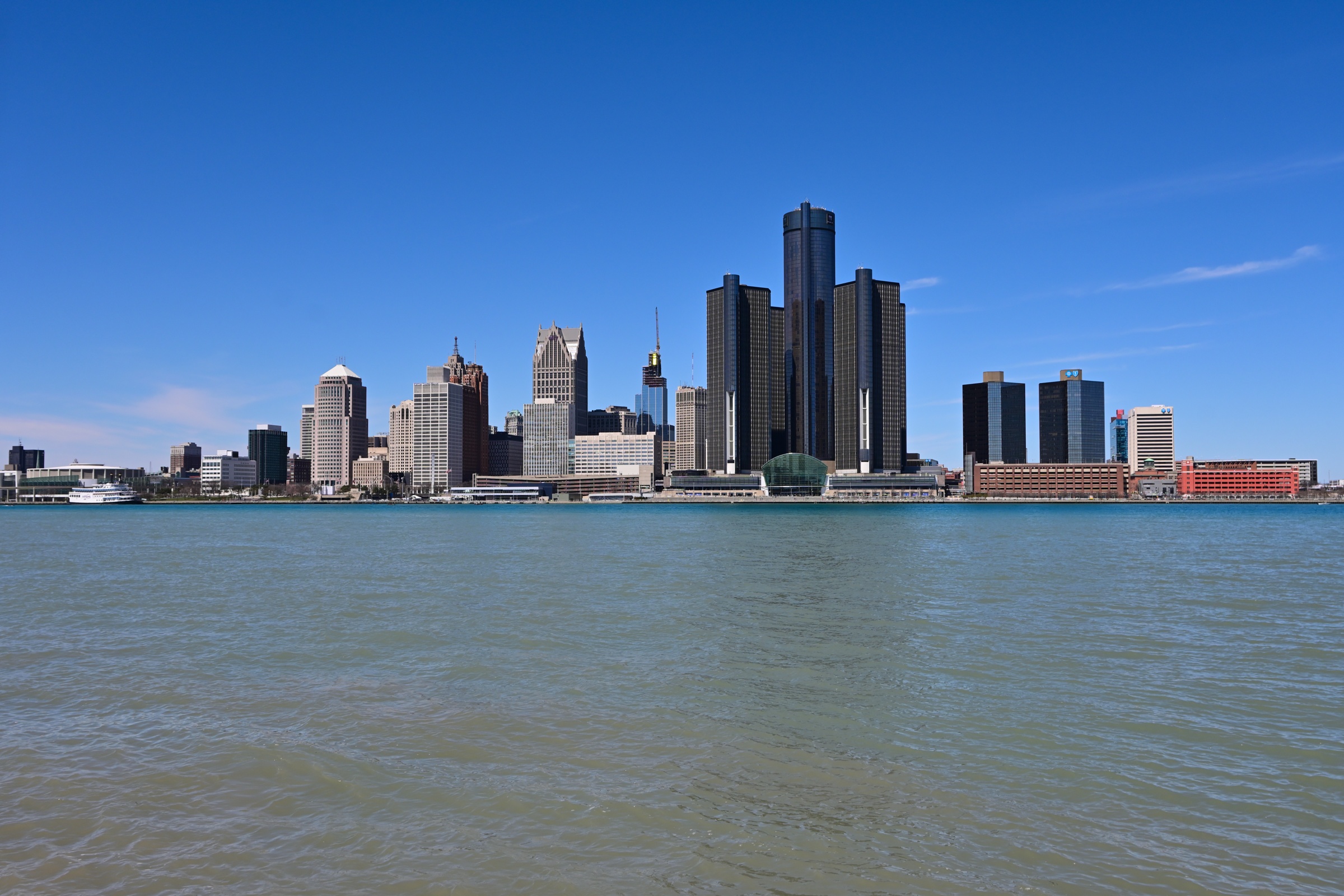
Photo: Andrew Heneen / Wikimedia Commons, April 7, 2024. CC BY 4.0. Resized; no crop.

A photograph of a product, a photograph of someone using it, and a photograph of an audience learning about it tell different stories. At a Detroit business event, I would want the client to choose which story matters before treating the work as one general request for event coverage.
That choice affects where the photographer stands, which moments deserve uninterrupted attention, and whether the finished images can actually serve the team that commissioned them. It also helps photographers submit a useful proposal instead of a broad promise that everything will be covered.
This guide uses current official facility and company information as context. The event situations are examples, not claims that particular organizations are hiring or accounts of my own assignments. The aim is to help clients evaluate evidence and help applicants describe a real service. It is not a ranked list of named photographers.
Start with the image the organization cannot make afterward
Imagine a company commissioning a demonstration followed by a presentation and an evening gathering. The communications team wants the new product. The event team wants the room and participants. Leadership wants the people responsible for the work. Those are compatible goals until their important moments happen at once.
I would ask each team which result would be hardest to replace later. A static object may be available for another photograph. A live audience reaction or a particular person using it may not. The answer should come from the client, not from an assumption that the most visually dramatic subject is automatically the priority.
Put the nonrepeatable activity first in the plan. Then decide what supporting material can be made before, between, or after those moments. This is an editorial hierarchy, not a promise about how quickly a photographer can move through a building.
Keep the product record separate from the program record
If the client needs controlled product images, say so. An event photograph can be useful for a recap without meeting the requirements of a separate product campaign. Ask for the intended use, detail, styling, and approval needs instead of treating a product visible in the room as a finished advertising assignment.
For a live demonstration, ask what action must read clearly. The person, mechanism, result, or audience may be the point. The photographer can plan around that meaning without needing an unsupported technical explanation invented on the spot.
If the action cannot be repeated, tell the photographer before it begins. If a demonstration can be repeated, the organizer should still confirm when and under what conditions. A photographer should not interrupt it or direct an operator merely because another attempt would improve an angle.
Huntington Place is several kinds of photographic assignment
Huntington Place's current Spaces & Facilities page identifies exhibit halls, meeting and breakout rooms, the Riverview Atrium, the Grand Riverview Ballroom, and outdoor square and terrace space. The distinctions matter more here than the marketing adjectives or numerical capacities.
A client should identify the actual booked area and installed configuration. A general building name does not explain whether the commission is a demonstration among exhibits, a speaker program, an invitation-only meeting, or a reception. Each asks the photographer to preserve something different.
The examples below use those operator-listed space types. They do not establish camera permission, public entry, or authority to use a particular position during an event. Get the current event instructions from the responsible organizer.
Exhibit halls: show the thing and the reason people gathered
For a hypothetical exhibit demonstration, I would ask for both a clean view of the subject and an interaction that explains its place at the event. An object with a crowd behind it may communicate scale while hiding the action. A tight detail may be clear while losing the event context.
If several exhibitors require attention, provide an actual roster and identify which representative can help at each stop. A logo list alone cannot tell the crew whether the right person or demonstration is present. Organizers need a way to report substitutions.
If a required exhibit is not ready, name who decides whether to return or use an approved alternative. A photographer can report the problem, but should not spend an open-ended part of the commission waiting without the client's knowledge. Required coverage should remain visible as an obligation, not an assumption.
Meeting rooms: one useful record or every session?
The operator lists meeting and breakout rooms. The client needs to go further and identify the specific rooms, concurrent activities, and expected completeness. Selected atmosphere from several rooms is different from a continuous record of every presentation.
When important sessions overlap, make a choice about staffing, rotation, or a smaller scope. A single photographer can move among activities without witnessing each one from beginning to end. Calling the service full coverage does not settle that physical limitation.
Provide the current program and person who can confirm changes. If a presentation moves, the camera plan must change with it. A photographer who knows the old room perfectly can still miss the event by following an outdated document.
Riverview Atrium: decide whether the background serves the people
The venue describes its Riverview Atrium as a three-story glass space with riverfront views. That supports a possible setting discussion, not a promise of uniform light or an unobstructed view in the client's setup.
For a hypothetical reception there, ask whether the priority is conversation, selected introductions, or identifiable groups. Those choices determine how much direction guests should expect. A photographer looking for candid exchanges should not be judged against an unstated requirement for every guest to face the camera.
If a particular background is essential for portraits, confirm the position and event arrangement. Provide an alternative that preserves the purpose when possible. Bringing the right people together may be more important than a background selected from an empty-room photograph.
Grand Riverview Ballroom: recognition is a sequence, not only a room
The official page describes the Grand Riverview Ballroom, its glass-enclosed pre-function area, open-air terrace, and customizable lighting. Those features invite planning questions. They do not tell a photographer what the show lighting, permissions, or actual presentation order will be.
For recognition, agree on whether recipients pause with the presenter or continue naturally. Share that convention with the host before the first exchange. A brief handoff and a held presentation portrait give the photographer different opportunities.
Provide the verified names and order if identification is part of delivery. If another person accepts on someone's behalf, the organizer must explain it. A photograph alone cannot establish a role or reason for recognition accurately.
Outdoor space: a commissioned option, not assumed access
The venue lists outdoor square and terrace space. If the client proposes a group or reception image there, verify that the actual event can use the intended area. Public descriptions cannot substitute for the booking or current instructions.
If the outdoor picture matters, agree on the decision-maker and a usable alternative. This guide does not assume a particular date's weather, crowd level, or conditions. The crew should act on the real circumstances and the authorized plan.
Do not scatter the essential people before the outdoor decision is settled. A group can become impossible when the participants leave, even if the preferred location becomes available later. The organizing contact should know when their gathering work is needed.
Use current company and location information
General Motors announced its new global headquarters at Hudson's Detroit in January 2026. A current article should not continue to describe the Renaissance Center as GM's present headquarters simply because older Detroit coverage does.
That correction is context, not a claim that a private event is available at Hudson's Detroit, that GM is commissioning this work, or that an outside photographer can enter. Any actual company assignment needs its own location and authorization.
For a program with activities at more than one property, get the actual addresses, arrival instructions, and schedule. Do not infer a transfer time or feasible staffing plan from a general description of downtown. The photographer should identify the obligations that overlap and which location has priority.
Distinguish a launch from a confidential working session
A company can ask for an event record while limiting when it may become public. Ask the client to identify restricted material and the review process. The person commissioning the photography needs to establish the intended audience rather than leave the crew to infer it from the atmosphere.
If release depends on approval, make pending status unmistakable. A delivered image should not silently become a public promotional asset for the photographer. Their portfolio use needs its own agreed permission.
Share practical boundaries without unnecessary private explanations. A crew may need to know not to photograph a screen or participant without learning confidential background. Clear, limited instructions are more useful than a general warning to be careful.
The attending photographer needs an event-side partner
One organizer should be able to settle the priority when requests conflict. That person does not have to follow the photographer continuously, but the crew needs a working contact and a clear escalation route.
For unfamiliar required people, assign someone who can introduce or gather them. Photographers can recognize expressions and interactions without recognizing an executive from an organization name. A roster supports the work only when someone can connect it to the people in the room.
If an important person has limited availability, schedule the photograph rather than hoping to encounter them. State who gathers the group and whether another activity pauses. An ambitious list without that cooperation can create expectations the photographer cannot meet alone.
An added request spends attention already assigned elsewhere
A guest may want a team portrait during a live presentation. Another department may ask for detailed exhibit images while recognition begins. These are not necessarily bad requests; they are choices about a finite service.
The photographer should explain the displaced work and ask the authorized contact. They should not quietly abandon an essential moment or turn the conversation into a dispute with the guest. Give the client an understandable choice while there is still time to make it.
Afterward, record material changes so the final set can be assessed against the actual commission. An authorized change is different from an unexplained omission. The distinction matters to the client and to the crew's accountability.
Compare portfolios by the assignment's difficult part
If live demonstration is the priority, look for a permitted sequence that makes the action understandable. If recognition matters, inspect the ordinary recipients as well as the dramatic stage frame. If the job needs exhibit, speaker, and reception work, request evidence of that balance.
A few strong images can establish taste without proving complete coverage. Ask to see an authorized gallery or another suitable example that reveals consistency. Respect another client's restrictions rather than demand private material as the price of consideration.
Ask what the applicant personally handled. The person who made stage images may not have managed the roaming work, portrait setup, or delivery. Accurate collaboration credits help you compare the proposed attending team with the evidence provided.
Check current preparation as well as past familiarity
Previous work in a room can help, but an earlier configuration may no longer apply. Ask how the photographer will obtain the current diagram, schedule, permissions, and working instructions. Someone new to the property should be able to explain that preparation plainly.
For access requirements, get the organizer's actual specification and verify it with the proposed crew. If credentials or insurance are required, confirm the current need before relying on them. A gallery does not establish compliance, and one event's terms do not create a rule for all Detroit venues.
A reference can describe how the photographer handled a real change. Ask for behavior rather than another broad compliment: did they flag a conflict, clarify who decided, and keep the priority visible? That is useful evidence without exposing private guest details.
Applicants should describe the work they will actually own
On ProShoot, the published client workflow includes posting work, reviewing bids and portfolios, and choosing a photographer. The photographer process includes applying and presenting relevant work. Use those exchanges to establish the assignment rather than attach a generic statement of enthusiasm.
A useful response to a demonstration brief names the action and any clarification needed. A response to concurrent sessions addresses attention and staffing. A response to a leadership group addresses who gathers people and where the portrait fits. Show that the proposal comes from the actual program.
Check availability across arrival, setup, event duties, and any agreed editing. Name the attending crew honestly. Do not imply personal local work history or access you cannot support. A listing and a portfolio cannot grant either.
Finish with images the next team can use
Ask how the client will retrieve the result. Communications may need a public selection; the event organizer may need a complete program record; a partner team may need a limited approved group. Agree on useful organization and access instead of assuming one undifferentiated gallery satisfies everyone.
If names or captions are included, identify the factual reviewer. A photographer can preserve visual evidence without knowing the correct product description or every participant's role. Those details should come from a reliable client source, not a guess made to make delivery look finished.
Agree on the final deliverable and any earlier selection separately. Editing during the event changes who is photographing unless the scope includes another person. Make that allocation explicit rather than attach an unexamined speed promise to the commission.
Clarify uses, restrictions, and the photographer's own promotion in the agreement. Describe actual storage and access terms. At closeout, reconcile required pictures with the program and authorized changes, and explain any unresolved item before the client discovers it by searching.
A concrete test before confirming the proposal
Try describing one essential picture without using a venue name. For example, the client may need the demonstrator's hand, the object being operated, and the participant's response in a readable sequence. Then ask the photographer which portion they can show from permitted prior work and what they need to learn about this event.
That exercise tests understanding without asking for a guarantee about circumstances nobody has verified. It can also expose a missing requirement early: perhaps the communications team needs a detail view while the event organizer expects a single wide record. Settle that difference before it becomes an argument over delivered images.
Hire for a record that explains the gathering
Detroit's current company and venue facts keep the plan grounded. The commission itself still needs a purpose: what happened, who participated, what was demonstrated, and which parts the client must be able to use afterward.
I would choose the photographer who can show that evidence and explain the limits honestly. Whether hiring or applying through ProShoot, a precise service is more useful than an unlimited promise built around a familiar city identity.
Let the demonstrator explain the action once
Before the live segment, ask the authorized demonstrator to describe what a viewer should recognize in the photographs. The explanation might identify the action, the visible result, or the participant's role. The photographer can use that information to anticipate a meaningful sequence without pretending to verify technical claims independently.
If another team also wants a clean object image, put that requirement beside the live record. It may be possible before the action begins; it may require a separate controlled setup. The important distinction is between photographing what happens and producing an additional visual treatment. Ask who approves any repeat and when it fits. That short conversation can prevent a request for one clear detail from interrupting an essential demonstration or becoming an unsupported promise about a separate campaign deliverable.
Sources checked November 6, 2026
- https://www.huntingtonplacedetroit.com/venue-info/spaces-facilities/
- https://news.gm.com/home.detail.html/Pages/news/us/en/2026/jan/0112-General-Motors-new-home-Detroit.html
- https://proshoot.io/how-it-works/
Ready to hire a professional photographer?
Post your job free and get bids from photographers near you.
Post a Job Free →