Top Event Photographers in Colorado
Find top event photographers in Colorado for conferences, mountain retreats, and weddings. Hiring guidance plus photography jobs across CO.
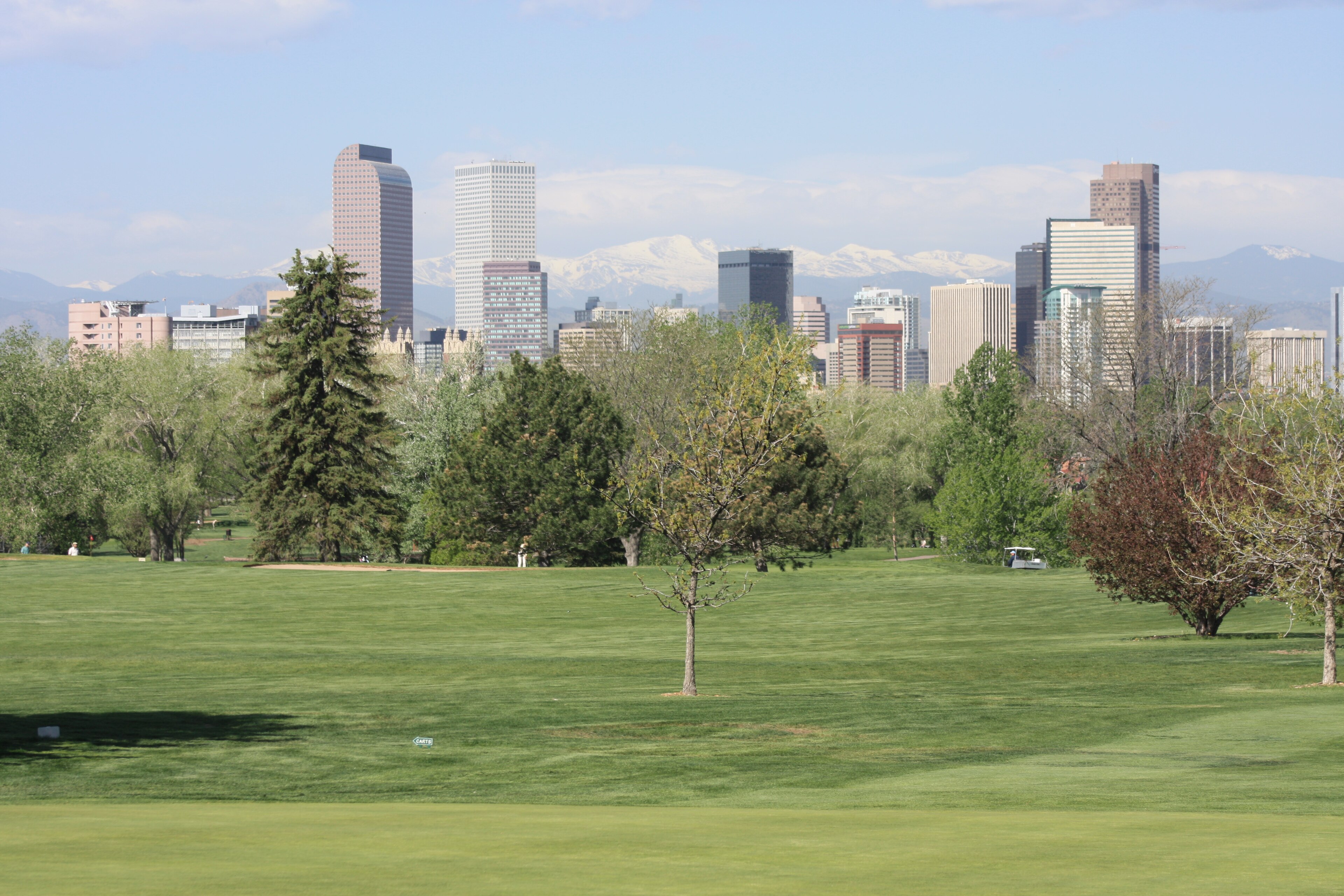
Hero photo: Mount Evans and the Denver skyline from City Park Golf Course, by David Herrera. License CC BY 2.0, via Wikimedia Commons. Shown uncropped.

I would begin a Colorado event photography search by separating the location people remember from the assignment being commissioned now. An event can move outdoors, a performance venue can have its own access conditions, and an organization's headquarters can be unrelated to the place where its gathering happens. Those differences matter more to a coverage plan than a broad claim about the state's event scene.
I have photographed events for more than 20 years. My approach is to ask what changed, what the photographer is allowed to do, and what the client needs from the images. This Colorado guide uses a dated festival move, Red Rocks, and the U.S. Olympic and Paralympic Committee as examples. It is not a photographer ranking, an availability report, or a promise of work in a particular region.
Start With the Change, Not the Familiar Event Name
Great American Beer Festival moved for its 2026 edition
The Great American Beer Festival's official January 2026 announcement identifies Levitt Pavilion in Denver as the venue for October 10 and 11, 2026, replacing the Colorado Convention Center setting. As of this November review, those are dates for the past 2026 edition. I would not turn them into an assumption about the next edition or use an old indoor gallery as proof of the new event's conditions.
For a photography brief, the move creates questions rather than automatic answers. Which part of the event is the client commissioning? What access has been arranged? Where should the photographer report? Which activities and people matter? The organizer's public announcement establishes the edition's venue; the client must still define the actual assignment.
That distinction is useful beyond one festival. A recurring event name can stay unchanged while its location, format, or program changes. Ask for the current edition's instructions and verify the relevant source. A photographer's previous experience can inform preparation, but it does not replace the event lead's current plan.
An outdoor setting changes the questions in the brief
I would ask how the client wants the setting to appear in the photographs. Does the gallery need to establish the venue, document participants interacting, or focus on a particular exhibitor or partner? An outdoor location should not reduce the assignment to scenic views. The people and activities remain the reason for the commission.
Ask the host about any approved alternative if a program segment changes. Identify the contact who decides and the way the crew will receive the update. Do not promise a particular background before the location and access are confirmed. A practical proposal describes how required coverage can continue without claiming control over conditions.
For an exhibitor or sponsor, define the coverage area and the intended image use. A client connected with one activity may not have authority to grant access to every part of an event. The photographer needs the relevant permissions, not a general assurance that everyone knows the event. Keep those questions visible until the responsible contact answers them.
Replace the old checklist with a current purpose
Imagine a client forwarding last year's photography brief. I would mark which requests still apply and which depend on the former setting. A room photograph, an indoor display, or a particular portrait background may no longer exist in the same form. Ask what each request was meant to communicate before choosing its replacement.
If the client wanted a sense of participation, a new image may satisfy that purpose without imitating the old composition. If the client needs a specific partner detail, that requirement may need an updated location and time. The goal is to preserve the useful intention rather than copy a checklist that no longer matches the event.
Red Rocks: A Recognizable Venue Is Not a Credential
Red Rocks' official history identifies the amphitheatre in Morrison and describes the venue's background. I would use that source to identify the place, not to infer the rules for a commissioned event. A recognizable performance setting can make an image distinctive, but a photographer still needs the permissions and working conditions for the actual program.
Separate the stage from the gathering around it
A client may ask for performance images, portraits, guest interactions, or a private reception. Those tasks should not be combined under a vague request to cover Red Rocks. Identify the part of the program, who is commissioning it, and where the photographer is allowed to work. Each task needs its own place in the scope.
For stage coverage, ask about approved positions, equipment, movement, and any time limits. Get those conditions from the event contact. A photographer's gallery from another performance does not establish that the same access will be available now. The proposal should show how relevant experience translates to the confirmed conditions.
For a reception or guest program, the important skill may be documenting relationships rather than making dramatic stage photographs. Look at complete examples of that work. Ask how the photographer would recognize key guests and whether anyone on site will help with identification. A famous venue should not distract from the people the client needs recorded.
Ask for evidence of judgment under limits
I would invite a candidate to explain a portfolio example where their movement or lighting was restricted. What did they prioritize? What did they leave out? How did they communicate the limitation to the client? The answer can reveal more than a statement that they are comfortable in any setting.
Listen for a practical distinction between what the photographer controls and what the organizer controls. The photographer can prepare equipment and choose compositions. The host must establish access and communicate rules. A proposal that assigns those responsibilities clearly is more useful than an absolute promise to make every desired image.
Keep the setting in proportion
A wide venue image may establish the place, while a close photograph may reveal the meaning of a moment. Ask how the photographer would balance the two. The gallery should not become a catalogue of recognizable backgrounds with the event reduced to decoration.
For a client needing a recap, I would look for a sequence that connects setting, program, and response. A viewer should understand what people did and why they gathered. The architecture or landscape can support that understanding, but cannot carry the whole story alone.
Colorado Springs: An Organization's Address Does Not Define the Commission
The U.S. Olympic and Paralympic Committee identifies its headquarters in Colorado Springs. That fact should not be expanded into a claim about which events it holds, where a specific event takes place, or whether photographers can receive access. A headquarters location is an organizational fact, not a photography opportunity in itself.
For a related assignment, ask who the actual client is and what they are commissioning. A partner gathering, an internal meeting, and a public program may involve different permissions and image uses. Name the location rather than assuming it from the organization. Ask the host to confirm any restrictions instead of inventing them from the subject matter.
I would also clarify attribution and captions. If the images concern named participants or organizations, the event team should supply accurate identifying information. A photographer should not have to infer a person's role or affiliation from clothing or context. Give the crew a reliable contact for questions before files move into public use.
Write a Colorado Brief With Decisions, Not Adjectives
Words such as exciting, authentic, and energetic can describe a hope for the gallery without explaining what the photographer should do. I would translate them into observable priorities. Which interactions show the event's character? Which part of the program matters? Which people need to be recognized? Those answers turn a mood into a usable assignment.
Choose what must be photographed
List the moments that cannot be repeated and identify any that overlap. If a portrait window coincides with a required session, show the conflict. Discuss staffing or priorities rather than assuming one photographer can solve the schedule by moving faster. A realistic plan protects the essential coverage.
For formal groups, name the people and assign someone to gather them. The photographer can direct the arrangement, but cannot reconstruct a guest's relationships from an unfamiliar list. Decide when the group can be together and where the photograph is approved to happen. Keep an alternative if the original setting changes.
Choose what must not be released
Identify confidential material, guests with privacy restrictions, and any required approval before publication. Make the instruction practical: when the material appears, how the person can be identified, and who can answer a question. A vague warning about sensitivity leaves too much for the photographer to guess.
Separate permission to capture an internal record from permission to publish it. A file may be useful to the client without being suitable for a public recap. Name the reviewer and the delivery destination for restricted selections. The handoff should not rely on another team inferring approval from the presence of an image in a gallery.
Choose who can change the plan
One named event contact should be able to settle competing requests. If a speaker moves, a session runs late, or a location changes, the photographer needs to know which priority now takes precedence. Several people making reasonable requests independently can still create an impossible assignment.
Give that contact the agreed scope. They should understand what the proposal includes before asking for a change. If a new request affects another required photograph, discuss the tradeoff rather than quietly replacing one task with another. A short, clear decision can prevent a missing image from becoming a surprise after delivery.
Compare Portfolios for Adaptation, Not Just Scenery
Ask for a full comparable gallery that the candidate is permitted to show. Read the sequence with your own event's conditions in mind. A photographer can make attractive Colorado landscapes without demonstrating the skills needed for a conference, performance, or private gathering. Relevant evidence should concern the people and program as well as the setting.
Look at the ordinary moments
Check arrivals, breaks, listening faces, and small exchanges. Do the images feel attentive or merely incidental? Does the photographer maintain clear backgrounds and useful context when the event is less visually dramatic? Those frames show whether the gallery can sustain its quality beyond the obvious highlight.
Look at repetition and omissions too. A long series of one subject may not add useful variety, while a brief but important activity may be absent. Ask what the original client requested and what conditions shaped the gallery. Coverage should be evaluated against its assignment, not an unexplained file count.
Understand the person's actual role
If a gallery came from a team assignment, ask which photographs the candidate made and which responsibilities they held. The role may be entirely relevant, but it should be clear. A photographer who covered a reception should not be assumed to have managed every performance and presentation associated with the event.
For a proposal involving additional photographers, ask how responsibilities are divided and how changes reach the crew. Staffing helps when it supports a defined program. It does not eliminate the need to explain priorities, permissions, and the delivery process.
Discuss direction and discretion
Ask when the photographer would arrange a picture and when they would observe quietly. A portrait may need active direction, while a discussion may be better documented without interruption. The answer should reflect the event's purpose and audience. A broad style label is less useful than an explanation of those decisions.
Make Production Terms Part of the Creative Decision
The client should know what the photographer will deliver before deciding to hire. Put the coverage dates, hours, locations, staffing, edit, file formats, and delivery schedule together. If a term affects the photographs the client expects, it belongs in the agreement rather than in an assumption.
Define any early edit separately
If the team needs images before the event ends, explain the actual use and the agreed delivery point. Ask how selection, editing, approval, and transfer will work while coverage continues. That task requires attention and may affect staffing or priorities. Do not assume a request for speed leaves the rest of the assignment unchanged.
For the main gallery, agree on the selection process or expected quantity and any naming or caption requirements. Clarify what is included in the edit and what would be a later request. The client should be able to recognize the finished package without guessing whether another stage is still pending.
Discuss use beyond the commissioning team
A sponsor, performer, or partner may ask for photographs after the event. Explain those possible uses before booking and ask which are included in the proposed terms. Delivery to the client does not settle every outside use automatically. A clear agreement gives later teams something reliable to follow.
Keep privacy instructions with the archive where appropriate. Images intended for an internal audience should not drift into a public selection because someone new cannot find the original guidance. The handoff should preserve the decisions that made the coverage responsible in the first place.
Confirm site requirements and continuity
Ask the property or organizer what vendor documentation, equipment restrictions, or access conditions apply. Then ask whether the photographer can meet them. I would not claim that every Colorado venue uses the same policy. The specific event is the source for its operating requirements.
Discuss backup equipment, file protection, and the plan if the named photographer becomes unavailable. Ask for practical commitments rather than an assurance that nothing can go wrong. A professional plan should describe how disruption is limited without pretending uncertainty disappears.
A Change Log Can Be More Useful Than Another Adjective
For a recurring Colorado program, I would keep a short note of what differs from the previous brief: venue, access, activities, priorities, and recipients. This is not a second set of instructions. It is a way to draw attention to the details someone might otherwise carry forward from memory.
Review that note with the photographer and retire the outdated version. If a change remains unresolved, name the person who must confirm it. The result is a current plan rather than a mixture of last year's assumptions and this year's requests.
Use ProShoot to Commission the Event That Exists Now
Post the Colorado assignment with its current location, date, hours, purpose, and confirmed constraints. Available photographers can assess the brief and respond with relevant work and bids. If a recurring event has changed, explain that change rather than relying on an old description. Compare proposals against the same current program.
For photographers seeking event photography jobs in Colorado, demonstrate how you would handle the assignment rather than sell a general idea of adventure or destination work. Point to relevant coverage, explain your contribution, and flag unresolved details. The festival move and headquarters example in this guide establish facts to check, not guaranteed bookings.
I would finish with a final review of what changed since the proposal: location, room, schedule, access, key people, and image audience. After delivery, verify captions and the agreed package before distributing files. A successful Colorado hire produces useful photographs of the actual event, with the expectations and permissions clear on both sides.
Ready to hire a professional photographer?
Post your job free and get bids from photographers near you.
Post a Job Free →