Top Event Photographers in Charlotte
Build a Charlotte event photography brief around the stage, room divisions, and people who need usable images. Practical hiring and application guidance.
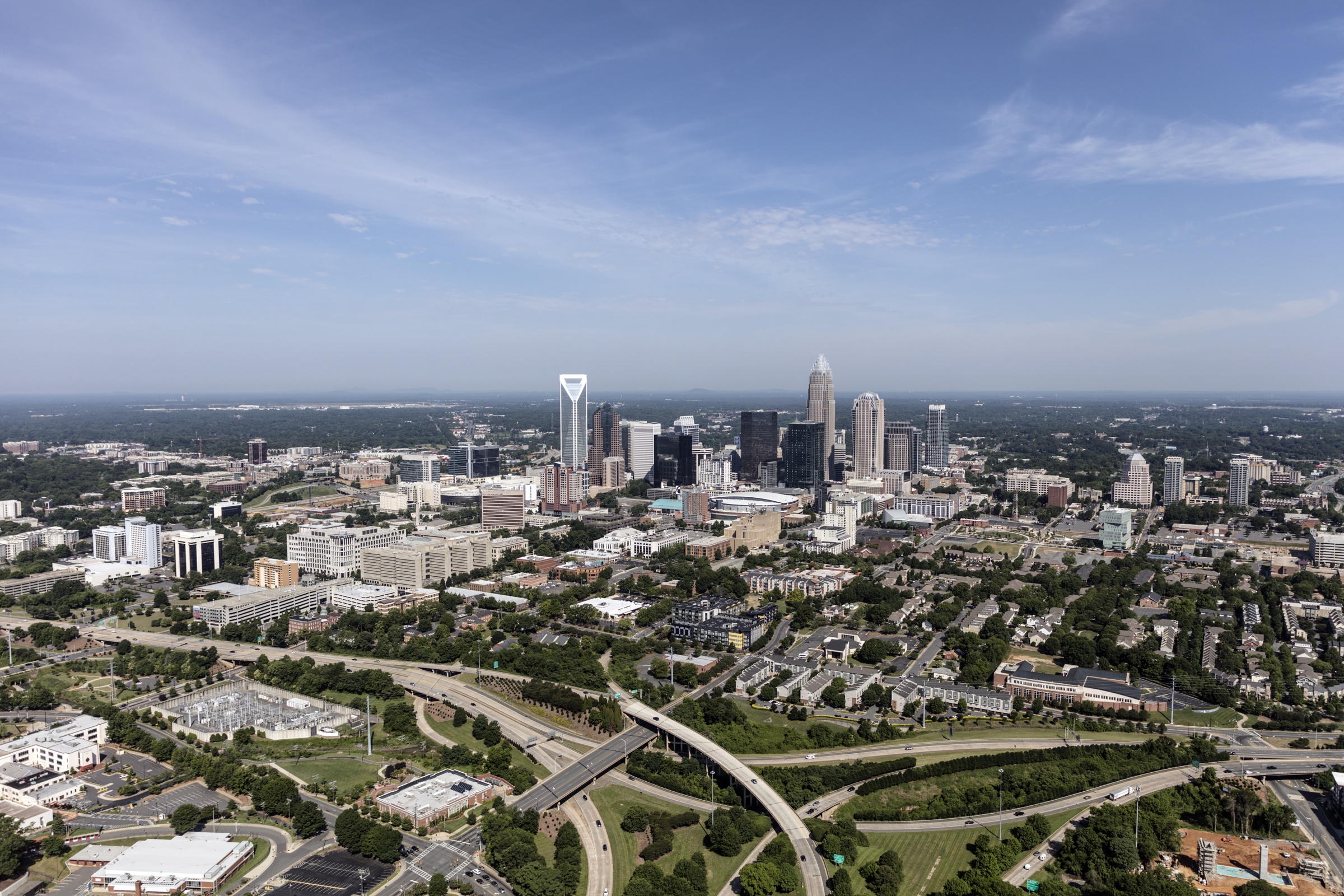
Photo: Carol M. Highsmith / Library of Congress, May 26, 2017. No known restrictions on publication. Photographs in Carol M. Highsmith's America Project in the Carol M. Highsmith Archive, Library of Congress, Prints and Photographs Division. Resized; no crop.
When a client says they need a photographer for a Charlotte program, I want to know what the host thinks the evening is about. The answer may be recognition, learning, introductions, or a message the organization wants people to remember. Those meanings produce different photographs even inside the same building.
A photographer needs the event's purpose, but purpose alone is not an executable brief. Somebody must connect it to the actual rooms, people, stage sequence, and uses. That is the point where hiring becomes more useful than browsing unrelated highlight images.
This guide treats the Charlotte Convention Center's current room descriptions as planning context. The examples are proposed situations, not accounts of my personal assignments or evidence of current jobs. I am not ranking named photographers. I am explaining how I would make a commission clear enough for a client to compare and an applicant to answer.
Write the host's introduction before the camera brief
Try an exercise with the organizer: finish the sentence, "By the end of this program, I want people to understand..." A leadership transition, a participant achievement, and an educational gathering will produce different answers. That difference should remain visible in the photography brief.
Next, ask which people and moments carry that meaning. If the point is a recipient's achievement, the presentation exchange may deserve more attention than a room-wide view. If the point is participation, the story may require discussion and response as well as the person on stage.
The photographer should not have to infer that hierarchy from a dense schedule or the seniority of a person requesting a photograph. I would ask the authorized organizer to name the nonnegotiable moments and then make supporting pictures around them.
Let the desired record determine the direction guests receive
Some hosts want an observational record with little interruption. Others need deliberately arranged introductions or groups. A photographer can do both at different times, but guests need a coherent experience. The organizer should say when direction is welcome.
For example, a required recipient portrait may be easy if the host asks everyone to pause in the same place. It may be impossible if guests are encouraged to keep moving and no pause is scheduled. The distinction belongs in the program design, not only in the photographer's effort.
If the client wants the event to feel uninterrupted, acknowledge the resulting limits on arranged images. A candid approach cannot also guarantee every named person facing the camera on demand. Choosing honestly is better than quietly expecting two incompatible services.
The Crown Ballroom suggests one kind of stage question
The Charlotte Convention Center's official Space Finder describes the Crown Ballroom as undivided, with a built-in stage, backdrop curtain, and side speaker-ready area. Those physical distinctions support a discussion of the client's presentation. They do not establish access to backstage or a place for a camera.
For a hypothetical recognition program in that room, I would want the approved stage arrangement and current production instructions. Where do speakers enter? Which exchange is essential? Is there an agreed pause? The facility's built-in stage does not answer those event-specific questions.
A portfolio should show more than a single well-lit speaker. Look for a permitted sequence in which the audience can understand the program: the host, the exchange, the response, and the setting. Ordinary recipients deserve usable images as well as the headline participant.
Give the stage sequence an identifiable owner
The stage manager or program lead should tell the photographer about a changed order. If someone accepts for an absent recipient, that fact should reach the crew. Guessing from the scene can attach the wrong identity or meaning to a picture.
If names are part of the deliverable, use the final verified list and a factual reviewer. A printed program can be a helpful working reference while still being outdated. A photograph of someone holding an object does not establish their title or the reason they received it.
The camera team also needs a route for urgent choices. A side portrait request during an essential presentation is a conflict even when the request is polite and important. The organizer should decide what takes priority while a choice is still possible.
A speaker-ready area is not a promised portrait studio
The official page names a side speaker-ready area. That may prompt a client to ask whether a short portrait is possible there. It does not mean the area is available for lighting, portraits, storage, or unescorted entry.
Get specific permission and a workable time before building that image into the promised result. If the important goal is a particular person's portrait, an approved alternative location may meet the need. Avoid making a required deliverable depend on a space nobody has confirmed.
The same discipline applies to any adjacent feature mentioned by the venue. Public descriptions can identify possibilities; the actual booking and event contact must establish what this crew can do. Relevant prior work does not give a photographer permanent access.
The Richardson Ballroom raises a division question instead
The official Space Finder describes the Richardson Ballroom as divisible into four rooms, with lobby and terrace pre-function options. I would ask which divisions and adjoining areas the event actually uses. The undivided room name is not a complete description of the commission.
A hypothetical program might move from separate discussions into a shared gathering. The photographic task then includes transitions and connections, not simply an attractive main room. Ask whether the client needs selected illustrations from discussions or a complete record of every assigned activity.
If sessions overlap, decide which receive continuous attention and which receive a visit. One person rotating can provide a useful selection without being present everywhere throughout. The proposal should use that distinction rather than let the word coverage do all the work.
Ask what must survive when a discussion becomes an image
A photograph can show people sitting around a table without revealing that they are actively exchanging ideas. Tell the photographer whether the client wants participation, facilitation, or a required person. Those choices help the crew observe rather than interrupt every group for a posed picture.
If a facilitator can identify a useful demonstration or exchange in advance, put it on the working plan. Do not script a false interaction afterward and present it as an unqualified documentary moment. If an image is deliberately arranged, the client and photographer should understand that treatment.
Where discussions contain private content, give a practical boundary. It may concern a screen, page, participant, or segment. Avoid sharing sensitive background the crew does not need. A clear restriction is easier to follow than a vague statement that the meeting is important.
Treat lobby and terrace ideas as separate decisions
A pre-function area can provide another setting for guest interaction. If the client wants a formal group there, identify the approved position and timing. The facility feature alone does not resolve whether it is available during the assigned event.
An outdoor option also needs a decision about what happens if it cannot serve the intended picture. This guide does not claim weather conditions for an unspecified event date. Protect the purpose with an agreed alternative rather than promise an outdoor result from the name of a terrace.
If guests will disperse during the transition, ask the organizing contact to gather the essential group beforehand. A location becoming available later is not helpful when the required people have already left. Program cooperation matters as much as camera preparation.
Meeting wings need a map of obligations
The convention center page identifies East and West Meeting wings and atrium areas. That is enough to ask the client for exact room assignments; it is not enough to infer travel times or a continuous camera route.
Build the photographic plan from the booked rooms and the live program. If several presenters are equally essential at once, consider additional coverage or a narrower commitment. Do not hide a physical conflict under a statement that the photographer is experienced and fast.
A room change should reach the crew through the agreed contact. Keep the operative version recognizable so an earlier schedule does not remain in use by mistake. A useful plan is one people can update and follow during the event.
The exhibit assignment may need another definition of complete
The official page also identifies exhibit facilities. For a hypothetical exhibit component, establish whether the goal is general event atmosphere, every required organization, selected interactions, or specific display details. These are separate deliverables, not interchangeable ways of saying exhibit coverage.
Provide the actual required list and someone who can identify the representatives. If an exhibitor is absent or a demonstration is delayed, the client needs a decision route. The photographer should report the missing subject rather than spend the remaining commission waiting without approval.
Some clients need evidence of presence; others need a relationship in action. A sign can support the first and fail at the second. Clarify the reason for the requirement so the photographer can make an image that serves it.
Make the crew's preparation visible in the proposal
I would look for a short explanation of what the photographer needs before the event. It might include the final sequence, key-person introductions, approved positions, and current access instructions. This is not administrative padding when each item affects a promised picture.
If the organizer requires credentials or insurance, obtain the current requirement and confirm that the attending team can satisfy it. A portfolio does not prove compliance, and a requirement from one property should not become a blanket Charlotte rule.
Describe equipment and setup needs honestly. A roaming camera service and a controlled portrait station place different demands on the organizer. The photographer should not present the station as a trivial add-on if it changes space, assistance, or attention elsewhere.
Arrival instructions need their own confirmation
A venue's public location information does not tell a crew which entrance or check-in process applies to its equipment. Ask the event contact for current directions. Do not copy an old loading assumption into a new assignment because the building is familiar.
A count of loading docks would not establish this crew's authorized route. Ask the organizer where the actual team should report, what equipment route is approved, and who handles a problem at arrival. The answer should fit this commission rather than turn general visitor information into operational certainty.
If the program adds another property, record its actual address and timing as a new obligation. Assess feasibility from the real locations and schedule. A broad impression of the city cannot establish a transfer allowance or prove that one person can cover both.
Read a portfolio like the person who will use the pictures
The communications editor may need different image shapes and contexts from an internal recognition coordinator. Ask the applicant to show relevant authorized work and explain how it served the client. The answer should connect photographic choices to the job rather than simply praise the images.
A complete permitted example can reveal whether the useful pictures continue through routine parts of a program. If confidentiality prevents sharing it, request a suitable alternative. Respect for another client's restrictions matters more than satisfying curiosity with private material.
Verify the applicant's role and the attending team. A person may have made excellent stage images while a collaborator handled portraits and roaming. Accurate attribution helps the new client compare the right evidence with the actual offer.
Ask a reference about one changed plan
A specific account of change is useful: a shortened program, added group, or moved room. Did the photographer identify the consequence and seek a choice? The client does not need confidential details to learn whether the crew communicated when it mattered.
Avoid treating venue familiarity as the sole qualification. Prior access can help someone prepare, but this event still has its own room divisions, people, and rules. A photographer new to the property should explain how those facts will be verified.
I would favor clarity over an unlimited assurance. A defined scope lets the organizer decide whether the service is sufficient. A broad promise can delay that decision until the program has ended and the missing moment cannot be made.
Applying through ProShoot means answering this program
ProShoot's published workflow lets clients post work, compare bids and portfolios, and choose a photographer. Photographers can apply and present relevant evidence. Use that exchange to clarify the commission without adding claims about guaranteed demand, earnings, or how often events produce jobs.
An applicant should respond to the host's purpose and actual room plan. Explain the most important required record, any concurrent conflict, and what remains to confirm. Check availability across setup and assigned duties, not only the headline time guests see on an invitation.
Do not invent a local work history to sound familiar with Charlotte. Strong relevant evidence and a credible preparation plan are useful on their own. Similarly, do not imply backstage, terrace, or speaker-ready access merely because an official page names those features.
Use a miniature assignment to compare the finalists
Give each finalist the same short scenario: the host shortens a presentation, the essential group is ready earlier, and one discussion has moved. Ask what they would confirm first and which person should decide. You are not asking for a performance of confidence. You are testing whether the photographer can keep the essential record visible when the plan changes.
A good answer can include a question. Uncertainty about the new room or authority should be settled rather than concealed. The exercise also reveals whether the organizer has supplied enough information to make a responsible choice.
Put the final handoff in the host's terms
Agree on the delivered selection, editing, organization, and intended uses. If the host needs a recognition record, names and order may matter to retrieval. If communications needs a recap, an approved public selection may matter more. The deliverable should reflect that next task.
Treat an earlier selection as an actual service with its own allocation of attention. If the photographer edits during the event, decide who is photographing then. Use the agreement's real delivery terms rather than a vague promise about speed.
Identify who checks captions and restricted material. The photographer's own promotion is a separate use to agree on. At closeout, explain any canceled activity, missing required participant, or authorized change that affects the essential record.
The final test is simple: can the client understand what happened without reconstructing every decision from a folder of images? A clear Charlotte commission connects the host's purpose to the rooms, the attending crew, and the useful result. That is what I would hire for and what I would ask an applicant to demonstrate.
Let the host read the photographic promise aloud
A practical final check is to ask the host to describe what the photographer is expected to deliver from one recognition segment. If the host describes natural flow while the written scope promises a held portrait for every recipient, the disagreement is still fixable. Clarify the convention before anyone steps onto the stage.
Then ask the organizer to describe the group requirement. Who gathers people, which combinations matter, and what happens if someone is absent? Those answers should be recognizable to the attending crew rather than remain private assumptions in the planning team. I would keep the check short and specific. It is not a rehearsal of the whole evening, but a way to ensure the human cooperation behind the required photographs actually exists. A polished proposal cannot replace that cooperation when the program begins.
Sources checked November 6, 2026
- https://www.charlottemeetings.com/charlotte-convention-center/space-finder
- https://proshoot.io/how-it-works/
Ready to hire a professional photographer?
Post your job free and get bids from photographers near you.
Post a Job Free →