Top event photographers in California
Hiring guidance and photography job advice for California clients and photographers.
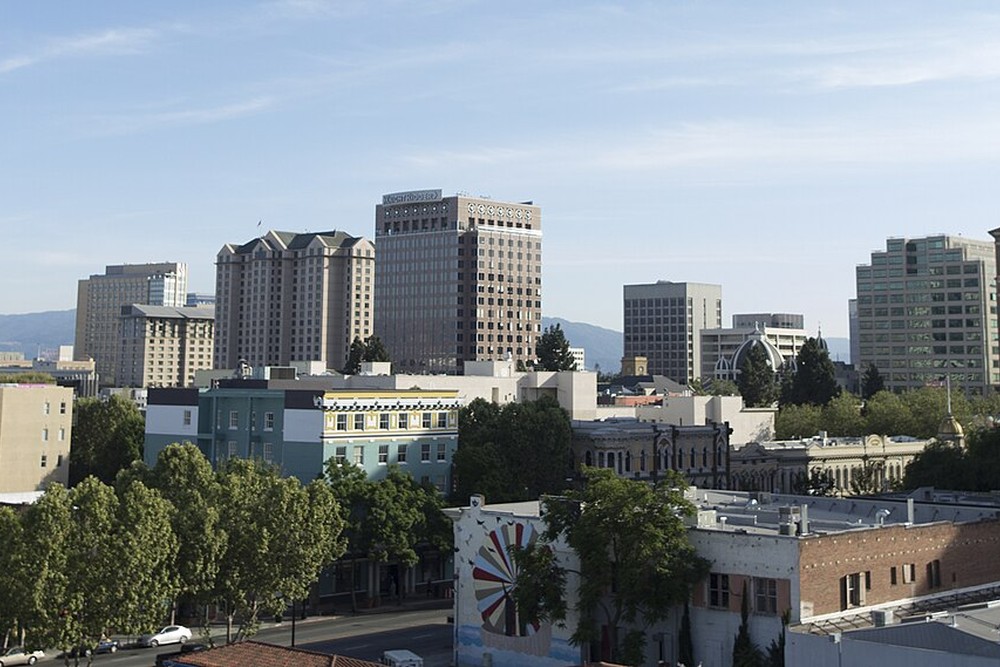
Photo: Adam Schultz / Wikimedia Commons. CC BY 2.0. Cropped and resized.

Choose a market you can actually put on the schedule
California is too large a photography brief. Before I would recommend a coverage plan, I would want the city, address and program. An event in San Diego is not a local assignment for every photographer in Los Angeles. A San Francisco gallery does not establish somebody's arrival plan for Sacramento.
That sounds obvious until a search turns into a list of statewide profiles with no connection to the actual job. I would go the other way: define the commission, inspect relevant work and then ask who can serve the location under a clear agreement. Photographers looking for California event jobs can use the same approach to make their replies honest and useful.
The examples in this guide are hypothetical assignments, not accounts of jobs I claim to have photographed. They illustrate different buying decisions across California. The purpose is to help clients and photographers understand the service, not to pretend every place has the same event scene.
San Francisco: commission the conference story, not the building
Imagine a San Francisco professional conference. The client needs a gallery for members and a selection for a public recap. I would ask which audience the edit should serve and whether those uses need separate selections. That answer affects the balance of context, people and activity.
If the Moscone Center is involved, use its official site for current facility information. Obtain this event's room assignments, credentials and working access from the organizer or responsible operator. A building's name does not establish where the photographer may stand or which entrance is appropriate for equipment.
Put fixed moments on the program first. A keynote, a one-time demonstration and a departing speaker portrait can compete. Identify which are essential, which can move and which need a different staffing plan. A client should not discover after the event that full coverage meant something narrower than expected.
For pre-opening images, confirm when the room is ready. Signage, furniture and lighting may still be changing before guests arrive. The photographer needs a contact who can confirm usable access, not simply an arrival time copied from the public schedule.
In the portfolio, look for an event story shared with appropriate permission. Scroll beyond the first photographs. Do ordinary speaking images, audience reactions and relevant interactions hold together as a useful edit? Ask about the earlier brief so the example is judged fairly rather than against requirements it never had.
San Jose: ask what the demonstration is allowed to reveal
For a hypothetical San Jose product gathering, I would start with the approved subject matter. The organizer may want a public record of participation while keeping certain screens, documents or unfinished material outside the photographs.
Give the photographer a practical boundary and an authorized contact. Which areas are approved? What should remain out of frame? Who answers if the demonstration changes? A vague warning about sensitive content asks the crew to recognize information only the client understands.
Then explain what the event is meant to show. A clean installation photograph, a genuine product interaction and a representative portrait serve different purposes. Name the outputs rather than asking for branding and assuming the photographer will know which one matters.
Do not manufacture a false account of participation. If a portrait is arranged, treat it as a portrait in the planning conversation. Photograph actual demonstrations and activity. The gallery should help the client communicate honestly, not imply an interaction or endorsement that never occurred.
For photographers seeking this work, show a process sequence as well as attractive details. Can a viewer understand what people are doing? Does the edit connect the object to people and context? A standalone product photograph may be strong work without proving coverage of a live gathering.
Sacramento: an association meeting needs names and priorities
Imagine a private association program in Sacramento with speakers, workshops and recognition. I would ask the organizer to identify the required people and give the photographer a way to recognize them. A list of names alone does not identify faces across a crowded room.
If captions are required, nominate someone to verify names and titles. The photographer should not infer a role from a badge or rely on hearing an introduction perfectly over applause. The visual record and the identifying information need a deliberate connection.
For recognition photographs, coordinate the stage position and pause. Who presents the award? Where do the two people face? Is the award meant to be visible? A short instruction from the program contact can produce a cleaner record without the photographer interrupting each handoff.
Workshops may overlap with that stage program. Decide whether each needs complete coverage or a representative story. If equal coverage is required, ask the proposed crew to explain how it will be provided. One person visiting rooms briefly is not equivalent to dedicated coverage of simultaneous activity.
For a relevant portfolio, I would read a full meeting sequence the photographer is allowed to share. Look at the ordinary required photographs, not only the dramatic opening. Ask what access and lighting were available before comparing the example with the current assignment.
Los Angeles: avoid buying a promise with no route through the day
For a hypothetical Los Angeles company event, the client may request an afternoon meeting, employee portraits and a reception at another address. I would separate those parts before choosing a photographer. They require different workflows and may compete for the same time.
Portraits need a room, an appearance reference, an expected number of people and a coordinator. The meeting needs a program and priorities. The reception needs a coverage start and current access instructions. Calling all of it one event does not eliminate those requirements.
List the exact addresses and put the transition on the timeline. Packing, transport, entering and preparing at the second place are part of the move. A map estimate covers only part of it. Do not use every minute for photography and assume the equipment somehow moves itself.
If one person is proposed, ask which coverage stops during portraits or travel. If a team is proposed, ask how responsibilities are divided and who assembles the final edit. The client should understand the method rather than simply seeing a larger camera count on a proposal.
Photographers should identify schedule dependencies explicitly. A portrait that must happen at the end of a meeting can affect arrival at the reception. Name that choice and ask what can move. Honest planning is more useful than promising that every transition will work regardless of the program.
Orange County: a portrait set is not a handful of spare moments
Consider a company gathering in Orange County where employees need new portraits. I would treat the session as a defined service. How many people? What appearance? What intended use? Does the result need to match existing company photographs?
Show the photographer the actual reference and discuss the available space. A different background or a smaller room may change what is possible. Set expectations before participants arrive. A client should not judge the result against a reference introduced only after the session.
Assign someone to bring people to the setup and verify names if named files are requested. The photographer can direct each portrait but should not be searching the event for the next employee. Decide what happens to missed appointments and when the station closes.
If portraits continue while meeting coverage is required elsewhere, ask how the plan handles it. One photographer cannot remain in two rooms simultaneously. Adjust scheduling, staffing or priorities deliberately instead of hiding the conflict inside a broad coverage promise.
Review several portraits as a set. Consistency across people matters for a staff page. Ask what each participant receives and whether selection or retouching is included. Keep portrait delivery separate from the event gallery so the client understands what each output is for.
San Diego: a convention and an evening gathering need one current program
For a hypothetical San Diego convention assignment, I would want a current schedule with all requested activities and addresses. The San Diego Convention Center's own site can provide facility information. This event's organizer must supply credentials, rooms and working instructions.
Sponsor requests need definition. Does the client need a view of an installation, a genuine interaction or a portrait of representatives? Those photographs may require different access and timing. Say which matters and identify any demonstration that happens only once.
If an evening gathering is elsewhere, put the move in the plan. Does the photographer stop at the convention at a fixed time? Is there equipment to pack? What moment opens the reception? The client and crew should know where a coverage gap exists rather than discovering it through missing photographs.
Name one organizer who can prioritize competing requests. A sponsor, speaker and staff member may each ask for something during the same break. The photographer needs to know which instruction represents the commissioning client's decision.
For photographers, choose a relevant gallery and explain your contribution if it involved a team. The buyer should know whether the proposed coverage resembles the staffing behind the example. A combined event story can be useful evidence without implying every image was made by the candidate personally.
Fresno and inland assignments: use the actual job, not a coastal assumption
A California guide should not treat an inland event as a footnote to a coastal market. A Fresno meeting, a regional workshop or another inland program needs a proposal tied to its own address, schedule and intended output. Ask the photographer where they are based and how travel fits.
For a hypothetical business workshop, start with what participants actually do. Is there a presentation, a demonstration or group work? Tell the photographer which activity explains the event's purpose. That helps them observe rather than repeatedly interrupting people for posed photographs.
Identify content boundaries before coverage. Screens, notes or prototypes may not be intended for distribution. Give the crew current instructions and a contact who can answer a question. A room being accessible does not establish permission for every visible detail to be published.
If multiple stations operate simultaneously, decide whether the client needs a complete record of each or a representative story. That difference affects the proposed plan. Attendance alone is not a reliable shortcut for deciding staffing.
Photographers new to a venue can prepare honestly. Request room information, the current program and access instructions. Discuss a walkthrough when practical. A thoughtful preparation method is more credible than a claim of local familiarity that cannot be supported.
Outdoor California assignments: permissions and alternatives are separate checks
For an outdoor group or reception, identify the precise location and who controls it. Check current requirements for the proposed group, equipment and use. A scenic view does not establish permission, and a previous visit does not prove the same arrangement applies today.
If approval is needed, name who obtains it and confirm it before the date. The photographer should not arrive with participants while the organizer assumes equipment creates automatic access. Keep the answer in the working brief so the crew knows what has been resolved.
Then establish the alternative if the original plan becomes unsuitable. The fallback must be a real space with enough room and an agreed time. A smaller room or different background may require another arrangement. Tell the photographer early enough to assess the change.
Check current conditions and operator instructions near the event. A general statement about California weather is not a forecast. Name the person who can move the activity and how the photographer receives the decision.
For travel or accommodation included in a proposal, define responsibilities and how date changes affect the agreement. Consequential terms deserve qualified advice where appropriate for the relevant jurisdiction and circumstances. They should not remain a casual assumption inside a broad statewide service description.
Compare evidence and assumptions together
I would send candidates the same current brief. Then I would compare the relevant portfolio with the proposed method. Does the work show the service being offered? Does the program support the coverage? Which details are still pending?
A one-person plan for sequential activity is not the same as a team plan for parallel sessions. A portrait production is not equivalent to informal pictures made during a break. Read assumptions and exclusions so the comparison is about actual assignments rather than similar document headings.
Ask for galleries that can be shared appropriately. Do not pressure a photographer to disclose confidential material from another client. A different relevant example or a permitted reference may provide suitable evidence. Respect for an earlier agreement is compatible with helping you choose.
Photographers should explain where an example differs from the proposed job. A controlled portrait does not answer every question about reception coverage. A daylight workshop does not establish work under a different lighting restriction. State what the evidence shows and what remains to discuss.
The aim is not to eliminate uncertainty through a confident sentence. It is to resolve the consequential unknowns and make the remaining conditions visible before accepting the commission. A useful answer may include a limit the organizer needs to consider.
Define the delivery while there is still time to plan it
The agreement should identify the parties, date, addresses, coverage hours, staffing and responsible organizer. Then state the promised outputs, format, delivery method, recipients and deadlines. A separate early edit, if requested and agreed, needs its own definition.
Describe intended image uses and any other recipients. Public promotion, internal communication, sponsor distribution and advertising may involve different terms. Seek qualified advice on significant contract or rights questions under the applicable jurisdiction and circumstances rather than relying on vague wording.
If captions or named files are required, identify the source for accurate information and who checks it. The photographer should not invent a title or reconstruct identities by guesswork after a long assignment. The client's process needs to support the promised handoff.
At delivery, explain what is complete and what each selection contains. Name unresolved information directly. A recipient should not have to inspect every folder to discover whether the first selection is the final gallery or an early subset.
Collect feedback through one contact. Distinguish a factual correction, a missing agreed item and a new request. Clear feedback gives the photographer a defined response and gives the client a fair way to confirm completion.
Finding event photography jobs in California without an empty statewide pitch
I would choose a practical service area and describe it honestly. State where you are based and how you consider travel. Do not imply every California city is local or that every requested schedule is possible simply because a profile lists the state.
Organize the portfolio around the buyer's problem. A conference organizer needs a conference story. An employer needs a consistent portrait set. A workshop host needs activity explained through a sequence. Make that evidence easy to find before listing unrelated services.
The first reply should address the actual date, location and brief. Ask the unresolved question that affects your plan. If you lack experience at a venue, describe useful preparation rather than inventing familiarity. Current access still needs checking even at places you know.
If ProShoot is your starting route, consult its current how-it-works page for the platform process. This guide does not guarantee functions, photographer availability or results from a listing. The introduction still needs to become a clear agreement between the people commissioning and doing the work.
A California search should end with a specific commission
By the final decision, the state name should have become an address, a program, a set of priorities and an understandable delivery. The client should know what the proposed photographer will do. The photographer should know which choices matter most to the client.
Keep one current brief and make material updates obvious. Name an alternate contact when the original organizer will be occupied. Then allow the photographer room to observe and work within the agreed scope.
That is how I would hire an event photographer in California, and how I would present myself for the job. Relevant work and a credible plan are more useful than a claim to do everything everywhere. The gallery has to serve this event, at this place, for the people actually waiting to use it.
Sources checked November 6, 2026
Ready to hire a professional photographer?
Post your job free and get bids from photographers near you.
Post a Job Free →