Top Event Photographers in Austin
Plan Austin event photography with a confirmed venue during convention-center redevelopment. Practical guidance for organizers and photographers preparing a real assignment.
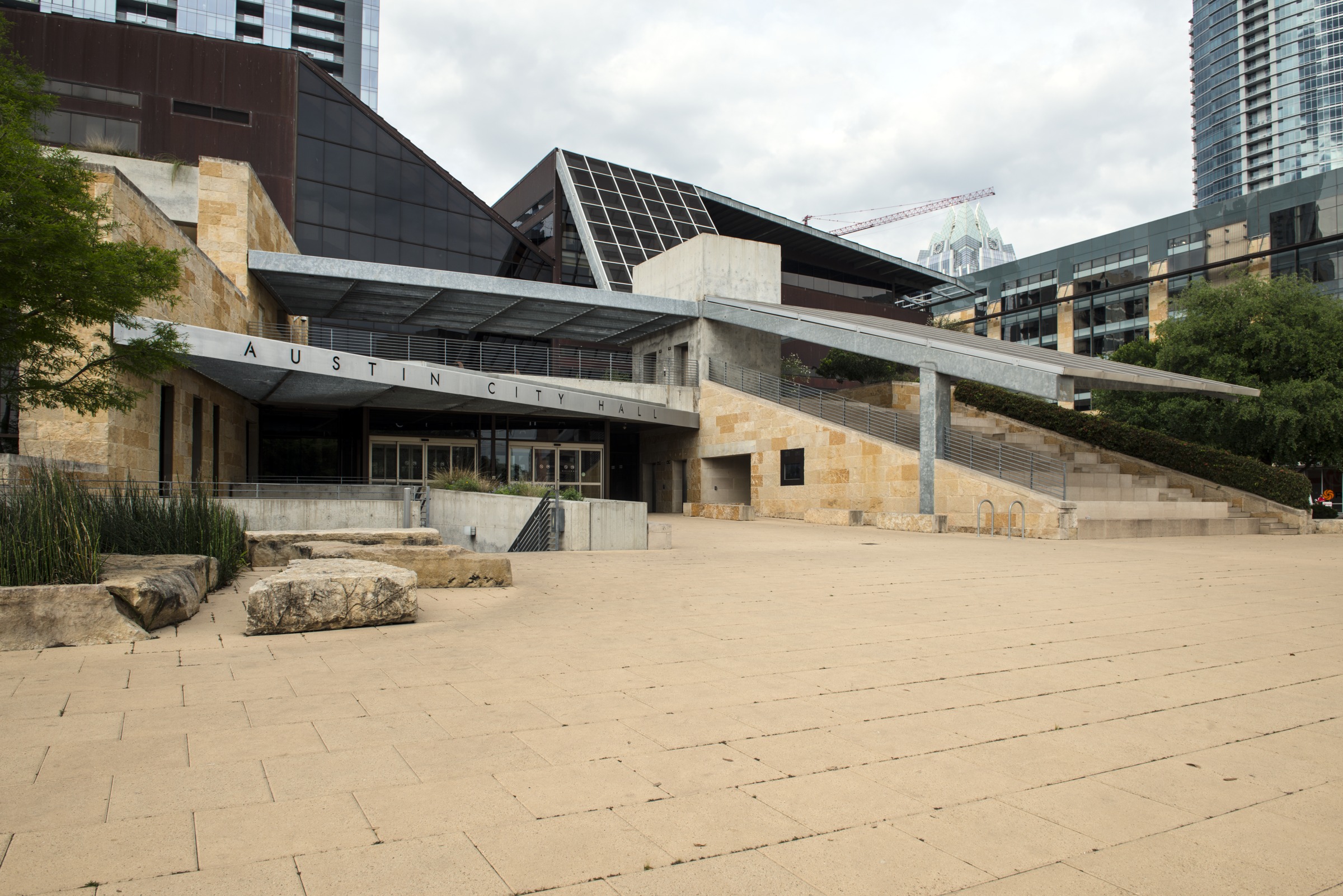
Photo: Carol M. Highsmith / Library of Congress. No known restrictions on publication. The Lyda Hill Texas Collection of Photographs in Carol M. Highsmith's America Project, Library of Congress, Prints and Photographs Division. Resized.
If an Austin photography brief says convention center without further detail, I would stop at that line and confirm the actual location. The familiar name does not make an old assumption current. The Austin Convention Center closed for redevelopment in April 2025, so a new assignment needs a real booked venue rather than instructions inherited from an earlier program.
That correction should make the plan more precise, not less useful. An organizer can still define the photographs needed from the event. A photographer can still show relevant experience. Both need to connect the work with the property, people, and program that are actually confirmed.
This guide uses the convention-center redevelopment project's current FAQ to explain that distinction. The planning examples are hypothetical, not open jobs or accounts of my personal shoots. The goal is a usable commission for hiring or applying, not a ranked roster of individual photographers or a prediction of Austin's market.
Start with the fact that changes the rest of the brief
The project's official FAQ says the convention center closed in April 2025 and demolition was completed at the end of 2025. It describes ongoing construction and a substantial-completion target at the end of December 2028 for the 2029 spring festival season. That is a project target, not a guaranteed opening date or a current photography location.
An older article or event plan may describe the former facility as operating. Do not use that description to establish this commission's destination. Ask the organizer where the actual event is booked and who can confirm the room and working instructions.
This guide does not repeat redevelopment spending, planned area totals, or forecasts of economic benefit. Those details are not necessary to choose a photographer. They also should not be turned into claims that a particular amount of photography work is available now.
A future facility is not a current backdrop
A client may have seen renderings or future-program descriptions and ask for photographs with a particular look. Clarify whether that idea refers to something actually available for this event. A public project image cannot authorize a portrait location that does not yet exist as booked working space.
If the desired result is a leadership group or a presentation record, preserve that purpose at the confirmed venue. A useful brief can adapt a visual idea without pretending the old location remains open. The people and activity usually offer a stronger foundation than an outdated building assumption.
If a future opening date matters to a separate planned commission, treat that as its own verification task when relevant. Do not make a current promise dependent on the completion target in a public FAQ. The real booking and permissions need confirmation through the responsible organizer.
Rebuild the assignment from its intended use
Imagine an organization planning an Austin program at another confirmed property. It wants a presentation, discussion, and participant record. I would begin by asking who receives those images and what they need to do next with them.
An internal team may need a coherent account of the whole program. Communications may need a small cleared public selection. A partner-relations contact may need specific participation shown. Reconcile those purposes before they become several competing directions to the photographer.
Write a sentence for each essential result. A presentation image might show an announcement and audience response. A discussion image might show real participation. A group might identify the people involved. Those are connected without being interchangeable tasks.
The program is not only a list of sessions
Ask what participants do between the listed items. An introduction in a lobby, a brief recognition, or a group before someone departs can be important without occupying a large block on the timetable. The organizer knows those constraints and should share them.
Mark which moments need complete coverage and which can be sampled. A selected visit can be useful when that is the agreed service. It should not later be judged against an expectation of an uninterrupted account that the proposal never included.
If essential activities happen at the same time in separate spaces, choose priorities, change the sequence, or discuss another photographer. One person cannot maintain full attention in two places simply because both are part of the same event.
Confirm the new venue without inventing a replacement list
A current venue choice needs grounding in the organizer's booking. This guide does not replace the closed convention center with a speculative list of properties presumed available. The real assignment should identify the actual property, address, room, and contact.
Obtain the current approved diagram and setup. A hotel, meeting room, private property, or performance space can have different instructions. Do not infer technical permissions from a public description or treat one venue's rules as applying elsewhere.
The photographer should know where to report, when setup is permitted, and which positions are approved. An attendee invitation may not supply working access. Mark unknown details honestly instead of filling a blank with a convenient entrance that nobody checked.
Keep background separate from the working note
An older plan can still explain the client's original intent. Label it as background so it does not compete with newer instructions. A polished attachment should not silently become authoritative because it looks complete.
Put confirmed facts, requirements, and unanswered decisions in distinct categories. The booked room belongs among confirmed facts only after verification. An essential group is a requirement. An unapproved portrait position remains an open decision with an owner who will settle it.
If the room or time changes, update the version the crew follows. The photographer should acknowledge any effect on coverage, equipment, or staffing. Sending another attachment does not establish that its practical consequence is understood.
Build the presentation record around what matters
For our hypothetical program, ask what cannot be repeated: a reveal, a recognition, a speaker exchange, or a question. The photographer needs that hierarchy rather than a general instruction to make many stage pictures.
Discuss the intended balance between the speaker and audience. A close frame can preserve expression while a wide view explains context. One photograph does not necessarily do every editorial job. The final selection may need several kinds of images working together.
Review a permitted complete presentation sequence from comparable work. Look at ordinary moments, changes in speaker, and whether the program remains understandable. A single dramatic favorite demonstrates selected ability without establishing the full service.
Do not leave a permission boundary to interpretation
If slides, displayed work, or parts of the session are restricted, make the instruction recognizable. Identify when it applies and who settles an unexpected change. A vague request to be discreet does not answer whether photographs may be made or publicly released.
The commissioning organization may not control every possible use of material that appears. Ask it to identify the relevant approval route. Attendance at a program is not an automatic resolution of every image-rights question.
If captions are included, designate a factual source for names, roles, and context. The photographer should not infer an outcome from expressions or applause. The record should describe what actually happened rather than attach the organizer's desired result to an unrelated visual moment.
A discussion photograph should show the real discussion
For the hypothetical learning portion, ask what the participants actually do. Discussion, demonstration, and practice can look different. A photograph of people around a table may document attendance without explaining why the gathering matters.
Tell the photographer how much movement and interruption are appropriate. If natural exchange is important, repeated posing can work against the program. If a formal group is also essential, give it a separate task rather than assume observational coverage will necessarily produce it.
A photograph of conversation does not prove agreement, a transaction, or collaboration beyond what occurred. If the client wants a caption describing an outcome, have a reliable person verify the fact. The camera records appearance; the final description still needs evidence.
Required participants need a recognition contact
A list of names cannot identify unfamiliar faces by itself. Assign someone who knows the essential people and can make introductions. The photographer should not infer leadership or affiliation from seating, clothing, or badges.
If a required person is absent, identify who decides whether to return, use an approved alternative, or move on. A prolonged search can consume the rest of the commission. Honest status helps the organizer choose rather than assume the image is already complete.
Share privacy instructions without unnecessary private reasons. The crew may need to know someone should not appear publicly without receiving their personal background. Keep information proportionate to following the boundary.
Groups should be scheduled before people disperse
Choose the essential combinations and their purpose. One shared leadership portrait and a long sequence of departments are different work. Extra requests can sound quick individually while collectively reducing the time available for the program story.
Confirm the moment with participants and assign a gathering contact. A photographer can arrange a group without knowing the organization's entire roster, but someone must recognize who is missing. A call after the event has effectively ended may be too late.
Select an approved position and an alternative when the photograph is essential. If the people together are the main purpose, another suitable setting may preserve the result. If the location itself is indispensable, state that condition before accepting the commission.
Portraits can be a separate production inside the program
An individual portrait request may mean casual introductions or a consistent series matching existing profiles. Define the desired result and provide authorized references early. A look introduced afterward cannot guide photographs already made.
Ask the photographer to describe equipment and footprint. A backdrop, light, or waiting line occupies working space. A room's general size does not prove a station fits around the installed furniture, production, and circulation.
Assign someone who calls participants and verifies names so the photographer does not repeatedly leave a prepared setup to search. Put the portrait window beside the program. A fixed station and uninterrupted roaming elsewhere need a realistic division of time or crew.
An added function is an additional decision
An evening reception or another property can be related to the main program without being included in the original scope. Identify its purpose, actual location, participants, and timing. Do not add it silently because it sounds informal or close by.
Use actual addresses and the full schedule to judge feasibility. This guide does not give transfer estimates from a general impression of Austin. Arrival, setup, coverage, and the final commissioned function all belong to the real commitment.
Name the person authorized to approve changes during the event. A guest, speaker, or another department can have a reasonable idea without authority to redirect commissioned work. The photographer should explain what would be displaced and seek an informed choice.
Evaluate a photographer against a relocated program
A venue change can expose how an applicant prepares. I would ask the photographer to talk through the newly confirmed property using the actual program. Which earlier assumptions no longer apply? What information would they request first? The answer should connect their past work with this new task instead of substituting a confident claim to know every Austin room.
For the presentation, inspect a permitted sequence rather than one favorite. For the discussion, look at whether the people and activity are understandable without a caption inventing meaning. For the group, examine direction and consistency. A candidate can demonstrate these skills in comparable settings even without the exact new property in their portfolio.
Ask whose decisions shaped the example. Someone who photographed guests alongside a lead can describe that contribution honestly. It becomes misleading only when the work of a team is presented as one person's complete responsibility. On this new assignment, identify the actual attending crew and the part each person will own.
Ask a former client about an obsolete assumption
A useful reference question is whether a plan changed after approval and how the photographer responded. Did they ask for the missing fact? Did they explain what a different room meant for the proposed service? A specific answer tells you more than praise about being flexible.
The question does not need another client's private roster or internal material. Respect the same boundary when a photographer cannot display a whole restricted project. A permitted substitute or a discussion of the approach may still provide relevant evidence without exposing confidential work.
For an Austin assignment being rebuilt around a different property, this is particularly useful. The client needs confidence in verification and communication, not merely proof that someone once made good pictures in the old convention center. The transferable skill is making the new brief work truthfully.
Read the agreement for inherited language
I would search the proposal for references carried from an earlier version. Does it still name the former destination? Does an arrival note refer to a route nobody confirmed? Does a promised portrait depend on a room that was removed from the program? Correct those details before treating the document as the shared plan.
Then compare actual inclusions. One offer may provide an edited selection from the meeting; another may include a dedicated portrait session and another person for the discussion. Those are not the same service because they share the words event photography. Ask the applicant to explain the intended result in terms of this program.
Open conditions deserve a visible place. For example, the leadership photograph might await the participants' confirmation while the presentation is fixed. Put a named owner beside the question and decide when the answer is needed. Do not conceal a dependency simply to make the proposal look complete.
Requirements should travel with the new booking, not the old one
If insurance or credentials are required, obtain the specification from the people responsible for the newly confirmed event. Ask the proposed crew whether they satisfy it. A policy or document used for an earlier property may be a useful lead without settling a new request.
Likewise, a marketplace listing and a strong portfolio do not certify compliance. The client should verify the actual crew against the actual requirements. Avoid replacing that check with a broad statement about what every Austin venue supposedly requires.
For working arrival, the final note needs the reporting point assigned to this commission. It should identify who answers if that point is unavailable or a route changes. The crew should not have to interpret an attendee invitation as an equipment instruction or choose between contradictory old maps.
Photographers: show a deliberate reset in the application
I would start by acknowledging the location actually named in the current inquiry, then ask for the gap that materially changes the work. If the program still relies on the closed center, flag that fact and ask where it will happen. Do not offer a replacement destination as though it were booked when it is only an idea.
ProShoot's published workflow allows the client to post an assignment, examine bids and portfolios, and select a photographer. Its photographer process includes applying and presenting work. Use that exchange to make the new program understandable. Being listed is not proof of permission or personal experience at the final venue.
Before saying you are available, account for the job from preparation through the final commissioned function. If a separate reception is added, assess its real address and timing. Do not treat the public program's short duration as the whole commitment or promise a transfer based on a general impression of the city.
This guide does not derive openings from headquarters lists, festival duration, growth labels, weddings, or a theory of year-round demand. A real inquiry has a commissioning organization and a specific need. An accurate response can show local preparation by noticing the closure and working from the new facts, without inventing a market story.
Close the assignment against the final brief
The recipient may search the finished work by activity rather than time. Ask whether presentations, discussion, groups, portraits, and cleared public pictures should be easy to locate independently. The answer should guide the agreed organization, not leave the client rebuilding the program from filenames.
If words accompany the pictures, give the factual reviewer responsibility for identities and context. A person talking is not evidence of an agreement, and applause does not establish a project outcome. The final record should not outgrow what the organizer can verify.
Choose a delivery date and define any earlier selection as additional planned work. If it must happen while photographing continues, say how. Make pending review visible and keep the private delivery separate from any permission for the photographer to publish their own promotional selection.
The access and storage terms should be the terms actually offered, not an implication of permanent availability. Finally, explain any material difference between the final program and the essential pictures originally commissioned. A canceled activity or absent subject should not remain an unexplained hole the client has to discover alone.
Hire for the real location and occasion
The closure correction is not the whole Austin photography story. It is the fact that makes an honest new brief possible. The people, program, permissions, and intended image users then determine the service.
Whether hiring through ProShoot or applying there, begin with the confirmed event rather than a familiar venue assumption. I would choose through relevant complete evidence and a plan both sides can follow, not an unlimited promise tied to a place that is not currently operating.
Sources checked November 6, 2026
Ready to hire a professional photographer?
Post your job free and get bids from photographers near you.
Post a Job Free →