Top Event Photographers in Atlanta
Build an Atlanta event photography brief around campus locations, people, and permissions. Convention, hospitality, and outdoor examples for hiring and applying.
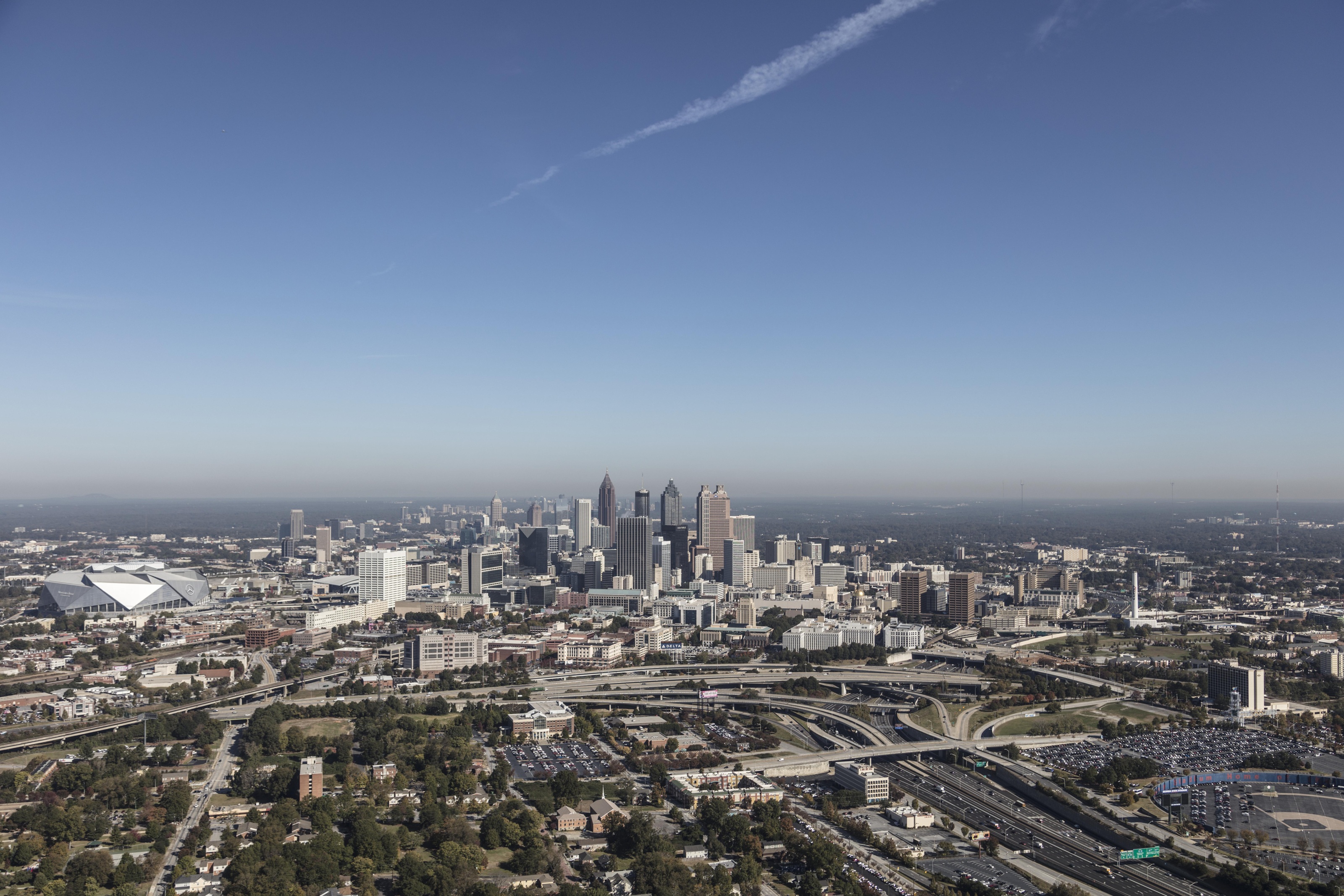
Photo: Carol M. Highsmith / Library of Congress. No known restrictions on publication. Resized.
An Atlanta event can cross several spaces while the organizing team thinks of it as one occasion. The photography plan needs to follow that occasion without pretending every neighboring property has the same access, setup, or priorities. I would draw the program before writing a long list of desired pictures.
That drawing can be simple: the presentation happens here, the conversations happen there, the required group needs this moment, and someone is responsible for each transition. It gives a prospective photographer something useful to assess. It also helps the organizer see where a promise of complete coverage may conceal a conflict.
The examples below use current Georgia World Congress Center Authority venue descriptions. They are hypothetical, not current job announcements or accounts of events I personally photographed. The purpose is a practical Atlanta commission that a client can compare and a photographer can answer honestly, not a ranked roster of individual names.
Begin with three marks on the program
I would mark the unrepeatable activity first. That could be a presentation, recognition, or a particular interaction. Next I would mark the required people whose availability is limited. Finally I would mark the places where the photographer needs a new instruction, permission, or setup.
Those marks reveal different kinds of risk. A camera setting cannot resolve a subject leaving before the group. Familiarity with a building cannot authorize another property. An energetic photographer cannot make two simultaneous essential programs happen in the same place.
The organizer should then choose what matters when requests compete. Some activities need a complete record; others can be sampled. Some photographs are essential; others are welcome ideas. A clear hierarchy does more for the final gallery than an unrestricted instruction to capture everything.
Mark one: the convention presentation
GWCCA's official venue page identifies Georgia World Congress Center exhibit halls, meeting rooms, grand ballrooms, fixed-seat auditoriums, and outdoor spaces. These categories establish the range of facilities. They do not tell the photographer which room is booked or how the event's production uses it.
For a hypothetical conference, place the main presentation in the actual booked space on the organizer's diagram. Add the expected image purpose. A speaker announcement, an internal program record, and a partner report can need different photographs of the same session.
I would ask the photographer to explain a relevant complete sequence. Can the viewer follow speaker changes, important exchanges, and audience response? An impressive isolated frame is valuable evidence of ability without proving the entire program will remain covered.
What happens when someone asks for a group during the talk?
This is a useful test of the plan. If the presentation is essential and uninterrupted, the photographer needs a way to defer the group or obtain an authorized change. A guest's reasonable request should not silently replace the client's priority.
Name the decision-maker in advance. The photographer can explain the tradeoff and ask for a choice. That is more professional than agreeing to incompatible requests and hoping the missing moment will not matter later.
If both tasks genuinely need simultaneous attention, discuss another photographer or another time. The answer should be visible in the proposal. A client should not accept a single-person plan while carrying an unspoken expectation of complete coverage in several places at once.
What does the actual setup permit?
Obtain the stage direction, seating, approved camera positions, and movement instructions. The public venue inventory cannot establish those event-specific facts. A past room visit can help someone prepare without becoming permission for a new program.
If additional lighting or a portrait setup is proposed, ask about its footprint and approval. Equipment can be portable while still affecting circulation or production. The photographer should know what can be placed and who may authorize a change.
For restricted content, identify whether images may be made and which uses are allowed. A room being available for a conference does not mean every displayed slide or artwork is cleared for public distribution. Give the crew a contact for uncertain material.
Mark two: the exhibit conversation
The client may need evidence of participation around selected exhibits. I would put those requirements on the same timeline as the presentation. A brief saying both conference and exhibition needs more definition before a photographer can promise a result.
Ask what an exhibit image should explain. A clean display before opening, a demonstration, and people discussing a process are different subjects. One wide view can establish context without making the required detail or relationship readable.
Provide the current assignments and identification contact for priority organizations. A brand list cannot tell a photographer where the display is or which participant matters. Someone on the organizing team needs to supply that knowledge.
What if the demonstration moves?
Name the contact who updates the photographer and settles priority changes. A later start can push a demonstration against another essential activity. The crew needs the revised fact and an authorized decision, not several separate messages with competing instructions.
If the representative is absent, decide whether to return, make an alternative approved image, or move to the next requirement. Do not let an open-ended search consume the event while everyone assumes someone else knows where the subject went.
A photographer applying for this work should show evidence of activity and interaction, not only product detail. Ask how their previous sequence connected the people with the display. The explanation should describe real decisions without inventing an ability to cover everything effortlessly.
Mark three: the hotel gathering
GWCCA's page identifies Signia by Hilton Atlanta as directly connected to the Georgia World Congress Center and describes meeting and event space there. That connection is useful context. It does not automatically include hotel functions in a convention photography commission or authorize use of hotel spaces.
For a hypothetical reception, identify its exact location, time, and purpose separately. The client may want networking, introductions, partner interaction, or a leadership group. Reconcile those needs with the convention story rather than treat the reception as an unlimited extension.
Ask whether the presentation still requires coverage when guests begin gathering. A transition can be seamless for attendees while creating competing assignments for one photographer. The proposal should explain the division of work in terms the organizer can judge.
A shared campus is not a shared equipment instruction
Confirm where the crew reports and how equipment moves for each assigned space. A public statement that properties connect is not an instruction to use every connecting route. The organizer should provide the approved arrangement for the actual program.
If a formal portrait is planned, obtain an authorized location and a gathering contact. A fixed station changes what the same photographer can document elsewhere. Do not describe portrait work as incidental if the client expects a controlled, consistent result.
A preferred setting should have an alternative when the photograph is essential. If the main purpose is the people together, preserve that result rather than tie success entirely to a particular view or background that has not been confirmed.
Recognize relationships before photographing them
A leadership or partner list needs someone who knows the people. Introductions help an unfamiliar crew make the right photographs without repeatedly interrupting everyone for poses. The photographer cannot reliably infer seniority or affiliation from seating and badges.
Tell the photographer how much direction the reception welcomes. Required groups can fit an informal gathering when planned. An expanding sequence of requested combinations can also displace the candid story, even when each extra picture sounds quick.
If privacy restrictions apply, share practical instructions without unnecessary private background. The crew needs to know what to do. A private participant gallery and an approved public selection may need different handling and should remain distinguishable.
The stadium inquiry: define what the client controls
GWCCA's current page identifies Mercedes-Benz Stadium as home to the Atlanta Falcons and Atlanta United FC. That fact helps identify the property; it does not establish a game credential, field position, backstage permission, or open photography job.
A company might hypothetically commission photographs of its own hospitality gathering there. Start with the booked activity and the rights the commissioning organization can authorize. Do not silently expand the assignment into public competition or performance coverage.
If the client wants that additional work, identify the relevant permission check before promising it. A guest invitation may not grant rights controlled by another organization. The photographer should distinguish confirmed scope from any proposed extension awaiting authorization.
Match the evidence to the commission
Excellent hospitality photographs may be relevant to the company's gathering without proving credentialed sports coverage. Likewise, strong action work does not automatically demonstrate a comfortable private guest record. Ask for portfolio evidence tied to the task the client is actually buying.
If a required guest must appear, provide a recognition contact and the person's availability. A photographer should not discover at the end that the person departed before a portrait nobody scheduled. The organizer's knowledge of people is part of the production.
Keep public distribution separate from private documentation. A photograph can be useful internally while needing another approval for advertising or partner use. State intended audiences in the agreement rather than assume every file has unlimited uses.
The park idea: setting is a conditional choice
GWCCA describes Centennial Olympic Park as a legacy of the 1996 Games and a privately operated greenspace open to the public. Public access is not the same as authorization for an event's proposed photography setup. Confirm the actual use through the relevant organizer and property contact.
A client may want an outdoor group or contextual images. Identify the location, timing, participant availability, and an alternative. Do not promise a required background merely because a park appears near the program in a campus description.
I would ask whether the outdoor idea serves the image purpose. If a leadership group's relationship is essential, an approved alternative may preserve the commission better than waiting for one setting. If the location itself is essential, make that condition clear before accepting.
Read the portfolio as a record of decisions
For the conference example, I would review a complete authorized set with presentation, exhibits, and interaction. For a hotel or stadium hospitality inquiry, I would examine guest coverage and groups. For a portrait extension, I would review a consistent series, not only one standout image.
Ask what the applicant personally did. A second photographer may have made excellent networking images while someone else handled stage continuity and delivery. Accurate contribution labels help the client use that experience without confusing it with full-project responsibility.
Exact venue history is useful context, not a permanent qualification. A new photographer can prepare with current plans; a familiar one can carry a stale assumption. The proposed verification and relevant work matter more than a broad claim to know Atlanta.
Ask references about a change, not a slogan
A former client can describe a delayed program, absent subject, or added group and how the photographer handled it. Did they explain the effect in time for a decision? That behavior is more useful than a general endorsement with no connection to the commission.
Avoid private guest details or confidential program material. You need evidence of working judgment, not another client's records. If a full gallery is restricted, an authorized alternative can still support review.
Confirm who will attend the new assignment. If the service is performed by someone other than the portfolio's principal author, review relevant work and responsibilities. The client should know whose evidence supports the proposal before accepting it.
Translate the plan into scope
Read the proposed properties, coverage, rooms, crew, portraits, selection, editing, delivery, and uses. Similar descriptions can conceal different work. A private reception record is not equivalent to complete simultaneous conference coverage plus portraits.
Ask for assumptions and exclusions in plain language. If a room, credential, subject availability, or gathering contact is essential, make the condition visible. An unresolved dependency should not hide beneath a confident promise and emerge while participants wait.
For insurance or credentials, obtain the actual current specifications if required and confirm that the proposed crew meets them. A portfolio or marketplace listing does not prove compliance. One property's paperwork should not become a universal Atlanta venue rule.
Keep one current working plan. If a room, schedule, or permission changes, update the instructions the crew follows and make the consequence clear. Several plausible but conflicting attachments can undermine careful preparation.
Photographers: make the application a useful next step
A GWCC inquiry should prompt a response about program and exhibit priorities. A Signia reception needs relationship and transition questions. A stadium hospitality commission needs a clear scope boundary. Those are different applications, even when one photographer can handle all three types of work.
ProShoot's published client process describes posting jobs, comparing bids and portfolios, and choosing a photographer. Its photographer process includes applying and presenting work. Use that exchange to show relevant evidence and define the actual service. A profile does not establish access or local shooting history.
Check availability against setup, the full program, and added functions. Use actual addresses and instructions rather than broad transfer assumptions. If a permission remains uncertain, state the condition honestly instead of offering an unconditional promise built on someone else's decision.
This guide does not infer jobs from company headquarters, championship expectations, economic labels, demographics, or seasonal patterns. A real opportunity needs a commissioning contact and current scope. Specific applications do not need unsupported market claims.
End with a record whose status is clear
Ask how the recipient will use the files. Presentations, exhibits, hospitality interaction, portraits, and approved public selections may be easier to navigate separately. The client should not have to reconstruct the program from an unexplained file list.
If names or captions are included, designate the source and reviewer. The photographer should not guess affiliations, titles, or what a conversation achieved. Agree on delivery and any earlier selection separately, including the effect of editing while coverage continues.
Discuss the photographer's promotional use separately from private client delivery. Use actual file-access and storage terms, preserve restrictions, and identify images awaiting review. Explain material gaps caused by canceled activities or absent subjects rather than leave the recipient searching for impossible photographs.
Before closing, reconcile the delivered set with agreed essentials and authorized changes. The purpose is a clean account of the occasion, not a new audit project for the client. A small amount of clear status can prevent a large amount of uncertainty.
Choose the photographer who can follow the occasion
Atlanta's campus examples show why connected places still need distinct decisions. Convention continuity, hotel relationships, stadium permissions, and outdoor ideas cannot be collapsed into one unrestricted service. I would choose through relevant complete work and a plan that makes those boundaries usable.
Whether hiring through ProShoot or applying there, begin with the actual people, program, and audiences. A precise commission gives the photographs a purpose before the event starts and gives both sides a clearer way to judge the result.
Keep the campus drawing usable when one part changes
I would give the organizer a simple test: move one required picture to a different part of the program and ask who needs to hear about it. The photographer needs the new assignment, the gathering contact needs the people, and the person controlling access may need to confirm the position. A changed arrow on a diagram is not enough if those responsibilities remain unchanged in everyone's memory.
For example, an essential group could become available earlier than expected. That may be helpful, but only if it does not replace an unrepeatable presentation without approval. Ask the event lead to choose and update the crew's working version. This makes the drawing a decision aid rather than decoration. The photographer still has room to observe, but the client can see which essential obligation moved and why.
Sources checked November 6, 2026
Ready to hire a professional photographer?
Post your job free and get bids from photographers near you.
Post a Job Free →